Bill · H.R. 8263· House(119-HR-8263)
Educational Equity Challenge Grant Act of 2026
- Introduced
- 4/14/2026
- Last activity
- 4/14/2026 — Referred to the House Committee on Education and Workforce.
- Sponsored by
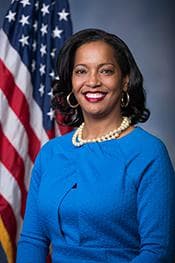
- Jahana Hayes
- Cosponsors
- - 7 - 0
- Introduced
- In Committee
What this bill would do
The Educational Equity Challenge Grant Act of 2026 establishes a grant program administered by the Department of Education. The program provides funds to various eligible entities to address student academic, social-emotional, mental, behavioral, and physical health needs. These needs include those associated with the COVID-19 pandemic. Grants can support both evidence-based activities and field-initiated proposals. The bill includes specific allocation requirements for rural areas, low-income populations, and tribal entities.
Yes· 3 of 33
Would children be better off under this?+10
Directly benefits children through improved academic and health support in schools.
Would students be better off under this?+10
Primary target of the bill, providing academic, mental, and physical health support.
Would households on low incomes be better off under this?+9
Specifically targets 50% of funds to low-income student populations.
The opposite· 3 of 4
Does this reduce what the federal government spends?-8
The bill establishes a new, multi-billion dollar grant program, increasing government spending.
Does this reduce what the federal government owes?-5
The bill authorizes significant federal spending totaling over $75 billion through 2036.
Does this make the government pay for what it commits to?-5
Significant new spending authorization without specified offsets.
Who it would affect, and how
Potential Positive Impacts for People
-
Addressing Student Health and Academic Needs: The program awards grants to implement strategies that address academic, social- emotional, mental, behavioral, and physical health needs, including those from the COVID-19 pandemic (Section 2(b)).
-
Support for Rural Communities: The Secretary must ensure that not less than 25 percent of grant funds are awarded to eligible entities in specific rural locale codes (Section 2(c)(4)(A)).
-
Support for Low-Income Students: The Secretary must ensure that not less than 50 percent of grant funds go to entities serving student populations where 20 percent or more of school-age children live in low-income families (Section 2(c)(5)(A)).
-
Support for Tribal Communities: The Secretary is required to reserve 5 percent of funds for the Bureau of Indian Education and outlying areas to support schools operated or funded by them (Section 2(c)(2)).
-
Diverse Educational Strategies: Funds can be used for various benefits such as high-quality tutoring, social and emotional learning, mental health services, and the recruitment of diverse educators (Section 2(g)).
Potential Negative Impacts for People
-
Reduction of Funds Due to Application Quality: The Secretary may reduce the amount of funds available for rural areas or low-income student populations if they do not receive a sufficient number of high-quality applications (Section 2(c)(4)(B) and Section 2(c)(5)(B)).
-
Increased Testing Burdens: While the bill encourages using existing tools, the application process involves identifying inequities through assessments which could lead to duplicative or excessive student testing (Section 2(e)(1) and Section 2(e)(4)).
Groups and Interests Ranking
Every group the model scored this bill for, from -10 to +10. Hover a score for the reason it gave.
- Demographic And Interest Groups
- Good For Children+10Good For Students+10Good For Low Income Households+9Good For Native Americans+9Good For African Americans+8Good For Hispanic Americans+8Good For People With Disabilities+8Good For Rural Residents+8Good For Asian Americans+7Good For Immigrants+7Good For Urban Residents+6Good For Young Adults+5Good For Farmers+4Good For Middle Class Households+3Good For White Americans+3Good For Union Workers+2Good For Business Owners-2
- Social Issues And Justice
- Improves Racial Equity+8Improves Disability Rights+7Improves Poverty Reduction+5Improves Childcare Affordability+4Reduces Homelessness+3
- Healthcare
- Improves Mental Health Access+8Improves Healthcare Access+6Increases Research Funding+3
- Economy And Finance
- Increases Job Creation+3Improves Economic Growth+2Reduces Government Spending-8Improves Fiscal Responsibility-5Reduces National Debt-5
- Education And Technology
- Increases Public School Funding+9Improves Internet Access+2Increases Scientific Research Funding+2
- Governance And Ideology
- Increases Federal Power+4Improves Government Transparency+3Improves Privacy Rights+2
- Environment Energy And Infrastructure
- Improves Rural Development+6
- 4/14/2026
- Referred to the House Committee on Education and Workforce.
- 7 Cosponsors added.
- Introduced in House
One bill Congress.gov lists as related to this one — companions in the other chamber, earlier versions, and bills this one absorbed or was folded into.
 Danny Davis
Democrat · Illinois
 Dwight Evans
Democrat · Pennsylvania
 Adelita Grijalva
Democrat · Arizona
 Henry Johnson
Democrat · Georgia
 Rick Larsen
Democrat · Washington
 LaMonica McIver
Democrat · New Jersey
 Eleanor Norton
Democrat · District of Columbia