Bill · S. 4288· Senate(119-S-4288)
Educational Equity Challenge Grant Act of 2026
- Introduced
- 4/14/2026
- Last activity
- 4/14/2026 — Read twice and referred to the Committee on Health, Education, Labor, and Pensions.
- Sponsored by
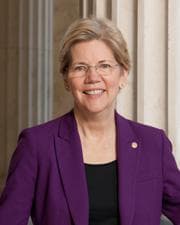
- Elizabeth Warren
- Cosponsors
- - 3 - 0
- Introduced
- In Committee
What this bill would do
The Educational Equity Challenge Grant Act of 2026 establishes a grant program administered by the Department of Education. This program provides funding to eligible entities to address the academic, social-emotional, mental, behavioral, and physical health needs of students. These needs include those associated with the COVID-19 pandemic. Grants are awarded for both evidence-based activities and field-initiated proposals. The program includes specific funding requirements for rural areas, low-income student populations, and tribal schools.
Yes· 3 of 12
Would children be better off under this?+8
The bill specifically addresses the academic and health needs of school-age children.
Does this put more money into public schools?+8
The bill authorizes tens of billions of dollars in new grant funding for educational agencies.
Would households on low incomes be better off under this?+7
The bill mandates significant funding priority for students from low-income families.
The opposite
No question was scored the opposite.
Who it would affect, and how
Potential Positive Impacts for People
-
Addressing Student Needs: The program funds activities to address academic, social- emotional, mental, behavioral, and physical health needs, specifically including those caused by the COVID-19 pandemic (Section 2(b)).
-
Support for High-Need Students: The Secretary is instructed to give priority to applicants serving disproportionately higher percentages of high-need students, such as low-income students, students of color, Native American students, and students with disabilities (Section 2(f)).
-
Support for Rural and Low-Income Communities: The bill ensures that at least 25 percent of funds go to specific rural locales and at least 50 percent of funds go to entities serving student populations where 20 percent or more of children live in low-income families (Section 2(c)(4) and 2(c)(5)).
-
Tribal Support: A 5 percent reservation of funds is set aside specifically for the Bureau of Indian Education and outlying areas to support schools operated or funded by the Bureau (Section 2(c)(2)).
-
Diverse Educational Options: Funding can be used for various beneficial activities, such as high-quality tutoring, summer learning programs, mental health services, and the recruitment of diverse educators (Section 2(g)(1)).
Potential Negative Impacts for People
-
Potential Reduction in Funding: The Secretary may reduce the amount of funds available for rural area requirements or low-income student requirements if there are not a sufficient number of high-quality applications (Section 2(c)(4)(B) and 2(c)(5)(B)).
-
Increased Testing Burdens: While the bill encourages the use of existing tools to avoid excessive testing, applicants are still required to describe how they will measure outcomes related to academic and health needs (Section 2(e)(1) and 2(e)(4)).
-
Evaluation Requirements: Entities pursuing field- and educator-initiated proposals must conduct and fund an independent evaluation of their program's effectiveness (Section 2(g)(2)(D) and 2(i)(1)).
Groups and Interests Ranking
Every group the model scored this bill for, from -10 to +10. Hover a score for the reason it gave.
- Demographic And Interest Groups
- Good For Children+8Good For Low Income Households+7Good For Native Americans+7Good For People With Disabilities+7Good For Rural Residents+6Good For Hispanic Americans+4
- Social Issues And Justice
- Improves Disability Rights+6Improves Racial Equity+6Improves Poverty Reduction+4
- Education And Technology
- Increases Public School Funding+8
- Healthcare
- Improves Mental Health Access+7
- Economy And Finance
- Increases Job Creation+3
- 4/14/2026
- Read twice and referred to the Committee on Health, Education, Labor, and Pensions.
- 3 Cosponsors added.
- Introduced in Senate
One bill Congress.gov lists as related to this one — companions in the other chamber, earlier versions, and bills this one absorbed or was folded into.
 Richard Blumenthal
Democrat · Connecticut
 Edward Markey
Democrat · Massachusetts
 Christopher Murphy
Democrat · Connecticut