Bill · H.R. 8085· House(119-HR-8085)
Ultra-Millionaire Tax Act of 2026
- Introduced
- 3/25/2026
- Last activity
- 3/25/2026 — Referred to the House Committee on Ways and Means.
- Sponsored by
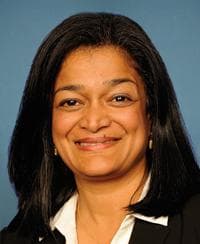
- Pramila Jayapal
- Cosponsors
- - 49 - 0
- Introduced
- In Committee
What this bill would do
The Ultra-Millionaire Tax Act of 2026 proposes to amend the Internal Revenue Code to impose a tax on the net value of an individual's taxable assets. This tax applies to the assets held on the last day of a calendar year, with rates varying based on asset thresholds. Assets below $50,000,000 are taxed at 0 percent, while those between that amount and $1,000,000,000 are taxed at 2 percent. Assets exceeding $1,000,000,000 are subject to an applicable percentage, which is generally 3 percent but could rise to 6 percent under certain conditions. The bill also establishes rules for various trust structures, information reporting, and enforcement via audits.
Yes· 3 of 6
Does this raise taxes on the highest earners?+10
The bill imposes a new wealth tax of 2 percent on assets over $50 million and up to 6 percent on assets over $1 billion.
Does this make the government pay for what it commits to?+5
The bill establishes significant new revenue streams through a wealth tax on ultra-high-net-worth individuals.
Would households on low incomes be better off under this?+5
The bill generates significant federal revenue through taxes on the ultra-wealthy which can be used for social programs.
The opposite
Would high-income households be better off under this?-10
The bill imposes a substantial new tax on net assets exceeding $50 million and includes increased penalties for valuation errors.
Would business owners be better off under this?-5
High-net-worth business owners may face liquidity constraints and increased audit risks under the new wealth tax.
Who it would affect, and how
Potential Positive Impacts for People
-
Increased Health Care Protection: The bill allows for a higher applicable tax rate of 6 percent if legislation is in effect that establishes a health insurance program providing all residents with comprehensive protection against health care costs and prohibits private entities from providing duplicate benefits (Section 2901(c)(2)).
-
Relief for Taxpayers with Liquidity Issues: The Secretary may extend the time for payment of the wealth tax for up to 5 years for taxpayers determined to have severe liquidity constraints or where immediate payment causes undue hardship on an ongoing enterprise (Section 6161(a)(3)).
Potential Negative Impacts for People
-
Tax Burden on High-Net-Worth Individuals: Individuals with net taxable assets exceeding $50,000,000 will be subject to a wealth tax of 2 percent up to $1,000,000,000, and a higher applicable percentage on assets above that threshold (Section 2901(b)).
-
Increased Penalties for Valuation Errors: Taxpayers may face increased penalties if they provide a substantial wealth tax valuation understatement, with penalties increasing to 30 or 50 percent depending on the nature of the misstatement (Section 6662(b)).
-
Taxation of Covered Expatriates: Individuals who are covered expatriates will face a tax rate of 40 percent on their taxable assets (Section 2903(c)).
-
Mandatory Audits: The Secretary is required to annually audit at least 30 percent of taxpayers required to pay the tax (Section 2905).
Groups and Interests Ranking
Every group the model scored this bill for, from -10 to +10. Hover a score for the reason it gave.
- Economy And Finance
- Increases Wealthy Taxes+10Improves Fiscal Responsibility+5
- Demographic And Interest Groups
- Good For Low Income Households+5Good For Urban Residents+2Good For High Income Households-10Good For Business Owners-5
- Healthcare
- Increases Affordable Care Act Support+5
- Governance And Ideology
- Improves Government Transparency+3
- 6/23/2026
- 1 Cosponsor added.
- 6/10/2026
- 1 Cosponsor added.
- 5/12/2026
- 1 Cosponsor added.
- 5/4/2026
- 1 Cosponsor added.
- 4/27/2026
- 1 Cosponsor added.
- 4/14/2026
- 1 Cosponsor added.
- 4/9/2026
- 1 Cosponsor added.
- 4/2/2026
- 1 Cosponsor added.
- 3/27/2026
- 1 Cosponsor added.
- 3/26/2026
- 1 Cosponsor added.
- 3/25/2026
- Referred to the House Committee on Ways and Means.
- 39 Cosponsors added.
- Introduced in House
One bill Congress.gov lists as related to this one — companions in the other chamber, earlier versions, and bills this one absorbed or was folded into.
 Yassamin Ansari
Democrat · Arizona
 Donald Beyer
Democrat · Virginia
 Brendan Boyle
Democrat · Pennsylvania
 Judy Chu
Democrat · California
 Greg Casar
Democrat · Texas
 Danny Davis
Democrat · Illinois
 Christopher Deluzio
Democrat · Pennsylvania
 Mark DeSaulnier
Democrat · California
 Madeleine Dean
Democrat · Pennsylvania
 Maxine Dexter
Democrat · Oregon
 Dwight Evans
Democrat · Pennsylvania
 Adriano Espaillat
Democrat · New York
 Maxwell Frost
Democrat · Florida
 Valerie Foushee
Democrat · North Carolina
 Laura Friedman
Democrat · California
 Jesús García
Democrat · Illinois
 Robert Garcia
Democrat · California
 Daniel Goldman
Democrat · New York
 Adelita Grijalva
Democrat · Arizona
 Glenn Ivey
Democrat · Maryland
 Henry Johnson
Democrat · Georgia
 Jonathan Jackson
Democrat · Illinois
 Robin Kelly
Democrat · Illinois
 Ro Khanna
Democrat · California
 Teresa Leger Fernandez
Democrat · New Mexico
 Summer Lee
Democrat · Pennsylvania
 James McGovern
Democrat · Massachusetts
 Grace Meng
Democrat · New York
 Analilia Mejia
Democrat · New Jersey
 Jerrold Nadler
Democrat · New York
 Eleanor Norton
Democrat · District of Columbia
 Alexandria Ocasio-Cortez
Democrat · New York
 Ilhan Omar
Democrat · Minnesota
 Frank Pallone
Democrat · New Jersey
 Chellie Pingree
Democrat · Maine
 Ayanna Pressley
Democrat · Massachusetts
 Delia Ramirez
Democrat · Illinois
 Adam Smith
Democrat · Washington
 Janice Schakowsky
Democrat · Illinois
 Linda Sánchez
Democrat · California
 Melanie Stansbury
Democrat · New Mexico
 Lateefah Simon
Democrat · California
 Mark Takano
Democrat · California
 Rashida Tlaib
Democrat · Michigan
 Jill Tokuda
Democrat · Hawaii
 Shri Thanedar
Democrat · Michigan
 Nydia Velázquez
Democrat · New York
 Maxine Waters
Democrat · California
 Bonnie Watson Coleman
Democrat · New Jersey