Bill · H.R. 8080· House(119-HR-8080)
Data to Save Moms Act
- Introduced
- 3/25/2026
- Last activity
- 3/25/2026 — Referred to the Committee on Energy and Commerce, and in addition to the Committee on Natural Resources, for a period to be subsequently determined by the Speaker, in each case for consideration of such provisions as fall within the jurisdiction of the committee concerned.
- Sponsored by
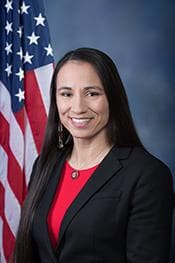
- Sharice Davids
- Cosponsors
- - 45 - 0
- Introduced
- In Committee
What this bill would do
The "Data to Save Moms Act" aims to amend the Public Health Service Act to improve maternal health data collection and quality measures. It provides funding to help maternal mortality review committees increase membership diversity and engage more effectively with their communities. The bill mandates a review of existing data processes and quality measures through consultation with various stakeholders. It also establishes a comprehensive study focused specifically on maternal health among American Indian and Alaska Native populations. Additionally, the act creates a grant program for minority-serving institutions to research specific aspects of the maternal health crisis.
Yes· 3 of 11
Would Native Americans be better off under this?+5
The bill mandates a comprehensive study specifically for American Indian and Alaska Native populations and reserves funds for them.
Would women be better off under this?+5
The bill aims to reduce maternal mortality and improve healthcare quality for pregnant and postpartum individuals.
Does this put more money into medical research?+5
The bill authorizes significant funding for research into maternal health disparities and outcomes.
The opposite
No question was scored the opposite.
Who it would affect, and how
Potential Positive Impacts for People
-
Increased Committee Diversity and Community Engagement: Maternal mortality review committees can receive assistance to include community members with diverse racial, ethnic, and professional backgrounds, which helps ensure local voices are heard (Section 2).
-
Removing Barriers to Participation: Funds can be used to address practical issues such as training, transportation, and compensation for community members serving on review committees (Section 2).
-
Enhanced Data Accuracy for Severe Conditions: The bill directs committees to review cases of severe maternal morbidity and deaths related to mental health or substance use disorders to the extent practicable (Section 3).
-
Improved Inclusion of Nonclinical Factors: Review processes are directed to consult with community organizations to ensure that nonclinical factors contributing to maternal deaths are considered alongside clinical factors (Section 3).
-
Targeted Support for American Indian and Alaska Native Populations: A specific comprehensive study will be conducted to examine causes of maternal mortality unique to these populations and provide policy recommendations (Section 5).
-
Support for Minority-Serving Institutions: Research centers and health schools at these institutions can receive grants to study the maternal health crisis among racial and ethnic minority groups (Section 6).
Potential Negative Impacts for People
- No negative impacts or burdens are explicitly stated in the provided text.
Groups and Interests Ranking
Every group the model scored this bill for, from -10 to +10. Hover a score for the reason it gave.
- Demographic And Interest Groups
- Good For Native Americans+5Good For Women+5Good For African Americans+3Good For Hispanic Americans+3Good For Low Income Households+2
- Healthcare
- Increases Research Funding+5Improves Healthcare Access+4Improves Mental Health Access+3Increases Medicaid Funding+2
- Social Issues And Justice
- Improves Racial Equity+5
- Education And Technology
- Improves College Affordability+2
- 8/10/2026
- 1 Cosponsor added.
- 5/12/2026
- 1 Cosponsor added.
- 3/25/2026
- Referred to the Committee on Energy and Commerce, and in addition to the Committee on Natural Resources, for a period to be subsequently determined by the Speaker, in each case for consideration of such provisions as fall within the jurisdiction of the committee concerned.
- 43 Cosponsors added.
- Introduced in House
3 bills Congress.gov lists as related to this one — companions in the other chamber, earlier versions, and bills this one absorbed or was folded into.
 Joyce Beatty
Democrat · Ohio
 Wesley Bell
Democrat · Missouri
 Yvette Clarke
Democrat · New York
 Steve Cohen
Democrat · Tennessee
 André Carson
Democrat · Indiana
 Angie Craig
Democrat · Minnesota
 Troy Carter
Democrat · Louisiana
 Sheila Cherfilus-McCormick
Democrat · Florida
 Herbert Conaway
Democrat · New Jersey
 Suzan DelBene
Democrat · Washington
 Debbie Dingell
Democrat · Michigan
 Shomari Figures
Democrat · Alabama
 John Garamendi
Democrat · California
 Jesús García
Democrat · Illinois
 Adelita Grijalva
Democrat · Arizona
 Steven Horsford
Democrat · Nevada
 Jahana Hayes
Democrat · Connecticut
 Glenn Ivey
Democrat · Maryland
 Henry Johnson
Democrat · Georgia
 Sara Jacobs
Democrat · California
 Jonathan Jackson
Democrat · Illinois
 Julie Johnson
Democrat · Texas
 Raja Krishnamoorthi
Democrat · Illinois
 Sydney Kamlager-Dove
Democrat · California
 George Latimer
Democrat · New York
 Gwen Moore
Democrat · Wisconsin
 Seth Moulton
Democrat · Massachusetts
 Lucy McBath
Democrat · Georgia
 Morgan McGarvey
Democrat · Kentucky
 LaMonica McIver
Democrat · New Jersey
 Christian Menefee
Democrat · Texas
 Eleanor Norton
Democrat · District of Columbia
 Ayanna Pressley
Democrat · Massachusetts
 Emily Randall
Democrat · Washington
 Robert Scott
Democrat · Virginia
 Adam Smith
Democrat · Washington
 Terri Sewell
Democrat · Alabama
 Darren Soto
Democrat · Florida
 Melanie Stansbury
Democrat · New Mexico
 Mark Takano
Democrat · California
 Rashida Tlaib
Democrat · Michigan
 Lauren Underwood
Democrat · Illinois
 Marc Veasey
Democrat · Texas
 Frederica Wilson
Democrat · Florida
 Bonnie Watson Coleman
Democrat · New Jersey