Bill · H.R. 7890· House(119-HR-7890)
Science of Reading Act of 2026
- Introduced
- 3/12/2026
- Last activity
- 9/17/2026 — Received in the Senate and Read twice and referred to the Committee on Health, Education, Labor, and Pensions.
- Sponsored by
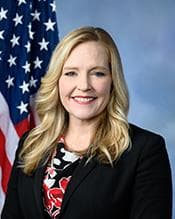
- Erin Houchin
- Cosponsors
- - 1 - 1
- Introduced
- Passed House
- In Senate committee
What this bill would do
The bill is called the ``Science of Reading Act of 2026''. It amends the Elementary and Secondary Education Act of 1965. The legislation excludes the three-cueing model from comprehensive literacy instruction. It also prioritizes certain funds to promote the use of evidence-based literacy instruction aligned to the science of reading. The bill establishes definitions for the science of reading and the three-cueing model. Finally, it includes rules of construction to protect existing disability laws and prohibit federal control over specific local curricula.
Yes· 3 of 6
Would children be better off under this?+6
The bill aims to improve reading outcomes by focusing on evidence-based literacy instruction.
Would students be better off under this?+6
The bill promotes instructional methods designed to improve fundamental reading skills.
Does this put more money into public schools?+5
The bill prioritizes funding for literacy instruction that aligns with the science of reading.
The opposite
Does this leave more decisions to the states?-2
The bill imposes specific instructional requirements on states seeking federal literacy funding.
Who it would affect, and how
Potential Positive Impacts for People
-
Section 2(a): This section excludes the three-cueing model from comprehensive literacy instruction and defines the science of reading as an interdisciplinary body of evidence-based research. This is positive because it ensures instruction focuses on essential components like phonemic awareness, phonics, vocabulary, fluency, comprehension, and writing.
-
Section 2(c) and Section 2(d): These provisions add a priority for comprehensive literacy state development grants and subgrants (for both birth through kindergarten entry and kindergarten through grade 12) that are aligned to the science of reading. This could benefit students by directing funds toward evidence-based reading supports.
-
Section 3(b): This section ensures that nothing in the Act limits or alters the rights, protections, and individualized instructional requirements under disability laws like the Individuals with Disabilities Education Act, section 504 of the Rehabilitation Act of 1973, or the Americans with Disabilities Act. This protects the legal rights and educational requirements for individuals with disabilities.
Potential Negative Impacts for People
- Section 2(a): By explicitly excluding the use of a three-cueing model from comprehensive literacy instruction and defining it as an approach that uses meaning drawn from context, pictures, or syntax, or visual memory as the primary basis for word recognition, educators and programs that currently rely on this specific model may be burdened by having to change their instructional methods to comply with the new requirements.
Groups and Interests Ranking
Every group the model scored this bill for, from -10 to +10. Hover a score for the reason it gave.
- Demographic And Interest Groups
- Good For Children+6Good For Students+6Good For Low Income Households+3Good For People With Disabilities+2
- Education And Technology
- Increases Public School Funding+5
- Governance And Ideology
- Increases Federal Power+3Increase States Rights-2
- 9/17/2026
- Received in the Senate and Read twice and referred to the Committee on Health, Education, Labor, and Pensions.
- 9/16/2026
- Motion to reconsider laid on the table Agreed to without objection.
- Passed/agreed to in House: On motion to suspend the rules and pass the bill, as amended Agreed to by voice vote.
- On motion to suspend the rules and pass the bill, as amended Agreed to by voice vote.
- DEBATE - The House proceeded with forty minutes of debate on H.R. 7890.
- Considered under suspension of the rules.
- Mr. Walberg moved to suspend the rules and pass the bill, as amended.
- 6/29/2026
- Reported (Amended) by the Committee on Education and Workforce. H. Rept. 119-717.
- Placed on the Union Calendar, Calendar No. 623.
- 3/18/2026
- 1 Cosponsor added.
- 3/17/2026
- Committee Consideration and Mark-up Session Held
- Ordered to be Reported (Amended) by the Yeas and Nays: 33 - 0.
- 3/12/2026
- Referred to the House Committee on Education and Workforce.
- 2 Cosponsors added.
- Introduced in House
 Virginia Foxx
Republican · North Carolina
 Kevin Kiley
Independent · California
 John Mannion
Democrat · New York