Bill · H.R. 7873· House(119-HR-7873)
Taiwan Energy Security and Anti-Embargo Act of 2026
- Introduced
- 3/9/2026
- Last activity
- 3/9/2026 — Referred to the Committee on Foreign Affairs, and in addition to the Committee on Transportation and Infrastructure, for a period to be subsequently determined by the Speaker, in each case for consideration of such provisions as fall within the jurisdiction of the committee concerned.
- Sponsored by
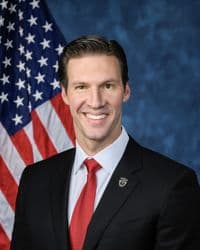
- Pat Harrigan
- Cosponsors
- - 3 - 2
- Introduced
- In Committee
What this bill would do
The Taiwan Energy Security and Anti-Embargo Act of 2026 aims to promote the energy security of Taiwan. It directs the government to prioritize United States energy exports to Taiwan and support the development of diverse energy sources. The bill includes provisions for enhancing Taiwan's energy infrastructure resilience against asymmetric threats like cyberattacks or sabotage. It also encourages the evaluation of nuclear energy to provide clean, reliable power. Additionally, the bill allows for insurance and reinsurance for vessels transporting vital goods to strategic partners facing maritime threats.
Yes· 3 of 9
Does this better protect the country from computer attacks?+7
The bill provides for capacity building to enhance cybersecurity for energy grid operating systems and storage terminals.
Does this strengthen ties with allied countries?+6
The bill strengthens bilateral economic and security ties between the United States and Taiwan.
Does this make trade with other countries easier?+5
The bill prioritizes and facilitates United States energy exports to Taiwan to strengthen strategic commerce.
The opposite
No question was scored the opposite.
Who it would affect, and how
Potential Positive Impacts for People
-
Support for United States Energy Industries: The bill seeks to facilitate United States energy exports and the export of technologies to Taiwan, which supports economic growth and job creation (Section 2, Section 3).
-
Enhanced Energy Security for Taiwan: By diversifying energy sources and increasing reliance on liquefied natural gas and potentially nuclear energy, the bill aims to reduce Taiwan's vulnerability to coercion or attack (Section 2, Section 5).
-
Improved Infrastructure Resilience: The bill allows for capacity building to protect Taiwan's energy grid and storage facilities from asymmetric threats, such as cyberattacks (Section 3).
-
Academic and Private Sector Collaboration: The potential establishment of a joint United States-Taiwan Energy Security Center would leverage higher education and private sector expertise to foster dialogue and collaboration (Section 3).
-
Protection of Vital Commerce: The provision for insurance and reinsurance for vessels transporting critical energy or humanitarian goods helps support vital strategic commerce and deters coercive maritime behavior (Section 6).
Potential Negative Impacts for People
- Potential Redirection of Energy Flows: The bill contemplates redirecting a portion of liquefied natural gas exports that are currently destined for the People's Republic of China toward Taiwan (Section 2, Section 3).
Groups and Interests Ranking
Every group the model scored this bill for, from -10 to +10. Hover a score for the reason it gave.
- National Security And Foreign Policy
- Improves Cybersecurity Defense+7Improves International Alliances+6Improves International Trade+5Increases Foreign Aid+4
- Economy And Finance
- Increases Job Creation+5Improves Economic Growth+3
- Demographic And Interest Groups
- Good For Business Owners+4Good For Students+3
- Environment Energy And Infrastructure
- Reduces Carbon Emissions+3
- 5/11/2026
- 1 Cosponsor added.
- 4/22/2026
- 1 Cosponsor added.
- 3/24/2026
- 1 Cosponsor added.
- 3/9/2026
- Referred to the Committee on Foreign Affairs, and in addition to the Committee on Transportation and Infrastructure, for a period to be subsequently determined by the Speaker, in each case for consideration of such provisions as fall within the jurisdiction of the committee concerned.
- 2 Cosponsors added.
- Introduced in House
One bill Congress.gov lists as related to this one — companions in the other chamber, earlier versions, and bills this one absorbed or was folded into.
 Gabe Evans
Republican · Colorado
 Pat Fallon
Republican · Texas
 Michael Lawler
Republican · New York
 Johnny Olszewski
Democrat · Maryland
 Eugene Vindman
Democrat · Virginia