Bill · H.R. 7798· House(119-HR-7798)
School Social Workers Improving Student Success Act
- Introduced
- 3/4/2026
- Last activity
- 3/4/2026 — Referred to the House Committee on Education and Workforce.
- Sponsored by
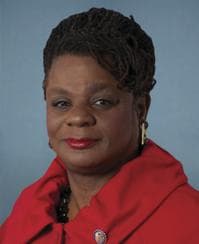
- Gwen Moore
- Cosponsors
- - 4 - 0
- Introduced
- In Committee
What this bill would do
The School Social Workers Improving Student Success Act aims to amend the Elementary and Secondary Education Act of 1965. It seeks to provide grants to high-need local educational agencies to hire and retain school social workers. The bill targets specific student-to-social worker ratios to increase access to mental health and student support services. These grants are intended to assist in meeting ratios of 1 social worker for every 250 students, or 1 for every 50 students for those with intensive needs. Additionally, the act establishes a National Technical Assistance Center to support the workforce and document successful methods.
Yes· 3 of 9
Would children be better off under this?+8
The bill increases access to mental health and student support services for elementary and secondary school students.
Would students be better off under this?+8
The bill enhances student success by providing increased access to counseling, crisis intervention, and social-emotional learning.
Does this make mental health care easier to get?+8
The bill aims to increase access to mental health services by funding school social workers to provide counseling and crisis intervention.
The opposite
Does this reduce what the federal government spends?-1
The bill authorizes $100,000,000 in annual appropriations for the grant program.
Who it would affect, and how
Potential Positive Impacts for People
-
Increased Access to Support Services: By providing grants to hire and retain staff, the bill aims to increase access to mental health and other student support services for students in elementary and secondary schools (Section 2(a)).
-
Improved Mental Health and Academic Outcomes: The bill authorizes social workers to provide services such as counseling, crisis intervention, trauma-informed services, and evidence-based mental health services to improve academic outcomes (Section 2(c)(1) and Section 2(d)(2)).
-
Addressing Basic Needs: Social workers funded by this act can work with families to address barriers to education, such as homelessness, housing insecurity, and food insecurity (Section 2(d)(2)(G)).
-
Support for High-Risk Students: The bill allows agencies to use funds to achieve a higher ratio of 1 social worker for every 50 students in schools where the majority of students are considered higher risk (Section 2(c)(2)(A)).
-
Workforce Development and Information: The creation of a National Technical Assistance Center provides training, information, and help to states, tribes, and educational agencies to improve the effectiveness of the school social work workforce (Section 3(a) and Section 3(b)).
Potential Negative Impacts for People
-
Funding Limitations: The grants provided to local educational agencies are limited to a period not exceeding 4 years (Section 2(b)(1)(A)(2)).
-
Restrictions on Use of Funds: Funds must be used to supplement, rather than replace, existing Federal, State, or local funds used for hiring and retaining school social workers (Section 2(b)(1)(A)(3)).
Groups and Interests Ranking
Every group the model scored this bill for, from -10 to +10. Hover a score for the reason it gave.
- Demographic And Interest Groups
- Good For Children+8Good For Students+8Good For Low Income Households+5Good For Young Adults+4
- Healthcare
- Improves Mental Health Access+8
- Education And Technology
- Increases Public School Funding+7
- Social Issues And Justice
- Improves Affordable Housing+3Improves Poverty Reduction+3
- Economy And Finance
- Increases Job Creation+6Reduces Government Spending-1
- 5/13/2026
- 1 Cosponsor added.
- 4/14/2026
- 1 Cosponsor added.
- 3/4/2026
- Referred to the House Committee on Education and Workforce.
- 2 Cosponsors added.
- Introduced in House
One bill Congress.gov lists as related to this one — companions in the other chamber, earlier versions, and bills this one absorbed or was folded into.
 Veronica Escobar
Democrat · Texas
 Sylvia Garcia
Democrat · Texas
 Eleanor Norton
Democrat · District of Columbia
 Hillary Scholten
Democrat · Michigan