Bill · H.R. 7653· House(119-HR-7653)
Biodefense Diplomacy Enhancement Act
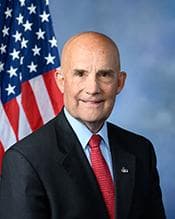
- Introduced
- 2/23/2026
- Last activity
- 3/26/2026 — Ordered to be Reported by the Yeas and Nays: 46 - 0.
- Sponsored by
- Keith Self
- Cosponsors
- - 2 - 4
- Introduced
What this bill would do
The Biodefense Diplomacy Enhancement Act directs the Secretary of State to advance U.S. foreign policy regarding international biotechnology, biosecurity, and biodefense. The bill mandates enhanced cooperation with NATO to strengthen policies, planning, and allied capabilities against biological threats. It also calls for increased cooperation with United States allies and partners, including major non-NATO allies. The Secretary must develop a specific "NATO Biodefense Strategy" and an "International Biotechnology, Biosecurity, and Biodefense Cooperation Strategy." These strategies are focused on addressing threats posed by biological agents and toxins. Finally, the Act requires reports and briefings to be provided to the appropriate congressional committees.
Yes
Does this strengthen ties with allied countries?+6
The act strengthens cooperation with NATO allies and major non-NATO partners on critical biosecurity matters.
Does this make the country readier for the next outbreak?+5
The bill enhances global biodefense, biosurveillance, and emergency response capabilities to mitigate biological threats.
Does this put more money into scientific research?+3
The bill promotes high standards of safety and security in biological research among international partners.
The opposite
No question was scored the opposite.
Who it would affect, and how
Potential Positive Impacts for People
-
Increased Security Against Biological Attacks: The bill seeks to strengthen NATO capabilities in detection, attribution, emergency response, and recovery regarding weaponized biological attacks (Section 2(b)(5)).
-
Improved Global Safety Standards: The Secretary is tasked with promoting the highest standards of safety and security in biological research among United States allies and partners (Section 2(b)(7) and Section 2(c)(3)).
-
Enhanced Protection Against Bioweapons: The bill coordinates with allies on export control policies for biotechnology items that could be used for military end-uses to develop bioweapons (Section 2(c)(2)).
-
Strengthened International Enforcement: The Act promotes collaboration on efforts to enforce the Biological Weapons Convention (Section 2(c)(4)).
-
Better Preparedness through Strategic Planning: By requiring the development of a NATO Biodefense Strategy and an International Biotechnology, Biosecurity, and Biodefense Cooperation Strategy, the bill aims to identify and address gaps in current planning and deployment (Section 2(d)(1) and Section 2(d)(2)).
Potential Negative Impacts for People
- No specific negative impacts are explicitly detailed in the provided text.
Groups and Interests Ranking
Every group the model scored this bill for, from -10 to +10. Hover a score for the reason it gave.
- National Security And Foreign Policy
- Improves International Alliances+6
- Healthcare
- Improves Pandemic Preparedness+5
- Education And Technology
- Increases Scientific Research Funding+3
- 6/30/2026
- 1 Cosponsor added.
- 4/6/2026
- 1 Cosponsor added.
- 3/26/2026
- Committee Consideration and Mark-up Session Held
- Ordered to be Reported by the Yeas and Nays: 46 - 0.
- 3/3/2026
- 3 Cosponsors added.
- 2/23/2026
- Referred to the House Committee on Foreign Affairs.
- 1 Cosponsor added.
- Introduced in House
One bill Congress.gov lists as related to this one — companions in the other chamber, earlier versions, and bills this one absorbed or was folded into.
 James Baird
Republican · Indiana
 William Keating
Democrat · Massachusetts
 Susie Lee
Democrat · Nevada
 Michael Lawler
Republican · New York
 Deborah Ross
Democrat · North Carolina
 Brad Sherman
Democrat · California