Bill · S. 4491· Senate(119-S-4491)
Biodefense Diplomacy Enhancement Act
- Introduced
- 5/12/2026
- Last activity
- 5/12/2026 — Read twice and referred to the Committee on Foreign Relations.
- Sponsored by
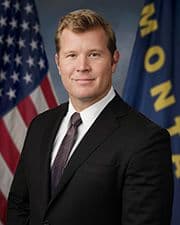
- Tim Sheehy
- Cosponsors
- - 0 - 1
- Introduced
- In Committee
What this bill would do
The Biodefense Diplomacy Enhancement Act directs the Secretary of State to advance United States foreign policy regarding international biotechnology and biosecurity. It mandates the pursuit of enhanced biodefense cooperation specifically within NATO through policy development and strengthened allied capabilities. The Act also calls for increased cooperation with United States allies and partners, including major non-NATO allies. Two primary strategies will be developed: a NATO Biodefense Strategy and an International Biotechnology, Biosecurity, and Biodefense Cooperation Strategy. These strategies are intended to address threats posed by biological agents and toxins. Finally, the Act requires specific reports and briefings to be provided to congressional committees.
Yes· 3 of 4
Does this strengthen ties with allied countries?+7
The bill specifically mandates advancing cooperation with NATO and major non-NATO allies to strengthen collective biodefense capabilities.
Does this put more money into scientific research?+3
The act promotes expanding NATO capabilities to research and develop biotechnology for international security purposes.
Does this make health care easier to get in general?+2
The bill's emphasis on biosurveillance and biodefense through international cooperation can help protect public health systems from biological threats.
The opposite
No question was scored the opposite.
Who it would affect, and how
Potential Positive Impacts for People
-
Improved International Security: The bill aims to strengthen NATO interoperability and allied capabilities in detection, emergency response, and recovery in the event of a weaponized biological attack (Section 2(b)(5)).
-
Enhanced Safety Standards: The Act promotes the adherence of NATO member states and other United States allies and partners to the highest standards of safety and security in biological research (Section 2(b)(7) and Section 2(c)(3)).
-
Increased Protection Against Bioweapons: The bill focuses on coordinating export control policies for biotechnology items that could pose a substantial risk if used for military end-uses, such as the development of bioweapons (Section 2(c)(2)).
-
Stronger Global Enforcement: The Secretary of State is tasked with collaborating on efforts to enforce the Biological Weapons Convention (Section 2(c)(4)).
Potential Negative Impacts for People
- No specific negative impacts or burdens are explicitly stated in the provided text.
Groups and Interests Ranking
Every group the model scored this bill for, from -10 to +10. Hover a score for the reason it gave.
- National Security And Foreign Policy
- Improves International Alliances+7Improves Cybersecurity Defense+1
- Education And Technology
- Increases Scientific Research Funding+3
- Healthcare
- Improves Healthcare Access+2
- 5/12/2026
- Read twice and referred to the Committee on Foreign Relations.
- 1 Cosponsor added.
- Introduced in Senate
One bill Congress.gov lists as related to this one — companions in the other chamber, earlier versions, and bills this one absorbed or was folded into.
 Jeanne Shaheen
Democrat · New Hampshire