Bill · H.R. 7538· House(119-HR-7538)
Migrant Child Safety Act
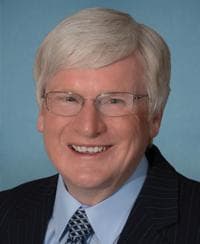
- Introduced
- 2/12/2026
- Last activity
- 2/12/2026 — Referred to the House Committee on the Judiciary.
- Sponsored by
- Glenn Grothman
- Cosponsors
- - 5 - 0
- Introduced
- In Committee
What this bill would do
This bill is called the Migrant Child Safety Act. It changes how unaccompanied alien children are placed with sponsors in the United States. The Secretary of Health and Human Services must share specific information about sponsors with the Secretary of Homeland Security before a child is placed. The bill requires pre-placement safeguards like home visits, electronic monitoring for non-citizen sponsors, and a bond of at least $5,000. It also requires reporting missing children to the National Center for Missing and Exploited Children if follow-up contacts fail. Finally, it mandates sharing information with State or local health or welfare agencies.
Yes· 3 of 5
Does this tighten control of the border?+8
The bill enhances border security and interior enforcement by mandating data sharing, background checks, and tracking for sponsors of unaccompanied alien children.
Would children be better off under this?+7
The bill provides additional safety safeguards, background checks, home visits, and local welfare oversight for unaccompanied alien children.
Does this give the federal government more power?+6
The bill expands federal authority by mandating rigorous background checks, home visits, and information-sharing with immigration and local welfare agencies.
The opposite· 3 of 4
Would immigrants be better off under this?-8
The bill imposes strict electronic monitoring, financial bonds, and deportation referral risks for undocumented sponsors of migrant children.
Does this make it easier for immigrants already here to become citizens?-6
The bill mandates that immigration status be checked and removal proceedings considered for sponsors who are unlawfully present.
Does this protect people from being watched or searched?-5
The bill diminishes privacy rights for sponsors by requiring extensive personal data collection, home visits, and electronic monitoring.
Who it would affect, and how
Potential Positive Impacts for People
-
Better background checks and data sharing: Under Section 2(a), adding clause (i), the Secretary of Health and Human Services must collect and share detailed sponsor information with the Secretary of Homeland Security. This includes names, social security numbers, background checks, and proof of relationship. This helps officials know who these children are living with.
-
In-person home visits: Under Section 2(a), adding clause (ii)(I), officials must conduct at least one in-person home visit at the residence before placement. This is designed to confirm the safety, suitability, and stability of the environment.
-
Tracking missing children: Under Section 2(a), adding clause (v), the Secretary of Health and Human Services must report a child as missing to the National Center for Missing and Exploited Children if contact with or from the sponsor fails within 120 days. This creates a safety net to find children who lose touch.
-
Local welfare involvement: Under Section 2(a), adding clause (vi), the Secretary must provide the collected information to appropriate State or local health or welfare agencies within 30 days of placement. This brings local child welfare groups into the process to help watch over the child.
Potential Negative Impacts for People
-
Electronic monitoring requirements: Under Section 2(a), adding clause (ii)(II), sponsors who are not United States citizens must consent to electronic monitoring, which may include GPS tracking. This places a heavy surveillance burden on the sponsor for the duration of the child's immigration proceedings.
-
Mandatory financial bonds: Under Section 2(a), adding clause (ii)(III), sponsors must execute a bond of at least $5,000 to ensure the child shows up to immigration proceedings. This could be a severe financial burden for families trying to take in a child.
-
Initiation of removal proceedings: Under Section 2(a), adding clause (iii), if the sponsor is determined to be unlawfully present in the United States and not currently in removal proceedings, the Secretary of Homeland Security shall consider starting removal proceedings against them. This creates a direct risk of deportation for sponsors who step forward to care for these children.
Groups and Interests Ranking
Every group the model scored this bill for, from -10 to +10. Hover a score for the reason it gave.
- Demographic And Interest Groups
- Good For Children+7Good For Immigrants-8Good For Low Income Households-4
- Governance And Ideology
- Increases Federal Power+6Improves Government Transparency+4Improves Privacy Rights-5
- National Security And Foreign Policy
- Increases Domestic Surveillance+5
- Social Issues And Justice
- Improves Border Security+8Improves Pathway To Citizenship-6
- 2/24/2026
- 1 Cosponsor added.
- 2/12/2026
- Referred to the House Committee on the Judiciary.
- 4 Cosponsors added.
- Introduced in House
 Lance Gooden
Republican · Texas
 Clay Higgins
Republican · Louisiana
 Diana Harshbarger
Republican · Tennessee
 Anna Paulina Luna
Republican · Florida
 Mary Miller
Republican · Illinois