Bill · H.R. 742· House(119-HR-742)
PROTECTS Act of 2025
- Introduced
- 1/28/2025
- Last activity
- 1/28/2025 — Referred to the House Committee on Energy and Commerce.
- Sponsored by
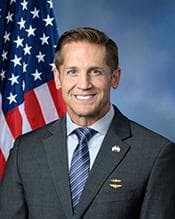
- Richard McCormick
- Cosponsors
- - 39 - 0
- Introduced
- In Committee
What this bill would do
This bill, known as the ``PROTECTS Act of 2025'', aims to stop the use of Federal funds for certain gender transition procedures for people under age 18. It specifically prohibits using such funds to provide or refer for procedures intended to change a person's body to not correspond to their sex. The definition of these procedures includes various surgeries, chest implants, gluteal implants, and certain medications like puberty blockers or hormones. However, there are exceptions for treating conditions like precocious puberty or medically necessary treatments for genetic disorders. These exceptions require the consent of a parent or legal guardian.
Yes
Does this reduce what the federal government spends?+2
The bill prohibits the use of Federal funds for specific gender transition procedures, which limits certain types of federal healthcare expenditures.
The opposite· 3 of 4
Would LGBTQ people be better off under this?-7
The bill specifically prohibits federal funding for medical transitions, which negatively impacts gender-diverse youth.
Does this make health care easier to get in general?-5
The bill restricts access to certain gender-affirming medical procedures and medications for individuals under 18 through federal funding.
Would children be better off under this?-4
The bill limits the availability of federal funds for gender transition procedures for individuals under age 18.
Who it would affect, and how
Potential Positive Impacts for People
-
Protection of Taxpayer Resources: The bill seeks to prevent Federal funds from being used to provide or reimburse specific gender transition procedures to minors (Section 2(a)).
-
Medical Exceptions for Genetic Disorders: The bill allows for medically necessary treatments to correct genetic disorders of sex development, such as 46,XX chromosomes with virilization or 46,XY chromosomes with undervirilization (Section 2(b)(2)(A)).
-
Treatment for Life-Threatening Conditions: Funds may still be used for procedures required to treat infection, disease, injury, or disorders that place an individual in imminent danger of death or impairment of a major bodily function (Section 2(b)(2)(B)(iii)).
-
Management of Precocious Puberty: The bill permits the use of drugs for puberty suppression when used for the purpose of normalizing puberty in individuals experiencing precocious puberty (Section 2(b)(2)(A)).
Potential Negative Impacts for People
-
Restriction of Gender Transition Procedures for Minors: Individuals under the age of 18 are prohibited from receiving certain gender transition procedures, such as specific surgeries or hormone treatments, through Federal funding (Section 2(a)).
-
Ban on Certain Hormone Treatments: The bill prohibits the use of Federal funds for administering or prescribing medications like puberty-blocking drugs or high doses of testosterone and estrogen to minors (Section 2(b)(1)(D)).
-
Ban on Specific Surgical Procedures: Federal funds cannot be used for various surgeries intended to change body features, including mastectomies, scrotoplasties, or various other reconstructive surgeries (Section 2(b)(1)(A)).
Groups and Interests Ranking
Every group the model scored this bill for, from -10 to +10. Hover a score for the reason it gave.
- Demographic And Interest Groups
- Good For L G B T Q Community-7Good For Children-4Good For Low Income Households-3
- Healthcare
- Improves Healthcare Access-5
- Economy And Finance
- Reduces Government Spending+2
- 12/17/2025
- 1 Cosponsor added.
- 10/17/2025
- 1 Cosponsor added.
- 8/12/2025
- 1 Cosponsor added.
- 3/18/2025
- 1 Cosponsor added.
- 2/14/2025
- 3 Cosponsors added.
- 1/31/2025
- 2 Cosponsors added.
- 1/28/2025
- Referred to the House Committee on Energy and Commerce.
- 30 Cosponsors added.
- Introduced in House
 Jodey Arrington
Republican · Texas
 Brian Babin
Republican · Texas
 James Baird
Republican · Indiana
 Sheri Biggs
Republican · South Carolina
 Andrew Clyde
Republican · Georgia
 Mike Collins
Republican · Georgia
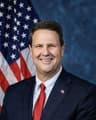 Jeff Crank
Republican · Colorado
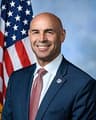 Jake Ellzey
Republican · Texas
 Pat Fallon
Republican · Texas
 Scott Franklin
Republican · Florida
 Brad Finstad
Republican · Minnesota
 Russell Fry
Republican · South Carolina
 Paul Gosar
Republican · Arizona
 Glenn Grothman
Republican · Wisconsin
 Lance Gooden
Republican · Texas
 Michael Guest
Republican · Mississippi
 Andy Harris
Republican · Maryland
 Abraham Hamadeh
Republican · Arizona
 Dusty Johnson
Republican · South Dakota
 Ronny Jackson
Republican · Texas
 Anna Paulina Luna
Republican · Florida
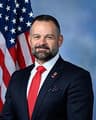 Cory Mills
Republican · Florida
 Riley Moore
Republican · West Virginia
 John McGuire
Republican · Virginia
 Ralph Norman
Republican · South Carolina
 Burgess Owens
Republican · Utah
 Andrew Ogles
Republican · Tennessee
 David Rouzer
Republican · North Carolina
 John Rose
Republican · Tennessee
 Pete Sessions
Republican · Texas
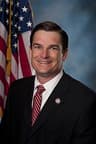 Austin Scott
Republican · Georgia
 W. Steube
Republican · Florida
 Thomas Tiffany
Republican · Wisconsin
 Jefferson Van Drew
Republican · New Jersey
 Beth Van Duyne
Republican · Texas
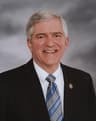 Daniel Webster
Republican · Florida
 Randy Weber
Republican · Texas
 Tony Wied
Republican · Wisconsin
 Ryan Zinke
Republican · Montana