Bill · H.R. 7318· House(119-HR-7318)
Opportunities in Organic Act
- Introduced
- 2/2/2026
- Last activity
- 3/20/2026 — Referred to the Subcommittee on Nutrition and Foreign Agriculture.
- Sponsored by
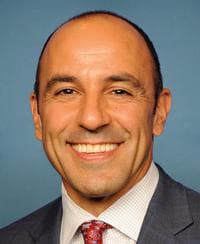
- Jimmy Panetta
- Cosponsors
- - 11 - 0
- Introduced
- In Committee
What this bill would do
The Opportunities in Organic Act aims to amend the Farm Security and Rural Investment Act of 2002. It seeks to expand the national organic certification cost-share program into a much broader "Opportunities in Organic" program. This new program provides support for transitioning to organic farming and offers technical assistance for organic management. The bill establishes funding for eligible nonprofit organizations to build capacity and support producers. It also includes provisions for organic supply chain development and technical assistance through various agencies and institutions.
Yes· 3 of 13
Would farmers be better off under this?+8
The bill provides extensive support for certification costs, transition assistance, and supply chain development for farmers.
Does this better protect air, water and wildlife?+7
The bill promotes organic management practices that improve soil health, nutrient management, and ecosystem enhancement.
Would business owners be better off under this?+6
The bill provides technical assistance, financial support, and infrastructure development for agricultural business owners.
The opposite
Does this make college cost less?-1
While not a direct cut, the bill directs resources toward universities and educational institutions for technical assistance rather than student aid.
Who it would affect, and how
Potential Positive Impacts for People
-
Reduced Certification Costs: The Secretary shall pay costs incurred by producers or handlers to obtain certification, with a maximum of $1,500, though this can be exceeded to ensure affordability for those in high-cost regions or socially disadvantaged groups (Section 2, subsection c).
-
Support for Transitioning Farmers: Funding is provided to help producers with the steps required to become a certified organic farm, including help with organic system plans, soil testing, and overcoming barriers to land access (Section 2, subsection d, paragraph 1, subparagraphs B and C).
-
Financial Relief During Transition: The bill allows for funding to compensate producers for foregone income that occurs during the transition to organic due to limited market options or changes in yield (Section 2, subsection d, paragraph 1, subparagraph C, clause iii, subclause XIII).
-
Assistance for Vulnerable Regions and Groups: The program targets support toward socially disadvantaged farmers and ranchers, as well as under-resourced or vulnerable agricultural regions, such as those near schools or sensitive ecosystems (Section 2, subsection a, paragraph 2; Section 2, subsection d, paragraph 1, subparagraph B, clause ii).
-
Infrastructure and Supply Chain Growth: Funding can be used to establish or expand cooperatives, food hubs, and organic processing or storage facilities to strengthen the organic supply chain (Section s 2, subsection d, paragraph 1, subparagraph B, clause ix).
Potential Negative Impacts for People
-
Strict Requirements for Funding: To receive certain types of transition and resilience funding, an organic operation, small farm, or ranch is required to develop a specific organic system plan (Section 2, subsection d, paragraph 1, subparagraph C, clause iv).
-
Limited Duration of Funding: Funding provided to certain recipient organizations for transition and resilience is limited to a term of 4 years, and the Secretary is prohibited from renewing this funding (Section 2, subsection d, paragraph 1, subparagraph C, clause ii).
Groups and Interests Ranking
Every group the model scored this bill for, from -10 to +10. Hover a score for the reason it gave.
- Demographic And Interest Groups
- Good For Farmers+8Good For Business Owners+6Good For African Americans+5Good For Hispanic Americans+5Good For Rural Residents+5Good For Middle Class Households+3Good For Low Income Households+2
- Environment Energy And Infrastructure
- Improves Environmental Protections+7Improves Rural Development+6
- Economy And Finance
- Improves Small Business Support+6Increases Job Creation+4
- Social Issues And Justice
- Improves Racial Equity+5Improves Poverty Reduction+3
- Education And Technology
- Improves College Affordability-1
- 3/26/2026
- 1 Cosponsor added.
- 3/20/2026
- Referred to the Subcommittee on Conservation, Research, and Biotechnology.
- Referred to the Subcommittee on Nutrition and Foreign Agriculture.
- 3/9/2026
- 1 Cosponsor added.
- 2/20/2026
- 1 Cosponsor added.
- 2/10/2026
- 1 Cosponsor added.
- 2/2/2026
- Referred to the House Committee on Agriculture.
- 7 Cosponsors added.
- Introduced in House
One bill Congress.gov lists as related to this one — companions in the other chamber, earlier versions, and bills this one absorbed or was folded into.
 Alma Adams
Democrat · North Carolina
 Valerie Foushee
Democrat · North Carolina
 Jahana Hayes
Democrat · Connecticut
 Josh Harder
Democrat · California
 Zoe Lofgren
Democrat · California
 Ted Lieu
Democrat · California
 Eleanor Norton
Democrat · District of Columbia
 Chellie Pingree
Democrat · Maine
 Kim Schrier
Democrat · Washington
 Paul Tonko
Democrat · New York
 Jill Tokuda
Democrat · Hawaii