Bill · H.R. 7060· House(119-HR-7060)
No Political Enemies Act
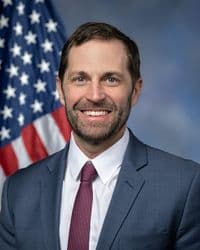
- Introduced
- 1/14/2026
- Last activity
- 1/14/2026 — Referred to the Committee on the Judiciary, and in addition to the Committees on Oversight and Government Reform, and Ways and Means, for a period to be subsequently determined by the Speaker, in each case for consideration of such provisions as fall within the jurisdiction of the committee concerned.
- Sponsored by
- Jason Crow
- Cosponsors
- - 11 - 0
- Introduced
- In Committee
What this bill would do
The "No Political Enemies Act" aims to prevent the Federal Government from targeting individuals or organizations based on their political speech or participation. It prohibits covered Federal officials from initiating enforcement actions or investigations that are substantially motivated by protected speech. The bill establishes an affirmative defense for those facing such government claims, shifting the burden of proof to the government. Additionally, it allows citizens to bring civil actions for injunctions or damages against officials who engage in political targeting. To increase oversight, the Act requires the Attorney General to submit quarterly reports to Congress regarding significant matters.
Yes· 3 of 10
Does this protect the individual right to speak freely?+8
The bill prohibits the government from using its power to suppress or punish protected speech or participation.
Does this make what the government does easier for the public to see?+6
The bill requires the Attorney General to submit quarterly reports to Congress regarding significant enforcement matters.
Does this change how police departments operate?+5
The bill increases accountability for federal officials by providing legal recourse against politically motivated enforcement.
The opposite
Does this reduce what the federal government spends?-2
The bill may increase government spending due to the potential for paying attorney fees and damages in civil actions.
Who it would affect, and how
Potential Positive Impacts for People
-
Protection of Constitutional Rights: The bill prohibits covered Federal officials from using their investigative or enforcement authority to suppress or punish protected speech, such as criticism or dissent (Section 4).
-
Legal Recourse Against Targeting: Individuals or entities can bring civil actions to seek injunctions to stop government actions that cause actual or imminent harm (Section 6).
-
Ability to Seek Damages: A covered person may sue for damages if a Federal official knowingly directs an action motivated by protected speech that violates their Constitutional rights (Section 7).
-
Affirmative Defense in Legal Proceedings: If a person is facing a government enforcement claim, they can use the fact that the claim was motivated by their protected speech as a defense (Section 5).
-
Shifting the Burden of Proof: In cases where a person presents evidence of political motivation, the government bears the burden of proving by clear and convincing evidence that the action was based on legitimate, unrelated grounds (Section 5).
-
Increased Accountability through Oversight: The requirement for the Attorney General to submit quarterly reports to Congress provides a mechanism to track significant investigations and enforcement actions (Section s 10).
Potential Negative Impacts for People
-
Limited Immunity for Officials: Federal officials may lose their legal immunity and can be sued personally for damages if they are found to have acted with political motivation rather than in good faith (Section 7).
-
Restrictions on Federal Funding: The bill prohibits the obligation or expenditure of Federal funds for government actions that are substantially motivated by protected speech (Section 9).
-
Potential for High Legal Costs: The bill allows courts to order the United States to pay reasonable attorneys' fees and costs to parties who prevail in these types of proceedings (Section 8).
Groups and Interests Ranking
Every group the model scored this bill for, from -10 to +10. Hover a score for the reason it gave.
- Governance And Ideology
- Improves Freedom Of Speech+8Improves Government Transparency+6Improves Privacy Rights+3
- Demographic And Interest Groups
- Good For Union Workers+3Good For High Income Households+2Good For Low Income Households+2Good For Middle Class Households+2
- Social Issues And Justice
- Improves Policing Reform+5Improves Voting Rights+2
- Economy And Finance
- Improves Consumer Protection+3Reduces Government Spending-2
- 9/4/2026
- 1 Cosponsor added.
- 1/14/2026
- Referred to the Committee on the Judiciary, and in addition to the Committees on Oversight and Government Reform, and Ways and Means, for a period to be subsequently determined by the Speaker, in each case for consideration of such provisions as fall within the jurisdiction of the committee concerned.
- 10 Cosponsors added.
- Introduced in House
One bill Congress.gov lists as related to this one — companions in the other chamber, earlier versions, and bills this one absorbed or was folded into.
 Angie Craig
Democrat · Minnesota
 Greg Casar
Democrat · Texas
 Maxwell Frost
Democrat · Florida
 Daniel Goldman
Democrat · New York
 Chrissy Houlahan
Democrat · Pennsylvania
 Dave Min
Democrat · California
 Eleanor Norton
Democrat · District of Columbia
 Alexandria Ocasio-Cortez
Democrat · New York
 Mark Pocan
Democrat · Wisconsin
 Lateefah Simon
Democrat · California
 Shri Thanedar
Democrat · Michigan