Bill · H.R. 6987· House(119-HR-6987)
Public Charge Clarification Act of 2026
- Introduced
- 1/8/2026
- Last activity
- 1/8/2026 — Referred to the House Committee on the Judiciary.
- Sponsored by
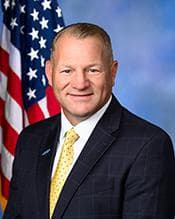
- Troy Nehls
- Cosponsors
- - 12 - 0
- Introduced
- In Committee
What this bill would do
The Public Charge Clarification Act of 2026 aims to amend the Immigration and Nationality Act regarding public charge definitions. It provides a specific definition for what constitutes a "public charge" based on receiving public benefits for more than 12 months within a 36-month period. The bill establishes requirements for affidavits of support, including proof that sponsors can maintain a household at 125 percent of the Federal poverty line. It also introduces a requirement for public charge bonds of at least $10,000 in certain cases. The Act seeks to ensure immigrant self-sufficiency and protect American taxpayers. These changes are intended to take effect 180 days after the bill is enacted.
Yes
Does this reduce what the federal government spends?+3
The bill aims to promote immigrant self-sufficiency and reduce reliance on public benefits.
Would high-income households be better off under this?+2
The bill requires sponsors to prove they can support households at 125 percent of the federal poverty line.
Does this make what the government does easier for the public to see?+2
The bill requires the Secretary of Homeland Security to publish a comprehensive list of benefits that impact public charge status.
The opposite· 3 of 6
Would immigrants be better off under this?-8
The bill imposes stricter financial thresholds, potential bonds, and a broader definition of public charge on immigrants.
Would households on low incomes be better off under this?-7
The bill's definition of public charge includes many benefits used by low-income households, which could impact their legal status.
Does this make it easier for immigrants already here to become citizens?-6
The bill creates stricter requirements and financial burdens like bonds that may impede the path to permanent status.
Who it would affect, and how
Potential Positive Impacts for People
-
Protection of Taxpayers: The bill aims to protect American taxpayers by promoting immigrant self-sufficiency (Section 2).
-
Clarity on Public Benefits: The Secretary of Homeland Security is required to publish a comprehensive list of all public benefits that may impact public charge status, which provides a clear framework (Section 3, Subparagraph D).
-
Specific Requirements for Sponsors: By requiring affidavits of support to include documentary evidence of a sponsor's ability to support a household at 125 percent of the Federal poverty line, the bill establishes clear financial standards for sponsors (Section 3, Subparagraph H).
Potential Negative Impacts for People
-
Financial Burden of Bonds: Certain individuals determined to be likely to become a public charge may be required to post a public charge bond of at least $10,000, which is forfeited if they become a public charge within 10 years (Section 3, Subparagraph I).
-
Strict Definition of Public Charge: An alien can be considered a public charge if they receive public benefits for more than 12 months in the aggregate within any 36-month period, which includes various forms of assistance like SNAP, Medicaid, or housing assistance (Section 3, Subparagraph B and C).
-
Limitations on Affidavits of Support: An affidavit of support cannot be used as a standalone factor to overcome a finding that an alien is likely to become a public charge (Section 3, Subparagraph H).
Groups and Interests Ranking
Every group the model scored this bill for, from -10 to +10. Hover a score for the reason it gave.
- Demographic And Interest Groups
- Good For High Income Households+2Good For Immigrants-8Good For Low Income Households-7Good For Hispanic Americans-5
- Social Issues And Justice
- Improves Pathway To Citizenship-6Improves Poverty Reduction-2
- Economy And Finance
- Reduces Government Spending+3
- Healthcare
- Increases Affordable Care Act Support-3
- Governance And Ideology
- Improves Government Transparency+2
- 7/20/2026
- 1 Cosponsor added.
- 2/12/2026
- 1 Cosponsor added.
- 1/9/2026
- 1 Cosponsor added.
- 1/8/2026
- Referred to the House Committee on the Judiciary.
- 9 Cosponsors added.
- Introduced in House
 Brian Babin
Republican · Texas
 Sheri Biggs
Republican · South Carolina
 Russell Fry
Republican · South Carolina
 Paul Gosar
Republican · Arizona
 Glenn Grothman
Republican · Wisconsin
 Brandon Gill
Republican · Texas
 Wesley Hunt
Republican · Texas
 Mark Harris
Republican · North Carolina
 Ronny Jackson
Republican · Texas
 Barry Moore
Republican · Alabama
 Chip Roy
Republican · Texas
 Randy Weber
Republican · Texas