Bill · H.R. 6976· House(119-HR-6976)
Duty Status Reform Act
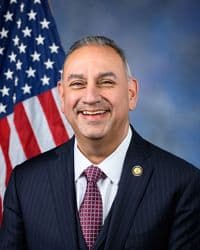
- Introduced
- 1/8/2026
- Last activity
- 1/9/2026 — Referred to the Subcommittee on Coast Guard and Maritime Transportation.
- Sponsored by
- Gilbert Cisneros
- Cosponsors
- - 21 - 23
- Introduced
- In Committee
What this bill would do
The Duty Status Reform Act seeks to amend existing laws regarding the duty of reserve component members of the Armed Forces. The bill focuses on consolidating authorities for ordering members to perform duty and aligning various benefits. It establishes different categories of active duty and reserve component duty, including remote assignments. Additionally, the Act modifies regulations for the Coast Guard and the National Guard. This legislation consists of numerous technical amendments to various federal laws, including Title 10, Title 32, and Title 37 of the United States Code. It also establishes transition provisions for duty consolidation, healthcare access, and ensures benefits accrued before the effective date are not changed.
Yes· 3 of 10
Would veterans be better off under this, taking everything together?+6
The bill expands various service-related benefits, death benefits, and service credits to include more National Guard duty scenarios.
Does this increase the pay, pensions or support veterans receive?+5
The bill expands the definition of veteran and aligns benefits for National Guard members performing specific duties through amendments to Title 38.
Would students be better off under this?+4
The bill updates the application of educational assistance and protections for military dependents.
The opposite
No question was scored the opposite.
Who it would affect, and how
Potential Positive Impacts for People
-
Protection of Career Progression: The President may suspend laws relating to promotion, retirement, or separation for members essential to national security during active duty (Sec. 3, Sec. 12311).
-
Extension of Service for Officers: If a suspension of separation or retirement laws occurs, the Secretary can extend an officer's end date by up to 90 days to ensure continuity (Sec. 3, Sec. 12311).
-
Service Credit for Retired Reserves: Members of the Retired Reserve who are ordered to active duty may receive service credit (Sec. 3, Sec. 12312).
-
Financial Protection for Early Release: Members serving under a written active duty agreement who are released early (without consent) are entitled to a specific amount of pay and allowances based on their unexpired service (Sec. 3, Sec. 12314).
-
Continuity of Benefits for Missing Members: Members may be ordered or retained on active duty to maintain continuity of service, pay, and benefits if they are in a missing status due to hostile action (Sec. 3, Sec. 12341; Sec. 12352).
-
Support for Sexual Assault Victims: Victims of sexual assault may request to be ordered to or retained on active or full-time duty to assist in the line of duty determination process (Sec. 3, Sec. 12352; Sec. 552).
-
Benefits for Remote Assignments: Members assigned to remote work or instruction can be awarded retirement points or compensation (Sec. 3, Sec. 12344; Sec. 554).
-
Youth Opportunity Programs: The National Guard Youth Challenge Program provides civilian youth with life skills, employment potential, and training (Sec. 3, Sec. 515).
-
Improved Benefit Alignment for National Guard Members: The bill expands the definition of service to include full-time National Guard duty across many different laws, ensuring National Guard members receive the same benefits as active-duty members (Section 9; Section 8).
-
Enhanced Education Support: By updating the language in the Higher Education Act of 1965 and the Defense Dependents' Education Act of 1978, the bill ensures students and families have clearer access to educational benefits related to full-time National Guard duty (Section 11, subsection (k); Section 11, subsection (l)).
-
Protection of Servicemember Rights: Updates to the Servicemembers Civil Relief Act ensure protections regarding leases and other civil matters are extended to include full-time National Guard duty and reserve component duty (Section 11, subsection (s); Section 8, subsection (g)).
-
Clarification of Survivor Benefits: The bill aligns survivor benefits to ensure service members performing reserve component duty or full-time National Guard duty are covered under various life and death benefit provisions (Section 8, subsection (a)).
-
Early Access to TRICARE: Members issued orders for active duty or full-time National Guard duty can meet eligibility requirements for TRICARE starting from the date of the order, up to 180 days before the duty begins (Section 14(a)).
Potential Negative Impacts for People
-
Loss of Control Over Retirement/Separation: The President has the authority to suspend laws related to promotion, retirement, or separation for members deemed essential to national security (Sec. 3, Sec. 12311).
-
Involuntary Active Duty for Standby Reserves: Members in the Standby Reserve may be ordered to active duty without their consent under specific circumstances, such as a time of war or national emergency (Sec. s, Sec. 12312).
-
Restrictions on Post-Service Service: Members of the Retired Reserve are ineligible for promotion or consideration for promotion while serving (Sec. 3, Sec. 12312).
-
Limitations on Release from Duty: During times of war or national emergency, a member's release from active duty may require the approval of a board of officers (Sec. 3, Sec. 12313).
-
Potential for Extended Service During Emergencies: Under active duty agreements, a member may be kept on duty without consent if an agreement expires during a war or national emergency (Sec. 3, Sec. 12314).
-
Loss of Pay/Allowances: Pay and allowances may be forfeited due to a court-martial or non-judicial punishment (Sec. 3, Sec. 12318; Sec. 516).
-
Restrictions on Remote Assignments: Members performing remote assignments are not entitled to the same pay, benefits, or legal protections as those on regular active duty (Sec. 3, Sec. 12354; Sec. 554).
Groups and Interests Ranking
Every group the model scored this bill for, from -10 to +10. Hover a score for the reason it gave.
- Demographic And Interest Groups
- Good For Veterans+6Good For Students+4Good For People With Disabilities+3Good For Retirees+3
- National Security And Foreign Policy
- Improves Veterans Benefits+5
- Healthcare
- Improves Healthcare Access+3Increases Medicare Funding+1
- Education And Technology
- Improves College Affordability+3
- Economy And Finance
- Improves Small Business Support+2
- Governance And Ideology
- Increase States Rights+2
- 8/20/2026
- 3 Cosponsors added.
- 6/11/2026
- 1 Cosponsor added.
- 6/9/2026
- 2 Cosponsors added.
- 5/21/2026
- 5 Cosponsors added.
- 5/12/2026
- 6 Cosponsors added.
- 4/30/2026
- 2 Cosponsors added.
- 4/15/2026
- 2 Cosponsors added.
- 4/9/2026
- 3 Cosponsors added.
- 3/25/2026
- 2 Cosponsors added.
- 3/18/2026
- 2 Cosponsors added.
- 3/4/2026
- 4 Cosponsors added.
- 2/12/2026
- 1 Cosponsor added.
- 2/4/2026
- 2 Cosponsors added.
- 2/2/2026
- 2 Cosponsors added.
- 1/22/2026
- 2 Cosponsors added.
- 1/20/2026
- 2 Cosponsors added.
- 1/9/2026
- Referred to the Subcommittee on Emergency Management and Technology.
- Referred to the Subcommittee on Transportation and Maritime Security.
- Referred to the Subcommittee on Cybersecurity and Infrastructure Protection.
- Referred to the Subcommittee on Coast Guard and Maritime Transportation.
- 1/8/2026
- Referred to the Committee on Armed Services, and in addition to the Committees on Transportation and Infrastructure, Oversight and Government Reform, Agriculture, Small Business, Financial Services, the Judiciary, Education and Workforce, Veterans' Affairs, Ways and Means, Homeland Security, and House Administration, for a period to be subsequently determined by the Speaker, in each case for consideration of such provisions as fall within the jurisdiction of the committee concerned.
- 3 Cosponsors added.
- Introduced in House
One bill Congress.gov lists as related to this one — companions in the other chamber, earlier versions, and bills this one absorbed or was folded into.
 Gus Bilirakis
Republican · Florida
 Julia Brownley
Democrat · California
 Don Bacon
Republican · Nebraska
 Jack Bergman
Republican · Michigan
 Nikki Budzinski
Democrat · Illinois
 Wesley Bell
Democrat · Missouri
 Jason Crow
Democrat · Colorado
 Troy Carter
Democrat · Louisiana
 Rosa DeLauro
Democrat · Connecticut
 Donald Davis
Democrat · North Carolina
 Gabe Evans
Republican · Colorado
 Brad Finstad
Republican · Minnesota
 Sam Graves
Republican · Missouri
 Michael Guest
Republican · Mississippi
 Maggie Goodlander
Democrat · New Hampshire
 Jahana Hayes
Democrat · Connecticut
 Pat Harrigan
Republican · North Carolina
 Dusty Johnson
Republican · South Dakota
 Ro Khanna
Democrat · California
 Thomas Kean
Republican · New Jersey
 Jennifer Kiggans
Republican · Virginia
 Zoe Lofgren
Democrat · California
 Stephen Lynch
Democrat · Massachusetts
 Ted Lieu
Democrat · California
 Michael Lawler
Republican · New York
 Tracey Mann
Republican · Kansas
 Gwen Moore
Democrat · Wisconsin
 Brian Mast
Republican · Florida
 John McGuire
Republican · Virginia
 Joe Neguse
Democrat · Colorado
 Burgess Owens
Republican · Utah
 August Pfluger
Republican · Texas
 Chris Pappas
Democrat · New Hampshire
 Harold Rogers
Republican · Kentucky
 John Rose
Republican · Tennessee
 Marilyn Strickland
Democrat · Washington
 Austin Scott
Republican · Georgia
 Pete Stauber
Republican · Minnesota
 Eric Sorensen
Democrat · Illinois
 Jill Tokuda
Democrat · Hawaii
 Derrick Van Orden
Republican · Wisconsin
 Gabe Vasquez
Democrat · New Mexico
 Eugene Vindman
Democrat · Virginia
 Matt Van Epps
Republican · Tennessee