Bill · H.R. 669· House(119-HR-669)
Restricting First Use of Nuclear Weapons Act of 2025
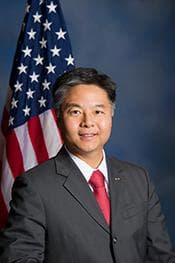
- Introduced
- 1/23/2025
- Last activity
- 1/23/2025 — Referred to the Committee on Foreign Affairs, and in addition to the Committee on Armed Services, for a period to be subsequently determined by the Speaker, in each case for consideration of such provisions as fall within the jurisdiction of the committee concerned.
- Sponsored by
- Ted Lieu
- Cosponsors
- - 35 - 0
- Introduced
- In Committee
What this bill would do
This bill, known as the "Restricting First Use of Nuclear Weapons Act of 2025," aims to limit when the United States can initiate a nuclear strike. It establishes a policy that no first-use nuclear strike should occur without a formal declaration of war by Congress. The legislation prohibits the use of Federal funds for such strikes unless Congress has expressly authorized them through a declared war. To qualify as a first-use strike, the attack would be one conducted without the Secretary of Defense and the Chairman of the Joint Chiefs of Staff first confirming a nuclear attack against the United States, its territories, or its allies.
Yes· 3 of 5
Does this better protect air, water and wildlife?+4
The bill seeks to prevent the long-term environmental consequences associated with nuclear warfare.
Does this give the federal government more power?+3
The bill strengthens the constitutional power of Congress over the President's authority to wage war.
Does this make what the government does easier for the public to see?+3
The bill implements a check that requires a formal declaration of war by Congress before a nuclear strike occurs.
The opposite
No question was scored the opposite.
Who it would affect, and how
Potential Positive Impacts for People
-
Restoring Constitutional Checks and Balances: The bill seeks to ensure that the decision to engage in massive warfare is made by the people's representatives rather than a single person, as found in Section 2(a)(2).
-
Protection Against Existential Risk: By restricting first-use strikes, the bill addresses the concern that nuclear weapons can instantly kill millions and create long-term health and environmental consequences (Section 2(a)(4)).
-
Prevention of Unconstitutional War: The bill aims to prevent a first-use strike conducted without a declaration of war, which it identifies as a violation of the Constitution (Section 2(a)(6)).
Potential Negative Impacts for People
- No specific negative impacts or burdens are explicitly stated within the provided text.
Groups and Interests Ranking
Every group the model scored this bill for, from -10 to +10. Hover a score for the reason it gave.
- Governance And Ideology
- Improves Government Transparency+3Increases Federal Power+3
- National Security And Foreign Policy
- Improves International Alliances+3Reduces Military Spending+2
- Environment Energy And Infrastructure
- Improves Environmental Protections+4
- 5/29/2026
- 1 Cosponsor added.
- 4/23/2026
- 1 Cosponsor added.
- 4/20/2026
- 1 Cosponsor added.
- 4/13/2026
- 5 Cosponsors added.
- 12/2/2025
- 1 Cosponsor added.
- 11/12/2025
- 1 Cosponsor added.
- 11/4/2025
- 2 Cosponsors added.
- 10/24/2025
- 1 Cosponsor added.
- 10/8/2025
- 1 Cosponsor added.
- 8/5/2025
- 1 Cosponsor added.
- 7/21/2025
- 1 Cosponsor added.
- 6/24/2025
- 1 Cosponsor added.
- 5/7/2025
- 1 Cosponsor added.
- 2/11/2025
- 1 Cosponsor added.
- 1/23/2025
- Referred to the Committee on Foreign Affairs, and in addition to the Committee on Armed Services, for a period to be subsequently determined by the Speaker, in each case for consideration of such provisions as fall within the jurisdiction of the committee concerned.
- 16 Cosponsors added.
- Introduced in House
One bill Congress.gov lists as related to this one — companions in the other chamber, earlier versions, and bills this one absorbed or was folded into.
 Jake Auchincloss
Democrat · Massachusetts
 Gabe Amo
Democrat · Rhode Island
 Yassamin Ansari
Democrat · Arizona
 Donald Beyer
Democrat · Virginia
 Steve Cohen
Democrat · Tennessee
 Joe Courtney
Democrat · Connecticut
 Judy Chu
Democrat · California
 Salud Carbajal
Democrat · California
 Gilbert Cisneros
Democrat · California
 Mark DeSaulnier
Democrat · California
 Maxine Dexter
Democrat · Oregon
 Raúl Grijalva
Democrat · Arizona
 John Garamendi
Democrat · California
 Sylvia Garcia
Democrat · Texas
 Val Hoyle
Democrat · Oregon
 Pramila Jayapal
Democrat · Washington
 Sara Jacobs
Democrat · California
 John Larson
Democrat · Connecticut
 Mike Levin
Democrat · California
 James McGovern
Democrat · Massachusetts
 Grace Meng
Democrat · New York
 Sarah McBride
Democrat · Delaware
 Jerrold Nadler
Democrat · New York
 Eleanor Norton
Democrat · District of Columbia
 Ilhan Omar
Democrat · Minnesota
 Frank Pallone
Democrat · New Jersey
 Chellie Pingree
Democrat · Maine
 Mark Pocan
Democrat · Wisconsin
 Brad Sherman
Democrat · California
 Janice Schakowsky
Democrat · Illinois
 Lateefah Simon
Democrat · California
 Mike Thompson
Democrat · California
 Paul Tonko
Democrat · New York
 Rashida Tlaib
Democrat · Michigan
 Nydia Velázquez
Democrat · New York