Bill · H.R. 6683· House(119-HR-6683)
Safer Schools Act of 2025
- Introduced
- 12/11/2025
- Last activity
- 12/11/2025 — Referred to the Committee on Education and Workforce, and in addition to the Committee on the Judiciary, for a period to be subsequently determined by the Speaker, in each case for consideration of such provisions as fall within the jurisdiction of the committee concerned.
- Sponsored by
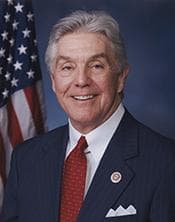
- Roger Williams
- Cosponsors
- - 13 - 11
- Introduced
- In Committee
What this bill would do
The bill establishes a five-year pilot program managed by the Attorney General to provide grants to public schools. It creates two specific types of grants: one for conducting independent facility security risk assessments and another for making hard security improvements. Public schools applying for the assessment grants must certify that they cannot afford the cost on their own, as outlined in Section 2(b). Schools applying for improvement grants must use the funds for updates identified by their risk assessments and comply with a 50 percent matching funds requirement, detailed in Section 2(c). The legislation gives explicit priority in awarding these grants to schools that have experienced an event involving deadly harm or attempted deadly harm against multiple individuals, according to Section 2(b)(2)(B) and Section 2(c)(2)(B). Finally, the bill requires recipients and the Attorney General to submit reports to Congress tracking the progress and effectiveness of the security updates, as stated in Section 2(e).
Yes· 3 of 8
Does this put more money into public schools?+7
The bill establishes a significant grant program specifically for public school security improvements.
Would students be better off under this?+6
The bill directly aims to increase the physical safety and security of students in schools.
Would children be better off under this?+5
The bill enhances the physical security of public school environments where children are present.
The opposite
No question was scored the opposite.
Who it would affect, and how
Potential Positive Impacts for People
-
Public schools that cannot afford to evaluate their own safety can receive federal assistance to conduct independent facility security risk assessments under Section 2(b)(1). This helps schools identify vulnerabilities without straining their local budgets.
-
Schools can receive federal funding to make hard security improvements under Section 2(c)(1), which includes updating infrastructure, doors, video monitoring, and visitor management technologies as defined in Section 2(g)(2).
-
Section 2(c)(5)(B) requires that if a panic alarm is not installed or operable, grant funds must be used to install at least one silent panic alarm directly linked to local law enforcement. This ensures faster emergency communication during active shooter or lockdown situations without alerting intruders.
-
Schools that have suffered through an event involving deadly harm or attempted deadly harm to multiple individuals receive priority for both assessment and improvement grants under Section 2(b)(2)(B) and Section 2(c)(2)(B), ensuring the hardest-hit communities get help first.
-
Section 2(c)(4)(B) allows the Attorney General to waive the 50 percent matching funds requirement for hard security improvements if a school has a financial need, preventing poor districts from being left behind.
Potential Negative Impacts for People
-
Section 2(c)(4)(A) states that the Federal share of a hard security improvement grant cannot exceed 50 percent of the total cost. This matching funds requirement could place a financial burden on cash-strapped schools and local taxpayers who still have to find matching funds if a waiver is not granted.
-
Section 2(b)(3)(A) and Section 2(c)(3)(A) make public schools ineligible to receive the same type of grant if they received one in the previous five fiscal years. This restriction could hurt schools that need ongoing financial assistance to maintain or expand their security measures over time.
-
Grant recipients must comply with extensive reporting requirements under Section 2(e)(1), which includes submitting surveys assessing how safe students and staff feel, tracking vulnerabilities, and reporting counts of violent events. This creates administrative burdens for school staff who are already busy educating children.
Groups and Interests Ranking
Every group the model scored this bill for, from -10 to +10. Hover a score for the reason it gave.
- Demographic And Interest Groups
- Good For Students+6Good For Children+5Good For Low Income Households+3Good For Native Americans+3Good For Young Adults+3
- Education And Technology
- Increases Public School Funding+7
- Governance And Ideology
- Improves Government Transparency+3Increases Federal Power+3
- 10/6/2026
- 1 Cosponsor added.
- 10/1/2026
- 3 Cosponsors added.
- 9/21/2026
- 1 Cosponsor added.
- 9/16/2026
- 3 Cosponsors added.
- 9/15/2026
- 1 Cosponsor added.
- 9/14/2026
- 2 Cosponsors added.
- 9/2/2026
- 1 Cosponsor added.
- 8/31/2026
- 2 Cosponsors added.
- 8/20/2026
- 1 Cosponsor added.
- 8/13/2026
- 1 Cosponsor added.
- 7/20/2026
- 1 Cosponsor added.
- 7/15/2026
- 1 Cosponsor added.
- 7/13/2026
- 2 Cosponsors added.
- 6/18/2026
- 1 Cosponsor added.
- 2/9/2026
- 1 Cosponsor added.
- 1/9/2026
- 1 Cosponsor added.
- 12/11/2025
- Referred to the Committee on Education and Workforce, and in addition to the Committee on the Judiciary, for a period to be subsequently determined by the Speaker, in each case for consideration of such provisions as fall within the jurisdiction of the committee concerned.
- 1 Cosponsor added.
- Introduced in House
 Don Bacon
Republican · Nebraska
 Robert Bresnahan
Republican · Pennsylvania
 Jim Costa
Democrat · California
 Donald Davis
Democrat · North Carolina
 Chuck Edwards
Republican · North Carolina
 Gabe Evans
Republican · Colorado
 Brian Fitzpatrick
Republican · Pennsylvania
 Josh Gottheimer
Democrat · New Jersey
 Daniel Goldman
Democrat · New York
 Jahana Hayes
Democrat · Connecticut
 Young Kim
Republican · California
 Thomas Kean
Republican · New Jersey
 Jennifer Kiggans
Republican · Virginia
 Stephen Lynch
Democrat · Massachusetts
 Nick LaLota
Republican · New York
 Michael Lawler
Republican · New York
 Greg Landsman
Democrat · Ohio
 Nicole Malliotakis
Republican · New York
 Jared Moskowitz
Democrat · Florida
 Ryan Mackenzie
Republican · Pennsylvania
 Jimmy Panetta
Democrat · California
 Thomas Suozzi
Democrat · New York
 David Valadao
Republican · California
 Eugene Vindman
Democrat · Virginia