Bill · H.R. 6637· House(119-HR-6637)
To advance bipartisan priorities.
- Introduced
- 12/11/2025
- Last activity
- 1/15/2026 — Referred to the Subcommittee on Oversight and Investigations.
- Sponsored by
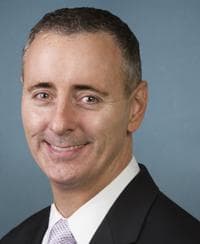
- Brian Fitzpatrick
- Cosponsors
- None
- Introduced
- In Committee
What this bill would do
This legislation, known as the "MARKET CHOICE Act," establishes several bipartisan priorities ranging from infrastructure and energy to election law. It introduces a tax on domestic and imported greenhouse gas emissions and creates the RISE Trust Fund to redistribute revenues into infrastructure, energy, and environmental projects. The bill includes provisions for cancer research, a National Climate Commission, and a National Bipartisan Fiscal Commission. Additionally, it addresses school safety through the MSD Act and establishes rules regarding financial instrument ownership for House members. The bill also requires states to allow unaffiliated voters to participate in primary elections under certain privacy conditions and prohibits noncitizens from voting in taxpayer-funded elections. Finally, it addresses intelligence sharing with Ukraine, supports veteran-owned small businesses, and modifies certain Department of Veterans Affairs employee disciplinary processes.
Yes· 3 of 22
Does this cut the pollution that drives climate change?+6
The bill imposes a tax on greenhouse gas emissions to incentivize reduction and funds environmental solutions.
Does this better protect air, water and wildlife?+5
The bill funds coastal flooding mitigation, reforestation, and environmental quality incentives.
Does this repair or build roads and bridges?+5
The bill directs significant revenue from the RISE Trust Fund to the Highway Trust Fund.
The opposite
No question was scored the opposite.
Who it would affect, and how
Potential Positive Impacts for People
-
Support for Cancer Research: The bill appropriates funds to the National Cancer Institute, equal to 25 percent of the amount appropriated for fiscal year 2024, to support cancer research (Title II, Sec. 202).
-
Infrastructure and Environmental Investment: The RISE Trust Fund directs money toward various needs, including the Highway Trust Fund, airport and airway needs, and coastal flooding mitigation (Title I, Sec. 10202).
-
Assistance for Energy Workers: The bill provides a program to assist workers in the energy sector, which may include retraining, relocation expenses, or early retirement (Title I, Sec. 10321).
-
Support for Low-Income Households: The Secretary of the Treasury is tasked with providing annual State grants to be distributed to eligible low-income households (Title I, Sec. 10203).
-
Enhanced School Safety: The MSD Act requires local educational agencies to develop emergency response procedures and notification systems for parents regarding various threats (Title VII, Sec. 702).
-
PFAS Community Engagement: The bill establishes a coordinator to improve outreach and communication for defense communities affected by PFAS contamination (Title III, Sec. 301).
-
Expanded Voting Access for Unaffiliated Citizens: Unaffiliated voters are permitted to vote in any primary election for Federal, State, or local office, provided they do not vote in more than one political party's primary (Section (b)(1) and (c)(1)).
-
Protection of Voter Privacy: States are prohibited from sharing an unaffiliated voter's name or contact information with political parties or others for political or commercial purposes, such as soliciting funds (Section (b)(2)(A)).
-
Preservation of Voter Status: An unaffiliated voter's status on official registration lists cannot be changed to a party member simply because they participated in a primary election (Section (b)(2)(B)).
-
Financial Support for State Election Changes: States that comply with the new unaffiliated voter requirements can receive transition assistance grants equal to 2 percent of certain previous requirements payments (Section (d)(1)).
-
Support for Veteran-Owned Small Businesses: The bill includes veteran-owned small business concerns in the definition of disadvantaged business enterprises for infrastructure investment purposes (Section 1101).
-
Whistleblower Protections: The bill amends the United States Code to include protections for whistleblowers from removal, demotion, and suspension (Section 1202(b)(2)).
Potential Negative Impacts for People
-
New Greenhouse Gas Taxes: The bill imposes taxes on fossil fuels, certain industrial processes, and specific manufactured products, which are paid by owners or operators at various points of taxation (Title I, Sec. s 9901, 9902, 9903).
-
Economic Burdens on Industrial Sectors: Certain industrial categories, such as iron and steel production, cement, and petrochemical production, are subject to taxation on their emissions (Title I, Sec. 10101).
-
Border Tax Adjustments: The bill establishes a system of levies on imported goods to ensure competitive equality, which may impact the cost of covered goods (Title I, Sec. 10102).
-
Mandatory School Security Upgrades: The MSD Act involves a rulemaking process that could lead to requirements for the installation or modification of interior and exterior doors in schools (Title VII, Sec. 703).
-
Restrictions on Noncitizen Voting: No person who is not a citizen of the United States is permitted to vote in any taxpayer-funded election for public office, including State or local office or ballot initiatives (Section 802(a), (b), and (c)).
-
Changes to VA Employee Disciplinary Procedures: The bill repeals certain separate removal, demotion, and suspension processes for certain employees of the Department of Veterans Affairs (Section 1202(a)).
Groups and Interests Ranking
Every group the model scored this bill for, from -10 to +10. Hover a score for the reason it gave.
- Environment Energy And Infrastructure
- Reduces Carbon Emissions+6Improves Environmental Protections+5Improves Roads And Bridges+5Increases Renewable Energy Investment+4Improves Rural Development+2
- Demographic And Interest Groups
- Good For Low Income Households+5Good For Veterans+4Good For Business Owners+3Good For Students+3
- Economy And Finance
- Increases Corporate Taxes+5Improves Small Business Support+4Improves Economic Growth+3Improves Union Protections+1
- Social Issues And Justice
- Improves Voting Rights+5Improves Poverty Reduction+4Improves Border Security+2
- Education And Technology
- Improves School Choice+3Increases Public School Funding+3
- Healthcare
- Improves Healthcare Access+3Improves Veterans Healthcare+2
- National Security And Foreign Policy
- Improves Veterans Benefits+3
- Governance And Ideology
- Improves Government Transparency+2
- 1/15/2026
- Referred to the Subcommittee on Oversight and Investigations.
- 12/11/2025
- Referred to the Committee on Ways and Means, and in addition to the Committees on Energy and Commerce, Natural Resources, Education and Workforce, Transportation and Infrastructure, Science, Space, and Technology, Agriculture, Appropriations, Armed Services, the Budget, Rules, Ethics, Financial Services, Foreign Affairs, Homeland Security, House Administration, the Judiciary, Intelligence (Permanent Select), Oversight and Government Reform, Small Business, and Veterans' Affairs, for a period to be subsequently determined by the Speaker, in each case for consideration of such provisions as fall within the jurisdiction of the committee concerned.
- Introduced in House
9 bills Congress.gov lists as related to this one — companions in the other chamber, earlier versions, and bills this one absorbed or was folded into.
- 119-HR-155: Let America Vote Act
- 119-HR-932: Protecting VA Employees Act
- 119-HR-1335: MSD Act
- 119-HR-3001: To advance commonsense priorities.
- 119-HR-3338: MARKET CHOICE Act
- 119-HR-3629: End Banking for Human Traffickers Act of 2025
- 119-HR-3761: To direct the Secretary of Defense to designate a Coordinator for Engagement with PFAS-impacted defense communities.
- 119-HR-5827: To advance bipartisan, common sense solutions.
- 119-HR-6636: To advance sensible priorities.