Bill · H.R. 155· House(119-HR-155)
Let America Vote Act
- Introduced
- 1/3/2025
- Last activity
- 1/3/2025 — Referred to the Committee on House Administration, and in addition to the Committee on the Judiciary, for a period to be subsequently determined by the Speaker, in each case for consideration of such provisions as fall within the jurisdiction of the committee concerned.
- Sponsored by
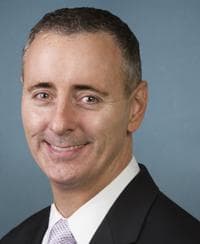
- Brian Fitzpatrick
- Cosponsors
- - 1 - 4
- Introduced
- In Committee
What this bill would do
The "Let America Vote Act" requires States to allow unaffiliated voters to participate in primary elections for Federal office. It mandates that these voters cannot participate in the primaries of more than one political party. The bill includes protections to prevent States from sharing an unaffiliated voter's personal information with political parties or for political commercial purposes. Additionally, it prevents States from treating these voters as party members on official registration lists solely because they voted in a primary. To receive federal election administration funds, States must also apply these rules to State and local elections. The bill provides transition assistance grants to States that comply with these requirements. Finally, the Act establishes a policy that no noncitizen shall be permitted to vote in taxpayer-funded elections.
Yes· 3 of 5
Does this protect people from being watched or searched?+8
The bill enhances privacy by prohibiting states from sharing unaffiliated voters' personal contact information with political parties.
Does this make elections run better?+7
The bill improves the electoral process by establishing clear rules for unaffiliated voter participation and data privacy.
Does this protect the right to vote?+6
The bill expands voting rights by requiring states to allow unaffiliated voters to participate in primary elections.
The opposite
Would immigrants be better off under this?-5
The bill explicitly restricts voting rights to citizens only, impacting the political agency of non-citizen residents.
Who it would affect, and how
Potential Positive Impacts for People
-
Increased access to primary elections for unaffiliated voters: Under Section 2(b)(1), each State must permit an unaffिliated voter registered for a Federal office election to vote in a primary election for that office.
-
Protection of personal privacy: Section 2(b)(2)(A) prevents States from sharing an unaffiliated voter's name and contact information with political parties or persons using the information for political or politically-connected commercial purposes, such as soliciting funds.
-
Maintenance of accurate voter registration status: Section 2(b)(2)(B) ensures that a State cannot treat an unaffiliated voter as a member of a political party on official registration lists just because they participated in a primary election.
-
Financial support for States to implement changes: Section 2(d)(1) provides for a payment to States that certify compliance, equal to 2 percent of the total amount of requirements payments made under the Help America Vote Act of 2002, to help cover the costs of these new procedures.
-
Ensuring only citizens vote in taxpayer-funded elections: Section 3(a) and 3(b) establish the policy and requirement that no person who is not a citizen of the United States is permitted to vote in elections for Federal office.
Potential Negative Impacts for People
- Limitations on primary participation for unaffiliated voters: Section 2(b)(1) stipulates that a State shall not permit an unaffiliated voter to vote in primary elections for the office of more than one political party.
Groups and Interests Ranking
Every group the model scored this bill for, from -10 to +10. Hover a score for the reason it gave.
- Governance And Ideology
- Improves Privacy Rights+8Improves Electoral Process+7
- Social Issues And Justice
- Improves Voting Access+6Improves Voting Rights+6Improves Border Security+1
- Demographic And Interest Groups
- Good For Immigrants-5
- 8/15/2025
- 1 Cosponsor added.
- 5/13/2025
- 1 Cosponsor added.
- 1/3/2025
- Referred to the Committee on House Administration, and in addition to the Committee on the Judiciary, for a period to be subsequently determined by the Speaker, in each case for consideration of such provisions as fall within the jurisdiction of the committee concerned.
- 3 Cosponsors added.
- Introduced in House
4 bills Congress.gov lists as related to this one — companions in the other chamber, earlier versions, and bills this one absorbed or was folded into.
 Vicente Gonzalez
Democrat · Texas
 Jared Golden
Democrat · Maine
 Andrew Garbarino
Republican · New York
 Marie Perez
Democrat · Washington
 Thomas Suozzi
Democrat · New York