
A Republican bill with 10 Republican cosponsors · See all 10 cosponsors
Last activity — Referred to the Committee on the Judiciary, and in addition to the Committee on Oversight and Government Reform, for a period to be subsequently determined by the Speaker, in each case for consideration of such provisions as fall within the jurisdiction of the committee concerned.
In committee
Introduced and handed to a committee in the chamber it started in.
The committee holds it, and most bills are never heard from again. A hearing or a committee vote would be news; silence is the usual outcome, and it kills the bill without anyone voting against it.
Its path through Congress
- Introduced
- In Committee
What this bill would do
This bill, known as the "SHIELD Act of 2025," aims to prevent state or local governments from interfering with federal immigration enforcement. It prohibits federal financial assistance to any state or political subdivision that arrests, detains, or prosecures federal law enforcement officers performing immigration duties. It also covers those who otherwise obstruct or interfere with such officers. The Attorney General and Secretary of Homeland Security will determine if such conduct has occurred. If a jurisdiction is found to be in violation, it becomes ineligible for federal financial assistance for that fiscal year and subsequent years. These funds are then reallocated to jurisdictions that are not ineligible.
Yes
- Scored +7
Does this give the federal government more power?
The bill expands federal authority by using the withholding of federal funds to prevent state and local interference with federal duties.
- Scored +5
Does this tighten control of the border?
The bill protects federal immigration officers from local legal interference to ensure uninterrupted immigration enforcement.
The opposite· 3 of 4
- Scored -4
Would immigrants be better off under this?
The bill strengthens federal immigration enforcement mechanisms that target immigrant populations.
- Scored -3
Would Hispanic Americans be better off under this?
The bill facilitates more aggressive immigration enforcement which may disproportionately affect Hispanic communities.
- Scored -2
Would households on low incomes be better off under this?
The bill may negatively impact low-income households if their local jurisdictions lose federal financial assistance due to the prohibition.
Who it would affect, and how
Potential Positive Impacts for People
-
Protection of Federal Officers: The bill aims to ensure that federal law enforcement officers acting within the scope of their duties are not subject to arrest, detention, or prosecution by state or local jurisdictions (Section 2).
-
Support for Immigration Enforcement: By preventing local interference, the act seeks to uphold the rule of law regarding the Federal Government's exclusive authority over immigration enforcement (Section 2).
-
Fund Reallocation: Any federal financial assistance that a state or local subdivision is ineligible to receive will be reallocated to states or political subdivisions that are not ineligible (Section 3(d)).
Potential Negative Impacts for People
-
Loss of Federal Financial Assistance: States or political subdivisions that arrest, detain, or prosecute federal law enforcement officers—or otherwise obstruct them—will be ineligible to receive federal financial assistance for that fiscal year and every year thereafter (Section 3(a) and 3(c)).
-
Strict Conditions for Restoring Funds: To get withheld federal financial assistance back, the Attorney General must certify that the offending entity has stopped the conduct and provided written assurances that the interference will not happen again (Section 4).
Groups and Interests Ranking
Every group the model scored this bill for, from -10 to +10. Tap or hover a score for the reason it gave.
- Demographic And Interest Groups
- Would immigrants be better off under this? — The bill strengthens federal immigration enforcement mechanisms that target immigrant populations. Would Hispanic Americans be better off under this? — The bill facilitates more aggressive immigration enforcement which may disproportionately affect Hispanic communities. Would households on low incomes be better off under this? — The bill may negatively impact low-income households if their local jurisdictions lose federal financial assistance due to the prohibition.
- Governance And Ideology
- Does this give the federal government more power? — The bill expands federal authority by using the withholding of federal funds to prevent state and local interference with federal duties.
- Social Issues And Justice
- Does this tighten control of the border? — The bill protects federal immigration officers from local legal interference to ensure uninterrupted immigration enforcement.
- Economy And Finance
- Does this reduce what the federal government spends? — The bill reallocates existing federal financial assistance from ineligible jurisdictions to others rather than reducing total spending.
- 4/9/2026
- 1 Cosponsor added.
- 12/16/2025
- 1 Cosponsor added.
- 12/15/2025
- 1 Cosponsor added.
- 12/11/2025
- Referred to the Committee on the Judiciary, and in addition to the Committee on Oversight and Government Reform, for a period to be subsequently determined by the Speaker, in each case for consideration of such provisions as fall within the jurisdiction of the committee concerned.
- 7 Cosponsors added.
- Introduced in House
 Don Bacon
Republican · Nebraska
 Tim Burchett
Republican · Tennessee
 Michael Cloud
Republican · Texas
 Glenn Grothman
Republican · Wisconsin
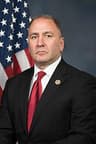 Clay Higgins
Republican · Louisiana
 Anna Paulina Luna
Republican · Florida
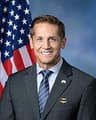 Richard McCormick
Republican · Georgia
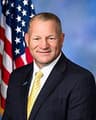 Troy Nehls
Republican · Texas
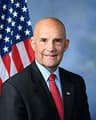 Keith Self
Republican · Texas
 Claudia Tenney
Republican · New York