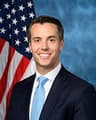
Morgan McGarvey (D-KY)
Justice for Breonna Taylor Act
A Democratic bill with 1 Republican cosponsor · See all 31 cosponsors
Last activity — Referred to the House Committee on the Judiciary.
In committee
Introduced and handed to a committee in the chamber it started in.
The committee holds it, and most bills are never heard from again. A hearing or a committee vote would be news; silence is the usual outcome, and it kills the bill without anyone voting against it.
Its path through Congress
- Introduced
- In Committee
What this bill would do
This bill, titled the "Justice for Breonna Taylor Act," aims to prohibit no-knock warrants. It establishes a federal prohibition that prevents Federal law enforcement officers from executing a warrant until they provide notice of their authority and purpose. Additionally, it creates restrictions for State and local law enforcement agencies that receive Department of Justice funds. These agencies would be prohibited from executing warrants that do not require officers to provide notice before forcibly entering a premises.
Yes· 3 of 6
- Scored +7
Does this change how police departments operate?
The bill mandates that federal and many state/local law enforcement officers provide notice of authority and purpose before entering a premises.
- Scored +6
Would Black Americans be better off under this?
The bill targets a police tactic that has historically resulted in high-profile incidents involving Black citizens.
- Scored +6
Does this narrow racial gaps in how people are treated?
The bill aims to reduce the use of no-knock warrants, which have been disproportionately used against minority communities.
The opposite
No question was scored the opposite.
Who it would affect, and how
Potential Positive Impacts for People
-
Requirement for notice by Federal officers: Under Section 2(a), Federal law enforcement officers must provide notice of their authority and purpose before executing a warrant, which prevents them from entering a premises without prior notice.
-
Requirement for notice by State and local agencies: Under Section 2(b), State or local law enforcement agencies that receive funds from the Department of Justice are prohibited from executing warrants that do not require the officer to provide notice of their authority and purpose before forcibly entering a premises.
Potential Negative Impacts for People
- No negative impacts are explicitly stated in the text provided.
Groups and Interests Ranking
Every group the model scored this bill for, from -10 to +10. Tap or hover a score for the reason it gave.
- Demographic And Interest Groups
- Would Black Americans be better off under this? — The bill targets a police tactic that has historically resulted in high-profile incidents involving Black citizens. Would people in cities be better off under this? — Urban residents are more likely to be subject to high-frequency policing where no-knock warrants are often utilized. Would households on low incomes be better off under this? — Reducing no-knock warrants can provide greater physical security for households in high-policing areas.
- Social Issues And Justice
- Does this change how police departments operate? — The bill mandates that federal and many state/local law enforcement officers provide notice of authority and purpose before entering a premises. Does this narrow racial gaps in how people are treated? — The bill aims to reduce the use of no-knock warrants, which have been disproportionately used against minority communities.
- Governance And Ideology
- Does this protect people from being watched or searched? — The requirement for notice before entry protects the sanctity of a person's home from sudden forcible entry.
- 1/7/2026
- 2 Cosponsors added.
- 12/10/2025
- Referred to the House Committee on the Judiciary.
- 29 Cosponsors added.
- Introduced in House
One bill Congress.gov lists as related to this one — companions in the other chamber, earlier versions, and bills this one absorbed or was folded into.
 Joyce Beatty
Democrat · Ohio
 Shontel Brown
Democrat · Ohio
 Yvette Clarke
Democrat · New York
 Jasmine Crockett
Democrat · Texas
 Dwight Evans
Democrat · Pennsylvania
 Maxwell Frost
Democrat · Florida
 Al Green
Democrat · Texas
 Jesús García
Democrat · Illinois
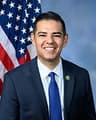 Robert Garcia
Democrat · California
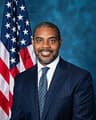 Steven Horsford
Democrat · Nevada
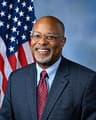 Glenn Ivey
Democrat · Maryland
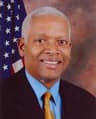 Henry Johnson
Democrat · Georgia
 Sara Jacobs
Democrat · California
 Jonathan Jackson
Democrat · Illinois
 Julie Johnson
Democrat · Texas
 Robin Kelly
Democrat · Illinois
 Sydney Kamlager-Dove
Democrat · California
 Zoe Lofgren
Democrat · California
 Summer Lee
Democrat · Pennsylvania
 Kweisi Mfume
Democrat · Maryland
 Thomas Massie
Republican · Kentucky
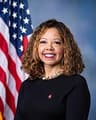 Lucy McBath
Democrat · Georgia
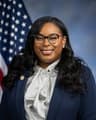 LaMonica McIver
Democrat · New Jersey
 Eleanor Norton
Democrat · District of Columbia
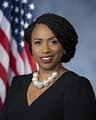 Ayanna Pressley
Democrat · Massachusetts
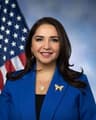 Delia Ramirez
Democrat · Illinois
 Lateefah Simon
Democrat · California
 Rashida Tlaib
Democrat · Michigan
 Shri Thanedar
Democrat · Michigan
 Nikema Williams
Democrat · Georgia
 Bonnie Watson Coleman
Democrat · New Jersey