Bill · H.R. 6533· House(119-HR-6533)
Military in Law Enforcement Accountability Act
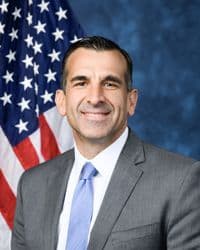
- Introduced
- 12/9/2025
- Last activity
- 12/9/2025 — Referred to the Committee on Armed Services, and in addition to the Committee on Rules, for a period to be subsequently determined by the Speaker, in each case for consideration of such provisions as fall within the jurisdiction of the committee concerned.
- Sponsored by
- Sam Liccardo
- Cosponsors
- - 31 - 0
- Introduced
- In Committee
What this bill would do
The Military in Law Enforcement Accountability Act aims to limit how the Department of Defense and federal law enforcement support civilian law enforcement. It requires the President to provide specific written justifications to Congress before the Secretary of Defense provides such support. The bill mandates that any support lasting longer than 30 days must be approved through a specific joint resolution of Congress. It also prohibits individuals from serving in both the Department of Defense and civilian law enforcement simultaneously, with limited exceptions for reservists. Additionally, the bill modifies requirements for when the Armed Forces and federal personnel assist civil authorities. Finally, it establishes a private right of action for those aggrieved by violations of the Act.
Yes· 3 of 4
Does this make what the government does easier for the public to see?+7
The bill mandates detailed written justifications and budget notifications to Congress regarding military support for civilian law enforcement.
Does this change how police departments operate?+6
The bill increases oversight and legislative control over the use of military and federal personnel in civilian law enforcement.
Does this protect the right to fair treatment by the courts?+5
The bill establishes a private right of action for individuals, States, or local governments aggrieved by violations of the Act.
The opposite
Would veterans be better off under this, taking everything together?-2
The bill imposes recusal requirements on reservists called to active duty regarding their civilian law enforcement roles.
Does this increase the pay, pensions or support veterans receive?-2
The bill requires reservists called to active duty to formally recuse themselves from their civilian law enforcement duties.
Who it would affect, and how
Potential Positive Impacts for People
-
Increased Transparency and Oversight: The Secretary of Defense can only provide support if the President submits a detailed notification to Congress. This includes the budget, implementation timeline, milestones, and the specific source of funds (Section 2, subsection a).
-
Legislative Control Over Long-Term Support: Any support provided for more than 30 days requires a joint resolution of approval from Congress, preventing indefinite support without legislative consent (Section 2, subsection b).
-
Prevention of Conflicts of Interest: The bill prohibits individuals from serving in both the Department of Defense and civilian law enforcement at the same time, which prevents dual roles (Section 3, subsection a).
-
Legal Recourse for Violations: The act allows any person, State, or local government that is aggrieved by a violation of this act to bring a civil action in court to seek relief or damages (Section 5, subsection a).
Potential Negative Impacts for People
-
Increased Bureaucratic Requirements: The President must provide extensive documentation to Congress, including descriptions of objectives, evaluation frameworks, and historical data regarding previous support (Section 2, subsection a).
-
Operational Delays: Support for more than 30 days is subject to a specific congressional approval process involving joint resolutions, which could delay the provision of assistance (Section 2, subsection b).
-
Employment Restrictions for Reservists: While there are exceptions, members of reserve components who are called or ordered to active duty must formally and officially recuse themselves from their civilian law enforcement duties (Section 3, subsection b).
Groups and Interests Ranking
Every group the model scored this bill for, from -10 to +10. Hover a score for the reason it gave.
- Governance And Ideology
- Improves Government Transparency+7Improves Due Process+5
- Social Issues And Justice
- Improves Policing Reform+6
- Demographic And Interest Groups
- Good For Urban Residents+4Good For Veterans-2
- National Security And Foreign Policy
- Improves Veterans Benefits-2
- 12/9/2025
- Referred to the Committee on Armed Services, and in addition to the Committee on Rules, for a period to be subsequently determined by the Speaker, in each case for consideration of such provisions as fall within the jurisdiction of the committee concerned.
- 31 Cosponsors added.
- Introduced in House
 Yassamin Ansari
Democrat · Arizona
 Wesley Bell
Democrat · Missouri
 Sean Casten
Democrat · Illinois
 Lloyd Doggett
Democrat · Texas
 Cleo Fields
Democrat · Louisiana
 Lizzie Fletcher
Democrat · Texas
 John Garamendi
Democrat · California
 Sylvia Garcia
Democrat · Texas
 Daniel Goldman
Democrat · New York
 Jared Huffman
Democrat · California
 Chrissy Houlahan
Democrat · Pennsylvania
 Val Hoyle
Democrat · Oregon
 Henry Johnson
Democrat · Georgia
 Pramila Jayapal
Democrat · Washington
 Jonathan Jackson
Democrat · Illinois
 Robin Kelly
Democrat · Illinois
 Raja Krishnamoorthi
Democrat · Illinois
 Sydney Kamlager-Dove
Democrat · California
 Zoe Lofgren
Democrat · California
 Ted Lieu
Democrat · California
 Morgan McGarvey
Democrat · Kentucky
 April McClain Delaney
Democrat · Maryland
 Kelly Morrison
Democrat · Minnesota
 Eleanor Norton
Democrat · District of Columbia
 Luz Rivas
Democrat · California
 Emily Randall
Democrat · Washington
 Marilyn Strickland
Democrat · Washington
 Dina Titus
Democrat · Nevada
 Lori Trahan
Democrat · Massachusetts
 Jill Tokuda
Democrat · Hawaii
 Derek Tran
Democrat · California