Bill · H.R. 6468· House(119-HR-6468)
Rural Residency Planning and Development Act of 2025
- Introduced
- 12/4/2025
- Last activity
- 12/4/2025 — Referred to the House Committee on Energy and Commerce.
- Sponsored by
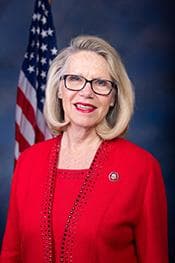
- Carol Miller
- Cosponsors
- - 3 - 9
- Introduced
- In Committee
What this bill would do
The Rural Residency Planning and Development Act of 2025 aims to amend the Public Health Service Act. This bill authorizes grant programs to establish new rural residency programs or add new training sites to existing ones. It also establishes a technical assistance program to help current and potential applicants. Eligible entities can include various public, private, nonprofit, or for-profit organizations, as well as Indian Tribes and Tribal organizations. The bill authorizes $12,700,000 for each fiscal year from 2026 through 2030.
Yes· 3 of 8
Would people in rural areas be better off under this?+7
The bill specifically targets the establishment and expansion of physician residency programs in rural communities.
Would Native Americans be better off under this?+5
The bill explicitly includes Indian Tribes and Tribal organizations as eligible entities for these medical training grants.
Does this invest in rural communities?+5
The bill invests in the development of medical residency programs and training sites within rural areas.
The opposite
No question was scored the opposite.
Who it would affect, and how
Potential Positive Impacts for People
-
Establishment of new medical training pathways: The Secretary can award grants to create new rural residency programs or expand existing ones, which focuses on areas like general primary care, high-need specialties, and maternal health (Section 2, subsection (a)(1)(A) and (a)(2)(B)).
-
Support for specific medical needs: The program targets critical fields such as family medicine, internal medicine, preventive medicine, psychiatry, general surgery, and obstetrics or gynecology (Section 2, subsection (a)(2)(B)).
-
Technical assistance for organizations: A technical assistance program is authorized to help entities apply for and manage these programs (Section 2, subsection (b)(1)(A)).
-
Broad eligibility for community organizations: The bill allows a wide range of groups, including rural hospitals, health clinics, Indian Tribes, and community-based organizations, to apply for these grants (Section 2, subsection (c)(1)).
Potential Negative Impacts for People
- No specific negative impacts are explicitly stated in the provided text.
Groups and Interests Ranking
Every group the model scored this bill for, from -10 to +10. Hover a score for the reason it gave.
- Demographic And Interest Groups
- Good For Rural Residents+7Good For Native Americans+5Good For Low Income Households+4Good For African Americans+3
- Environment Energy And Infrastructure
- Improves Rural Development+5
- Healthcare
- Improves Healthcare Access+5
- Social Issues And Justice
- Improves Racial Equity+3
- Education And Technology
- Improves College Affordability+2
- 9/2/2026
- 1 Cosponsor added.
- 6/23/2026
- 1 Cosponsor added.
- 5/13/2026
- 1 Cosponsor added.
- 4/28/2026
- 1 Cosponsor added.
- 4/16/2026
- 1 Cosponsor added.
- 2/23/2026
- 1 Cosponsor added.
- 2/9/2026
- 2 Cosponsors added.
- 12/16/2025
- 1 Cosponsor added.
- 12/4/2025
- Referred to the House Committee on Energy and Commerce.
- 3 Cosponsors added.
- Introduced in House
2 bills Congress.gov lists as related to this one — companions in the other chamber, earlier versions, and bills this one absorbed or was folded into.
 Sanford Bishop
Democrat · Georgia
 Becca Balint
Democrat · Vermont
 Salud Carbajal
Democrat · California
 Troy Carter
Democrat · Louisiana
 Sharice Davids
Democrat · Kansas
 Shomari Figures
Democrat · Alabama
 Adelita Grijalva
Democrat · Arizona
 James Moylan
Republican · Guam
 Adrian Smith
Republican · Nebraska
 Glenn Thompson
Republican · Pennsylvania
 Jill Tokuda
Democrat · Hawaii
 Eugene Vindman
Democrat · Virginia