Bill · H.R. 3890· House(119-HR-3890)
Resident Physician Shortage Reduction Act of 2025
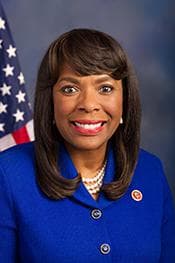
- Introduced
- 6/10/2025
- Last activity
- 6/10/2025 — Referred to the Committee on Energy and Commerce, and in addition to the Committee on Ways and Means, for a period to be subsequently determined by the Speaker, in each case for consideration of such provisions as fall within the jurisdiction of the committee concerned.
- Sponsored by
- Terri Sewell
- Cosponsors
- - 0 - 1
- Introduced
- In Committee
What this bill would do
The Resident Physician Shortage Reduction Act of 2025 aims to increase the number of medical residency positions available to hospitals. It directs the Secretary to distribute additional residency positions through specific rounds of applications from fiscal year 2026 through 2032. The bill establishes specific allocation rules for hospitals already operating above their resident limits and sets minimum distribution requirements for certain hospital categories. Additionally, the Act mandates a study by the Comptroller General regarding strategies to increase health professional diversity. Finally, it creates a new program to award grants for the development of rural residency programs and technical assistance.
Yes· 3 of 9
Would people in rural areas be better off under this?+6
The bill provides specific mandates and grants to increase physician training and presence in rural areas.
Does this make health care easier to get in general?+6
The bill increases physician residency positions to help address provider shortages and improve healthcare access.
Would Black Americans be better off under this?+5
The bill prioritizes hospital affiliations with historically Black medical schools.
The opposite
No question was scored the opposite.
Who it would affect, and how
Potential Positive Impacts for People
-
Increased Residency Opportunities: The Secretary shall increase the resident limit for qualifying hospitals that submit timely applications, providing more training positions (Section 2(a)(i)).
-
Support for Hospitals with High Resident Needs: One-third of the additional positions are available specifically for hospitals that are already operating over their resident limit (Section 2(a)(ii)(I)).
-
Targeted Support for Rural and Underserved Areas: The Secretary must distribute at least 10 percent of certain positions to specific categories, including hospitals in rural areas, sole community hospitals, and hospitals serving health professional shortage areas (Section 2(a)(C)(ii)).
-
Priority for Diversity-Focused Institutions: Priority in distributing positions to hospitals in health professional shortage areas is given to those affiliated with historically Black medical schools or other specific qualifying schools (Section 2(a)(C)(iii)).
-
Workforce Diversity Research: The Comptroller General is tasked with studying strategies to increase the number of health professionals from rural, lower income, and underrepresented minority communities (Section 3(a)).
-
Development of Rural Physician Programs: The bill creates a program where the Secretary may award grants to entities to create new rural residency programs focusing on primary care, high-need specialties, or maternal health (Section 4(b)(2)).
Potential Negative Impacts for People
-
Strict Requirements for High-Need Hospitals: To be eligible for a portion of the increased resident limit, hospitals must train at least 25 percent of their residents in primary care and general surgery, and failure to maintain this can result in a reduction of the resident limit (Section 2(a)(ii)(ii)).
-
Limits on Position Increases: A hospital is generally prohibited from receiving more than 75 full-time equivalent additional residency positions across the specified period (Section 2(a)(E)(i)).
-
Mandatory Agreements for Hospitals: Hospitals seeking additional positions under certain categories must agree to increase the total number of full-time equivalent residency positions under their approved program (Section 2(a)(D)).
Groups and Interests Ranking
Every group the model scored this bill for, from -10 to +10. Hover a score for the reason it gave.
- Demographic And Interest Groups
- Good For Rural Residents+6Good For African Americans+5Good For Students+4Good For Women+4Good For Low Income Households+3Good For Native Americans+3
- Healthcare
- Improves Healthcare Access+6
- Environment Energy And Infrastructure
- Improves Rural Development+5
- Social Issues And Justice
- Improves Racial Equity+5
- 6/10/2025
- Referred to the Committee on Energy and Commerce, and in addition to the Committee on Ways and Means, for a period to be subsequently determined by the Speaker, in each case for consideration of such provisions as fall within the jurisdiction of the committee concerned.
- 1 Cosponsor added.
- Introduced in House
2 bills Congress.gov lists as related to this one — companions in the other chamber, earlier versions, and bills this one absorbed or was folded into.
 Brian Fitzpatrick
Republican · Pennsylvania