
A Republican bill with 1 Democratic cosponsor · See all 6 cosponsors
Last activity — Referred to the House Committee on Energy and Commerce.
In committee
Introduced and handed to a committee in the chamber it started in.
The committee holds it, and most bills are never heard from again. A hearing or a committee vote would be news; silence is the usual outcome, and it kills the bill without anyone voting against it.
Its path through Congress
- Introduced
- In Committee
What this bill would do
This bill, known as the "Delivering Support for Hospitals in Tennessee Act," seeks to amend title XIX of the Social Security Act. It aims to provide a permanent disproportionate share hospital (DSH) allotment to the State of Tennessee. This allotment would begin in fiscal year 2026 and continue for each succeeding fiscal year. The bill establishes a specific calculation for the fiscal year 2026 allotment based on the 2015 allotment and consumer price index increases. Additionally, it classifies Tennessee as a "low dsh state" for future years to determine subsequent allotment increases.
Yes· 3 of 6
- Scored +7
Does this put more money into Medicaid, the health coverage for people on low incomes?
The bill provides a permanent and inflation-adjusted disproportionate share hospital allotment for Tennessee's Medicaid program.
- Scored +5
Would households on low incomes be better off under this?
The bill increases funding for hospitals that serve low-income populations through Medicaid DSH allotments.
- Scored +5
Does this make health care easier to get in general?
By providing permanent funding for disproportionate share hospitals, the bill helps ensure medical services remain available for low-income populations in Tennessee.
The opposite
- Scored -1
Does this reduce what the federal government spends?
The bill establishes a permanent, inflation-adjusted allotment for Tennessee, which increases long-term federal spending.
Who it would affect, and how
Potential Positive Impacts for People
-
Permanent Hospital Funding: The bill provides a permanent DSH allotment for Tennessee starting in fiscal year 2026 and continuing for each succeeding fiscal year, which provides consistent support (Section 2).
-
Inflation-Adjusted Allotments: For the fiscal year 2026, the allotment is set to be equal to the 2015 allotment increased by the percentage change in the consumer price index for all urban consumers, which helps account for rising costs (Section 2).
-
Sustainable Future Increases: For fiscal years after 2026, Tennessee is deemed a "low dsh state," meaning its allotment will increase based on the same manner used for other low DSH States (Section 2).
Potential Negative Impacts for People
- No specific negative impacts or burdens are explicitly stated in the provided text.
Groups and Interests Ranking
Every group the model scored this bill for, from -10 to +10. Tap or hover a score for the reason it gave.
- Demographic And Interest Groups
- Would households on low incomes be better off under this? — The bill increases funding for hospitals that serve low-income populations through Medicaid DSH allotments. Would people in cities be better off under this? — The funding supports disproportionate share hospitals which are often located in and serve urban populations. Would Black Americans be better off under this? — Increased Medicaid hospital funding can improve access to care for disproportionately impacted minority communities.
- Healthcare
- Does this put more money into Medicaid, the health coverage for people on low incomes? — The bill provides a permanent and inflation-adjusted disproportionate share hospital allotment for Tennessee's Medicaid program. Does this make health care easier to get in general? — By providing permanent funding for disproportionate share hospitals, the bill helps ensure medical services remain available for low-income populations in Tennessee.
- Social Issues And Justice
- Is this likely to lift people out of poverty? — The bill supports hospitals that serve low-income populations, which can help mitigate the healthcare-related impacts of poverty.
- Economy And Finance
- Does this reduce what the federal government spends? — The bill establishes a permanent, inflation-adjusted allotment for Tennessee, which increases long-term federal spending.
- 12/3/2025
- Referred to the House Committee on Energy and Commerce.
- 6 Cosponsors added.
- Introduced in House
One bill Congress.gov lists as related to this one — companions in the other chamber, earlier versions, and bills this one absorbed or was folded into.
 Tim Burchett
Republican · Tennessee
 Steve Cohen
Democrat · Tennessee
 Scott DesJarlais
Republican · Tennessee
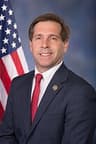 Charles Fleischmann
Republican · Tennessee
 David Kustoff
Republican · Tennessee
 John Rose
Republican · Tennessee