Bill · H.R. 6373· House(119-HR-6373)
Air Permitting Improvements to Protect National Security Act of 2025
- Introduced
- 12/3/2025
- Last activity
- 4/28/2026 — Placed on the Union Calendar, Calendar No. 544.
- Sponsored by
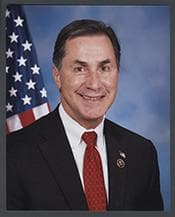
- Gary Palmer
- Cosponsors
- - 11 - 0
- Introduced
- On Calendar
What this bill would do
This bill, titled the "Air Permitting Improvements to Protect National Security Act of 2025," aims to amend the Clean Air Act. It seeks to grant the President the authority to waive requirements for advanced manufacturing or critical mineral facilities to offset increased air pollutant emissions. This waiver can be applied if the President determines it serves the national security interests of the United States. The bill also allows for these specific facilities to use alternative or innovative means to offset emissions under certain conditions. Furthermore, it provides for the possibility of paying emissions fees to state authorities instead of traditional offsets.
Yes· 3 of 5
Does this give the federal government more power?+5
The bill grants the President specific authority to waive Clean Air Act requirements for certain facilities.
Would business owners be better off under this?+4
The bill reduces regulatory burdens for owners of advanced manufacturing and critical mineral facilities.
Does this make it easier to run a small business?+3
The bill provides streamlined permitting options for advanced manufacturing and critical mineral facilities which can benefit industry operators.
The opposite
Does this better protect air, water and wildlife?-4
The bill allows the President to waive requirements that facilities must offset increased air pollutant emissions.
Who it would affect, and how
Potential Positive Impacts for People
-
National Security Protections: The President can waive the requirement for a facility to offset increased emissions if it is determined to be in the national security interests of the United States (Section 2, subsection (3)).
-
Alternative Offset Methods: Advanced manufacturing facilities (semiconductor manufacturing) or critical mineral facilities (extraction, processing, refining, or milling) can use alternative or innovative means to offset emissions if they show they have used all reasonable means to find available offsets (Section 2, subsection (f)(1)(A)).
-
Environmental Mitigation via Fees: State permitting authorities may impose an emissions fee on these facilities, which they must use in a manner that maximizes emissions reductions in that specific area (Section 2, subsection (f)(1)(B)).
Potential Negative Impacts for People
-
Reduced Emission Offsets: The President has the authority to waive requirements that a facility must offset increased emissions of any air pollutant (Section 2, subsection (3)).
-
Potential Financial Burdens on Facilities: A state permitting authority may impose an emissions fee on a source that is no greater than 1.5 times the average cost of stationary source control measures adopted in that area during the previous 3 years (Section 2, subsection (f)(1)(B)).
Groups and Interests Ranking
Every group the model scored this bill for, from -10 to +10. Hover a score for the reason it gave.
- Governance And Ideology
- Increases Federal Power+5
- Demographic And Interest Groups
- Good For Business Owners+4
- Environment Energy And Infrastructure
- Improves Environmental Protections-4
- Economy And Finance
- Improves Small Business Support+3
- Education And Technology
- Increases Scientific Research Funding+2
- National Security And Foreign Policy
- Improves Veterans Benefits+1
- 4/28/2026
- Reported by the Committee on Energy and Commerce. H. Rept. 119-627.
- Placed on the Union Calendar, Calendar No. 544.
- 3/4/2026
- 1 Cosponsor added.
- 2/23/2026
- 1 Cosponsor added.
- 2/9/2026
- 2 Cosponsors added.
- 1/21/2026
- Committee Consideration and Mark-up Session Held
- Ordered to be Reported by the Yeas and Nays: 25 - 23.
- 3 Cosponsors added.
- 1/14/2026
- 2 Cosponsors added.
- 1/12/2026
- 2 Cosponsors added.
- 12/3/2025
- Referred to the House Committee on Energy and Commerce.
- Introduced in House
 Rick Allen
Republican · Georgia
 Earl Carter
Republican · Georgia
 Dan Crenshaw
Republican · Texas
 Julie Fedorchak
Republican · North Dakota
 Craig Goldman
Republican · Texas
 Young Kim
Republican · California
 Nicholas Langworthy
Republican · New York
 John Moolenaar
Republican · Michigan
 Barry Moore
Republican · Alabama
 Robert Onder
Republican · Missouri
 Randy Weber
Republican · Texas