A Democratic bill with 23 Democratic cosponsors · See all 23 cosponsors
Last activity — Referred to the House Committee on Energy and Commerce.
In committee
Introduced and handed to a committee in the chamber it started in.
The committee holds it, and most bills are never heard from again. A hearing or a committee vote would be news; silence is the usual outcome, and it kills the bill without anyone voting against it.
Its path through Congress
- Introduced
- In Committee
What this bill would do
This bill, known as the "Urban and Rural Diabetes Initiative Act," proposes an amendment to the Public Health Service Act. It seeks to authorize grants to help provide treatment for diabetes and related co-morbid conditions. These grants are intended for eligible providers serving medically underserved communities. The bill requires providers to offer specific services, including routine care, public education, and treatment for complications like eye, foot, and kidney issues. Additionally, it mandates that services be provided with consideration for cultural backgrounds and appropriate languages.
Yes· 3 of 10
- Scored +7
Would households on low incomes be better off under this?
The bill targets medically underserved communities through grants to public and nonprofit health providers.
- Scored +7
Does this make health care easier to get in general?
The bill authorizes grants to provide essential diabetes treatment and related care to medically underserved communities.
- Scored +5
Would people over 65 be better off under this?
The bill provides treatment for diabetes complications like kidney and eye issues, which frequently affect older populations.
The opposite
No question was scored the opposite.
Who it would affect, and how
Potential Positive Impacts for People
-
Expanded Diabetes Care: The Secretary may make grants to eligible providers to provide services related to the treatment of diabetes and co-morbid conditions in medically underserved communities (Section 2, subsection a).
-
Comprehensive Treatment Services: Under the grant conditions, providers must offer routine care, public education on prevention and control, eye care, foot care, and treatment for kidney disease and other complications (Section 2, subsection c, 1).
-
Culturally Appropriate Care: The bill requires services to be provided in languages appropriate for the individuals and with consideration for their cultural backgrounds (Section 2, subsection c, 2).
-
Community Awareness: Providers are required to conduct outreach activities to inform the public about the services available through the program (Section 2, subsection c, 3).
-
Balanced Geographic Coverage: The Secretary is tasked with ensuring an equitable geographic distribution of funds to address the needs of both urban and rural communities (Section 2, subsection d).
Potential Negative Impacts for People
- No specific negative impacts or burdens are explicitly mentioned in the provided text.
Groups and Interests Ranking
Every group the model scored this bill for, from -10 to +10. Tap or hover a score for the reason it gave.
- Demographic And Interest Groups
- Would households on low incomes be better off under this? — The bill targets medically underserved communities through grants to public and nonprofit health providers. Would Hispanic Americans be better off under this? — The bill requires services to be provided in languages appropriate for the cultural backgrounds of the individuals served. Would people in rural areas be better off under this? — The bill includes rural communities as a key target for the equitable distribution of diabetes treatment funds. Would people over 65 be better off under this? — The bill provides treatment for diabetes complications like kidney and eye issues, which frequently affect older populations. Would people in cities be better off under this? — The bill includes urban communities as a key target for the equitable distribution of diabetes treatment funds.
- Healthcare
- Does this make health care easier to get in general? — The bill authorizes grants to provide essential diabetes treatment and related care to medically underserved communities. Does this put more money into medical research? — The bill funds public education and outreach related to diabetes prevention and control.
- Social Issues And Justice
- Does this narrow racial gaps in how people are treated? — The bill requires health services to be provided with consideration for cultural backgrounds and appropriate languages. Is this likely to lift people out of poverty? — By targeting medically underserved communities, the bill helps mitigate health-related financial burdens for low-income populations.
- Environment Energy And Infrastructure
- Does this invest in rural communities? — The bill mandates an equitable geographic distribution of funds to ensure rural communities receive diabetes care.
- 1/21/2026
- 1 Cosponsor added.
- 12/18/2025
- 1 Cosponsor added.
- 11/20/2025
- Referred to the House Committee on Energy and Commerce.
- 21 Cosponsors added.
- Introduced in House
 Joyce Beatty
Democrat · Ohio
 Nanette Barragán
Democrat · California
 Wesley Bell
Democrat · Missouri
 Emanuel Cleaver
Democrat · Missouri
 Yvette Clarke
Democrat · New York
 André Carson
Democrat · Indiana
 Troy Carter
Democrat · Louisiana
 Danny Davis
Democrat · Illinois
 Cleo Fields
Democrat · Louisiana
 Vicente Gonzalez
Democrat · Texas
 Henry Johnson
Democrat · Georgia
 Jonathan Jackson
Democrat · Illinois
 Ro Khanna
Democrat · California
 Gwen Moore
Democrat · Wisconsin
 Eleanor Norton
Democrat · District of Columbia
 Delia Ramirez
Democrat · Illinois
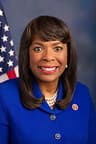 Terri Sewell
Democrat · Alabama
 Bennie Thompson
Democrat · Mississippi
 Rashida Tlaib
Democrat · Michigan
 Shri Thanedar
Democrat · Michigan
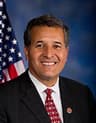 Juan Vargas
Democrat · California
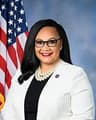 Nikema Williams
Democrat · Georgia
 Bonnie Watson Coleman
Democrat · New Jersey