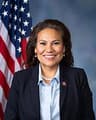
Veronica Escobar (D-TX)
Targeting Environmental and Climate Recklessness Act of 2025
A Democratic bill with no cosponsors
Last activity — Referred to the Committee on Foreign Affairs, and in addition to the Committees on the Judiciary, Financial Services, Oversight and Government Reform, and Ways and Means, for a period to be subsequently determined by the Speaker, in each case for consideration of such provisions as fall within the jurisdiction of the committee concerned.
In committee
Introduced and handed to a committee in the chamber it started in.
The committee holds it, and most bills are never heard from again. A hearing or a committee vote would be news; silence is the usual outcome, and it kills the bill without anyone voting against it.
Its path through Congress
- Introduced
- In Committee
What this bill would do
The Targeting Environmental and Climate Recklessness Act of 2025 authorizes the President to impose sanctions on foreign persons involved in activities that exacerbate climate change. This includes actions related to greenhouse gas emissions, illegal deforestation, and harm to environmental defenders. Sanctions may include visa ineligibility and the blocking of property within the United States. The bill aims to reinforce efforts to limit global temperature rise and address environmental corruption or human rights abuses. It also incorporates the use of Global Magnitsky sanctions for these specific environmental concerns.
Yes· 3 of 11
- Scored +5
Does this cut the pollution that drives climate change?
The bill authorizes sanctions against foreign actors whose activities increase greenhouse gas emissions or cause deforestation.
- Scored +5
Does this better protect air, water and wildlife?
The bill provides tools to protect environmental defenders and prevent illegal deforestation.
- Scored +4
Would Native Americans be better off under this?
The bill specifically protects the rights and lands of Indigenous communities threatened by environmental crimes.
The opposite
No question was scored the opposite.
Who it would affect, and how
Potential Positive Impacts for People
-
Protection of Environmental Defenders: The bill targets individuals who engage in actions that cause limitations on or circumvention of opposition by those seeking to protect the environment, public health, or community land rights (Section 5(b)(4)).
-
Addressing Human Rights and Corruption: The bill identifies that activities like deforestation and large-scale resource extraction are often associated with serious human rights abuses and corruption (Section 2(6)). It allows for the use of authorities to address these issues (Section 4(a)).
-
Mitigating Climate Risks: By targeting actions that undermine efforts to limit global warming to 1.5 degrees Celsius, the bill seeks to address threats such as severe weather, wildfires, droughts, and flooding that jeopardize the health and safety of people in the United States (Section 2(1), Section 5(a)(1)).
-
Support for Displaced Persons: The bill recognizes individuals who are obliged to leave their homes due to changes in the environment caused by human activities or climate change (Section 4(b)(3)).
Potential Negative Impacts for People
-
Restrictions on Travel and Property: Foreign individuals targeted under this act may be denied visas or have existing visas revoked (Section 5(c)(1)). Additionally, their property and interests in the United States may be blocked (Section s5(c)(2)).
-
Economic Disruption via Sanctions: The President is authorized to impose various sanctions, including those described in the Countering America's Adversaries Through Sanctions Act, against foreign persons determined to be engaging in specific environmental activities (Section 5(b), Section 5(c)(3)).
Groups and Interests Ranking
Every group the model scored this bill for, from -10 to +10. Tap or hover a score for the reason it gave.
- Demographic And Interest Groups
- Would Native Americans be better off under this? — The bill specifically protects the rights and lands of Indigenous communities threatened by environmental crimes. Would households on low incomes be better off under this? — The bill seeks to protect low-income communities from the worst impacts of climate-related disasters. Would Hispanic Americans be better off under this? — The bill addresses environmental injustices that disproportionately affect communities of color. Would people with disabilities be better off under this? — The bill aims to mitigate climate-driven health risks that can disproportionately impact vulnerable populations.
- Environment Energy And Infrastructure
- Does this better protect air, water and wildlife? — The bill provides tools to protect environmental defenders and prevent illegal deforestation. Does this cut the pollution that drives climate change? — The bill authorizes sanctions against foreign actors whose activities increase greenhouse gas emissions or cause deforestation.
- Social Issues And Justice
- Does this narrow racial gaps in how people are treated? — The bill specifically notes that climate change and the proposed sanctions address injustices faced by communities of color. Is this likely to lift people out of poverty? — The bill aims to mitigate the climate-driven threats that disproportionately affect low-income communities.
- Economy And Finance
- Does this give people more protection from unfair business practices? — The bill aims to prevent the misrepresentation of environmental impacts of products and investments.
- Governance And Ideology
- Does this make what the government does easier for the public to see? — The bill targets the misrepresentation of environmental impacts by economic actors.
- National Security And Foreign Policy
- Does this strengthen ties with allied countries? — The bill encourages international cooperation and similar targeted measures among other countries to combat climate change.
- 11/20/2025
- Referred to the Committee on Foreign Affairs, and in addition to the Committees on the Judiciary, Financial Services, Oversight and Government Reform, and Ways and Means, for a period to be subsequently determined by the Speaker, in each case for consideration of such provisions as fall within the jurisdiction of the committee concerned.
- Introduced in House
One bill Congress.gov lists as related to this one — companions in the other chamber, earlier versions, and bills this one absorbed or was folded into.