
A Democratic bill with 12 Democratic cosponsors · See all 12 cosponsors
Last activity — Referred to the House Committee on the Judiciary.
In committee
Introduced and handed to a committee in the chamber it started in.
The committee holds it, and most bills are never heard from again. A hearing or a committee vote would be news; silence is the usual outcome, and it kills the bill without anyone voting against it.
Its path through Congress
- Introduced
- In Committee
What this bill would do
This bill is called the "Ceasing Outrageous Restitution and Reimbursement Under President Trump Act" or the "CORRUPT Act". It proposes to change section 2680 of title 18, United States Code. The goal is to create an exception to the Federal Tort Claims Act. This exception would apply to claims brought by the President of the United States or their covered relatives. Covered relatives are defined as a spouse, child, sibling, or in-law of the President. The restriction applies during the term for which the President was elected.
Yes· 3 of 4
- Scored +2
Does this make what the government does easier for the public to see?
Aims to prevent the use of the Federal Tort Claims Act for personal or familial restitution by the President.
- Scored +1
Does this reduce what the federal government owes?
Potentially reduces government payouts by barring certain tort claims by the President and their relatives.
- Scored +1
Does this reduce what the federal government spends?
May decrease spending on legal settlements for the President and covered relatives.
The opposite· 3 of 4
- Scored -3
Would people with substantial wealth be better off under this?
Specifically targets high-net-worth individuals in the President's family by removing their legal recourse.
- Scored -3
Would the very wealthiest people be better off under this?
Specifically targets high-net-worth individuals in the President's family by removing their legal recourse.
- Scored -3
Would billionaires be better off under this?
Specifically targets high-net-worth individuals in the President's family by removing their legal recourse.
Who it would affect, and how
Potential Positive Impacts for People
- Restriction of Presidential Claims: By adding subsection (o) to section 2680 of title 18, United States Code, the bill prevents the President and their covered relatives (spouse, child, sibling, or in-law) from bringing certain claims during their elected term.
Potential Negative Impacts for People
- Loss of Legal Recourse: Under section 2(o), the President and their covered relatives, including spouses, children, siblings, and in-laws, would be unable to bring claims under the Federal Tort Claims Act during the President's elected term.
Groups and Interests Ranking
Every group the model scored this bill for, from -10 to +10. Tap or hover a score for the reason it gave.
- Demographic And Interest Groups
- Would billionaires be better off under this? — Specifically targets high-net-worth individuals in the President's family by removing their legal recourse. Would people with substantial wealth be better off under this? — Specifically targets high-net-worth individuals in the President's family by removing their legal recourse. Would the very wealthiest people be better off under this? — Specifically targets high-net-worth individuals in the President's family by removing their legal recourse.
- Economy And Finance
- Does this make the government pay for what it commits to? — Limits potential government liability regarding claims from the executive's immediate family. Does this reduce what the federal government spends? — May decrease spending on legal settlements for the President and covered relatives. Does this reduce what the federal government owes? — Potentially reduces government payouts by barring certain tort claims by the President and their relatives.
- Governance And Ideology
- Does this make what the government does easier for the public to see? — Aims to prevent the use of the Federal Tort Claims Act for personal or familial restitution by the President. Does this protect the right to fair treatment by the courts? — Restricts the legal right to bring claims under the Federal Tort Claims Act for a specific group.
- 12/2/2025
- 1 Cosponsor added.
- 11/7/2025
- Referred to the House Committee on the Judiciary.
- 11 Cosponsors added.
- Introduced in House
 Yvette Clarke
Democrat · New York
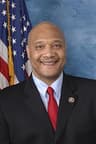 André Carson
Democrat · Indiana
 Angie Craig
Democrat · Minnesota
 Cleo Fields
Democrat · Louisiana
 Bill Foster
Democrat · Illinois
 Al Green
Democrat · Texas
 Jonathan Jackson
Democrat · Illinois
 Summer Lee
Democrat · Pennsylvania
 Seth Moulton
Democrat · Massachusetts
 LaMonica McIver
Democrat · New Jersey
 Eleanor Norton
Democrat · District of Columbia
 Rashida Tlaib
Democrat · Michigan