Bill · H.R. 5867· House(119-HR-5867)
Plant-Powered School Meals Pilot Act
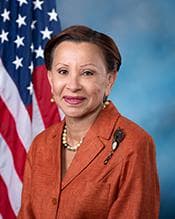
- Introduced
- 10/28/2025
- Last activity
- 10/28/2025 — Referred to the House Committee on Education and Workforce.
- Sponsored by
- Nydia Velázquez
- Cosponsors
- - 20 - 0
- Introduced
- In Committee
What this bill would do
This bill, known as the "Plant-Powered School Meals Pilot Act," seeks to amend the Richard B. Russell National School Lunch Act. It establishes a pilot grant program to provide school food authorities with funding to offer 100 percent plant-based food and milk options. The legislation also creates a second pilot grant program to help school food authorities cover the full cost of providing nondairy beverages as substitutes for fluid milk. Additionally, the bill updates rules regarding food substitutions for students with medical, religious, or other special dietary needs.
Yes· 3 of 12
Would children be better off under this?+5
The bill expands dietary options and accommodates specific medical and religious dietary needs for students.
Does this put more money into public schools?+5
The bill authorizes $12,000,000 in total pilot grant funding for school food authorities.
Would farmers be better off under this?+4
The bill provides opportunities for local, organic, and underserved farmers to participate in school food procurement.
The opposite
No question was scored the opposite.
Who it would affect, and how
Potential Positive Impacts for People
-
Support for Plant-Based School Meals: The bill establishes a pilot grant program to help school food authorities provide 100 percent plant-based food and milk options (Section 2, paragraph (d)(1)).
-
Benefits for Low-Income Students: Priority for plant-based grants may be given to authorities serving a high proportion of children eligible for free or reduced price meals (Section 2, paragraph (d)(3)(B)(i)).
-
Educational Opportunities: Grant funds can be used for student engagement and education regarding plant-based options, such as taste tests and culinary education (Section 2, paragraph (d)(4)(C)).
-
Support for Diverse Producers: Funds can be used to cover costs for procuring food from local farmers, organic farms, and underserved producers, including veterans and socially disadvantaged farmers (Section 2, paragraph (d)(4)(E)).
-
Accommodating Dietary Needs: The bill clarifies that schools may substitute foods to accommodate the medical, religious, or other special dietary needs of individual students (Section 3, paragraph (1)(A)).
-
Relief for Milk Substitution Costs: A separate pilot grant program is established to reimburse school food authorities for the full cost of providing nondairy beverages to students with specific dietary needs (Section s 3, paragraph (2)(B)(iii)(III)).
Potential Negative Impacts for People
- Financial Burden on Schools: If expenses for providing milk substitutions exceed what is covered by reimbursements, the school food authority must pay those excess expenses (Section 3, paragraph (2)(B)(iii)).
Groups and Interests Ranking
Every group the model scored this bill for, from -10 to +10. Hover a score for the reason it gave.
- Demographic And Interest Groups
- Good For Children+5Good For Farmers+4Good For Low Income Households+3Good For Business Owners+2Good For Veterans+2Good For Hispanic Americans+1
- Education And Technology
- Increases Public School Funding+5
- Economy And Finance
- Increases Job Creation+2Improves Economic Growth+1
- Healthcare
- Improves Healthcare Access+2
- Social Issues And Justice
- Improves Poverty Reduction+2
- Environment Energy And Infrastructure
- Increases Renewable Energy Investment+1
- 7/20/2026
- 1 Cosponsor added.
- 6/24/2026
- 1 Cosponsor added.
- 5/14/2026
- 1 Cosponsor added.
- 4/13/2026
- 2 Cosponsors added.
- 1/8/2026
- 2 Cosponsors added.
- 12/16/2025
- 1 Cosponsor added.
- 11/18/2025
- 2 Cosponsors added.
- 11/12/2025
- 1 Cosponsor added.
- 10/28/2025
- Referred to the House Committee on Education and Workforce.
- 9 Cosponsors added.
- Introduced in House
One bill Congress.gov lists as related to this one — companions in the other chamber, earlier versions, and bills this one absorbed or was folded into.
 Alma Adams
Democrat · North Carolina
 Julia Brownley
Democrat · California
 André Carson
Democrat · Indiana
 Judy Chu
Democrat · California
 Lloyd Doggett
Democrat · Texas
 Dwight Evans
Democrat · Pennsylvania
 Veronica Escobar
Democrat · Texas
 Laura Friedman
Democrat · California
 Daniel Goldman
Democrat · New York
 Adelita Grijalva
Democrat · Arizona
 Henry Johnson
Democrat · Georgia
 Ted Lieu
Democrat · California
 James McGovern
Democrat · Massachusetts
 Lucy McBath
Democrat · Georgia
 Eleanor Norton
Democrat · District of Columbia
 Ilhan Omar
Democrat · Minnesota
 Suhas Subramanyam
Democrat · Virginia
 Lateefah Simon
Democrat · California
 Frederica Wilson
Democrat · Florida
 Bonnie Watson Coleman
Democrat · New Jersey