
A Democratic bill with 13 Democratic cosponsors · See all 13 cosponsors
Last activity — Referred to the Committee on Energy and Commerce, and in addition to the Committee on the Judiciary, for a period to be subsequently determined by the Speaker, in each case for consideration of such provisions as fall within the jurisdiction of the committee concerned.
In committee
Introduced and handed to a committee in the chamber it started in.
The committee holds it, and most bills are never heard from again. A hearing or a committee vote would be news; silence is the usual outcome, and it kills the bill without anyone voting against it.
Its path through Congress
- Introduced
- In Committee
What this bill would do
This bill is called the Mental Health Crisis Response Act of 2025. It directs the Attorney General and the Assistant Secretary for Mental Health and Substance Use to set up a competitive grant program. This program helps communities transition to health-centered responses for mental health emergencies. Eligible jurisdictions can use the grant money to embed mental health professionals into 911 dispatch, route calls to mental health hotlines, and form partnerships for streamlined call handoffs. The bill authorizes $25,000,000 to be appropriated for each of the fiscal years 2027 through 2031.
Yes· 3 of 22
- Scored +8
Does this make mental health care easier to get?
The legislation explicitly establishes grants for communities to transition to health-centered responses for mental health emergencies, including embedding professionals in 911 dispatch.
- Scored +7
Would people with disabilities be better off under this?
Directly addresses the needs of individuals with mental health disabilities by ensuring appropriate professional intervention.
- Scored +7
Does this make health care easier to get in general?
By facilitating alternative 911 call routing and streamlining handoffs to crisis hotlines, the bill improves access to appropriate healthcare services.
The opposite
- Scored -1
Does this reduce what the federal government spends?
The bill authorizes $25,000,000 to be appropriated annually for each of fiscal years 2027 through 2031.
Who it would affect, and how
Potential Positive Impacts for People
-
Section 2(d)(1) allows communities to embed mental health professionals directly into 911 dispatch and call triage systems, which helps ensure callers get mental health expertise right away.
-
Section 2(d)(2) allows for the development of alternative 911 call routing to 988 or other mental health or substance abuse crisis hotlines, providing specialized help to individuals in behavioral health emergencies.
-
Section 2(d)(3) creates partnerships between emergency services and 911 dispatch centers to ensure a streamlined handoff so callers do not have to hang up and dial a separate crisis hotline.
Potential Negative Impacts for People
- Based on the provided text, there are no specific sections or provisions identified that create negative consequences or burdens for individuals or groups of people in the United States.
Groups and Interests Ranking
Every group the model scored this bill for, from -10 to +10. Tap or hover a score for the reason it gave.
- Demographic And Interest Groups
- Would people with disabilities be better off under this? — Directly addresses the needs of individuals with mental health disabilities by ensuring appropriate professional intervention. Would children be better off under this? — Improved emergency mental health responses benefit children and families experiencing behavioral crises. Would households on low incomes be better off under this? — Low-income households often rely on public emergency services and will benefit from improved mental health crisis resources. Would people in middle age be better off under this? — Middle-aged individuals facing behavioral health crises receive more appropriate care through streamlined emergency call routing. Would people over 65 be better off under this? — Seniors experiencing mental health or crisis situations benefit from immediate connections to specialized healthcare professionals. Would people in their twenties and thirties be better off under this? — Young adults experiencing mental health emergencies benefit from specialized health-centered responses. Would Black Americans be better off under this? — Health-centered alternatives in 911 dispatch help reduce adverse outcomes in police interactions during mental health crises. Would Hispanic Americans be better off under this? — Culturally competent and health-focused crisis intervention models can improve emergency outcomes for Hispanic communities. Would middle-income households be better off under this? — Middle-class households have better access to health-centered crisis response alternatives during emergencies. Would Native Americans be better off under this? — Tribal governments are explicitly included as eligible jurisdictions to receive grants for mental health crisis response. Would people in rural areas be better off under this? — Rural jurisdictions managing emergency services can implement alternative crisis routing where mental health resources are sparse. Would people in cities be better off under this? — Urban communities managing high volumes of emergency calls can utilize grants to improve triage and response systems. Would veterans be better off under this, taking everything together? — Veterans experiencing mental health or substance use crises can benefit from alternative call routing to specialized hotlines like 988.
- Healthcare
- Does this make mental health care easier to get? — The legislation explicitly establishes grants for communities to transition to health-centered responses for mental health emergencies, including embedding professionals in 911 dispatch. Does this make health care easier to get in general? — By facilitating alternative 911 call routing and streamlining handoffs to crisis hotlines, the bill improves access to appropriate healthcare services. Does this do more about addiction and overdose deaths? — The grant program supports behavioral health and substance abuse crisis hotline services.
- Social Issues And Justice
- Does this change how police departments operate? — The bill promotes health-centered crisis response alternatives, helping to reduce reliance on traditional law enforcement for mental health emergencies. Does this expand the rights of people with disabilities? — Providing health-centered responses for mental health emergencies directly benefits individuals with psychiatric disabilities or mental health conditions.
- Governance And Ideology
- Does this make what the government does easier for the public to see? — Grant recipients are required to submit annual reports on incident response times, use of force, and diversion rates. Does this leave more decisions to the states? — Eligible State, Tribal, and local governments have the flexibility to apply for and implement tailored crisis response strategies. Does this give the federal government more power? — The bill establishes a new federal grant program administered by the Attorney General and the Assistant Secretary for Mental Health and Substance Use.
- Economy And Finance
- Is this likely to create jobs? — The bill provides grant funding that can support the hiring and integration of mental health professionals into emergency dispatch systems. Does this reduce what the federal government spends? — The bill authorizes $25,000,000 to be appropriated annually for each of fiscal years 2027 through 2031.
- 12/17/2025
- 1 Cosponsor added.
- 10/31/2025
- 1 Cosponsor added.
- 10/14/2025
- 1 Cosponsor added.
- 10/8/2025
- Referred to the Committee on Energy and Commerce, and in addition to the Committee on the Judiciary, for a period to be subsequently determined by the Speaker, in each case for consideration of such provisions as fall within the jurisdiction of the committee concerned.
- 10 Cosponsors added.
- Introduced in House
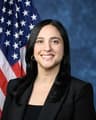 Yassamin Ansari
Democrat · Arizona
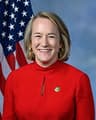 Nikki Budzinski
Democrat · Illinois
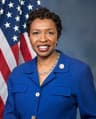 Yvette Clarke
Democrat · New York
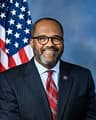 Troy Carter
Democrat · Louisiana
 Sylvia Garcia
Democrat · Texas
 Daniel Goldman
Democrat · New York
 Seth Moulton
Democrat · Massachusetts
 Eleanor Norton
Democrat · District of Columbia
 Mike Quigley
Democrat · Illinois
 Andrea Salinas
Democrat · Oregon
 Bennie Thompson
Democrat · Mississippi
 Rashida Tlaib
Democrat · Michigan
 Shri Thanedar
Democrat · Michigan