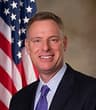
A Democratic bill with 18 Democratic cosponsors · See all 18 cosponsors
Last activity — Referred to the House Committee on Energy and Commerce.
In committee
Introduced and handed to a committee in the chamber it started in.
The committee holds it, and most bills are never heard from again. A hearing or a committee vote would be news; silence is the usual outcome, and it kills the bill without anyone voting against it.
Its path through Congress
- Introduced
- In Committee
What this bill would do
The "Cleaner Air Spaces Act of 2025" directs the EPA Administrator to provide grants to air pollution control agencies to implement a cleaner air space program. These grants are intended to help agencies establish clean air centers and distribute air filtration units to specific households. Agencies must partner with community-based organizations to carry out these requirements. The program specifically targets areas at risk of exposure to wildland fire smoke. It also aims to provide resources to low-income communities with vulnerable individuals.
Yes· 3 of 11
- Scored +7
Would households on low incomes be better off under this?
The bill provides free air filtration units and clean air centers specifically for low-income communities.
- Scored +6
Does this better protect air, water and wildlife?
The bill provides direct protections against air pollution from wildland fire smoke.
- Scored +5
Would Native Americans be better off under this?
The bill mandates that at least one grant be provided to a Tribal agency.
The opposite
- Scored -1
Does this reduce what the federal government spends?
The bill authorizes $30,000,000 in new spending for the cleaner air space program.
Who it would affect, and how
Potential Positive Impacts for People
-
Provision of air filtration equipment: Air pollution control agencies must distribute at least 1,000 eligible air filtration units to covered households at no cost (Section 2(d)(3)(A)). Additionally, they must provide one air filter replacement for each unit distributed (Section 2(d)(3)(B)).
-
Access to clean air centers: Agencies are required to establish at least one clean air center in an area at risk of wildland fire smoke (Section 2(d)(1)(A)). These centers must be accessible to individuals living in covered households and must be open and staffed during smoke events (Section 2(d)(1)(B-C)).
-
Support for vulnerable and low-income populations: The program targets "covered households," which include those in low-income communities with individuals at high risk of experiencing or being vulnerable to the health effects of wildland fire smoke (Section 2(g)(5)).
-
Inclusion of Tribal agencies: The Administrator is required to provide at least one grant to a Tribal agency that has jurisdiction over air quality (Section 2(b)(2)).
Potential Negative Impacts for People
- No specific negative impacts for individuals are explicitly stated in the text provided.
Groups and Interests Ranking
Every group the model scored this bill for, from -10 to +10. Tap or hover a score for the reason it gave.
- Demographic And Interest Groups
- Would households on low incomes be better off under this? — The bill provides free air filtration units and clean air centers specifically for low-income communities. Would Native Americans be better off under this? — The bill mandates that at least one grant be provided to a Tribal agency. Would children be better off under this? — The bill protects vulnerable individuals, including children, from the health effects of smoke. Would people with disabilities be better off under this? — The bill targets individuals vulnerable to health effects due to underlying health conditions or disabilities. Would people over 65 be better off under this? — The bill provides air filtration and clean air centers for seniors at risk from smoke exposure. Would people in rural areas be better off under this? — The bill addresses risks associated with wildland fire smoke which frequently impacts rural areas.
- Environment Energy And Infrastructure
- Does this better protect air, water and wildlife? — The bill provides direct protections against air pollution from wildland fire smoke. Does this improve help for people hit by a disaster? — The bill provides relief resources specifically for communities impacted by the health effects of wildland fire smoke events.
- Healthcare
- Does this make health care easier to get in general? — The bill improves access to clean air through the establishment of clean air centers and distribution of filtration units.
- Social Issues And Justice
- Does this narrow racial gaps in how people are treated? — The bill targets low-income communities and Tribal agencies which can help narrow racial disparities in environmental health exposure. Is this likely to lift people out of poverty? — The bill provides free health-protective equipment to low-income households.
- Economy And Finance
- Does this reduce what the federal government spends? — The bill authorizes $30,000,000 in new spending for the cleaner air space program.
- 4/15/2026
- 1 Cosponsor added.
- 4/6/2026
- 1 Cosponsor added.
- 7/29/2025
- 1 Cosponsor added.
- 3/3/2025
- 2 Cosponsors added.
- 1/20/2025
- Referred to the House Committee on Energy and Commerce.
- 13 Cosponsors added.
- Introduced in House
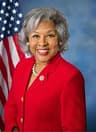 Joyce Beatty
Democrat · Ohio
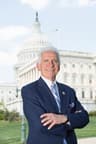 Jim Costa
Democrat · California
 Diana DeGette
Democrat · Colorado
 Mark DeSaulnier
Democrat · California
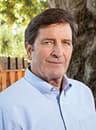 John Garamendi
Democrat · California
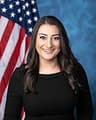 Sara Jacobs
Democrat · California
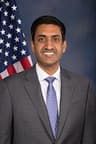 Ro Khanna
Democrat · California
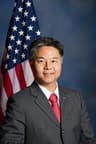 Ted Lieu
Democrat · California
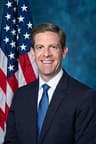 Mike Levin
Democrat · California
 George Latimer
Democrat · New York
 Seth Moulton
Democrat · Massachusetts
 Kevin Mullin
Democrat · California
 Joe Neguse
Democrat · Colorado
 Jimmy Panetta
Democrat · California
 Brittany Pettersen
Democrat · Colorado
 Eric Swalwell
Democrat · California
 Kim Schrier
Democrat · Washington
 Dina Titus
Democrat · Nevada