Bill · H.R. 5652· House(119-HR-5652)
Wildfire Recovery Act
- Introduced
- 9/30/2025
- Last activity
- 12/1/2025 — Referred to the Subcommittee on Economic Development, Public Buildings, and Emergency Management.
- Sponsored by
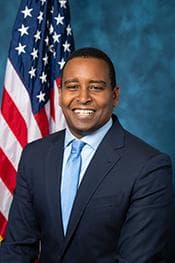
- Joe Neguse
- Cosponsors
- - 17 - 1
- Introduced
- In Committee
What this bill would do
This bill, known as the ``Wildfire Recovery Act'', seeks to amend the Robert T. Stafford Disaster Relief and Emergency Assistance Act. It aims to provide more flexibility regarding the cost share for fire management assistance. The legislation establishes that the Federal share of assistance shall be at least 75 percent of eligible costs. Additionally, it requires the FEMA Administrator to conduct a rulemaking process within three years to establish criteria for increasing the Federal cost share. The bill also directs a policy update regarding the reimbursement of domestic assets.
Yes· 3 of 4
Does this improve help for people hit by a disaster?+6
The bill enhances disaster relief capabilities by establishing a higher federal floor for fire management assistance costs.
Would people in rural areas be better off under this?+4
Rural communities are often more heavily impacted by wildfires and would benefit from increased federal fire management assistance.
Would Native Americans be better off under this?+3
The bill explicitly includes Tribal governments in the policy update regarding reimbursement for the predeployment of domestic assets.
The opposite
Does this reduce what the federal government spends?-2
The bill increases federal financial obligations by mandating a minimum 75 percent cost share for fire management assistance.
Who it would affect, and how
Potential Positive Impacts for People
-
Increased Federal Financial Support: The bill mandates that the Federal share of assistance for fire management must be not less than 75 percent of eligible costs (Section 2(a)). This provides a guaranteed minimum level of federal funding for fire management assistance.
-
Financial Impact Assessment: The President, through the FEMA Administrator, is required to create criteria for increasing the Federal cost share, which includes a metric to assess the financial impact on State or local governments (Section 3).
-
Reimbursement for Domestic Assets: The FEMA Administrator must update policy so that the predeployment of domestic assets by States, local, and Tribal governments may be eligible for reimbursement (Section 4).
Potential Negative Impacts for People
- No specific negative impacts are mentioned in the provided text.
Groups and Interests Ranking
Every group the model scored this bill for, from -10 to +10. Hover a score for the reason it gave.
- Demographic And Interest Groups
- Good For Rural Residents+4Good For Native Americans+3Good For Low Income Households+2
- Environment Energy And Infrastructure
- Improves Disaster Relief And F E M A+6
- Economy And Finance
- Reduces Government Spending-2
- 12/1/2025
- Referred to the Subcommittee on Economic Development, Public Buildings, and Emergency Management.
- 11/25/2025
- 1 Cosponsor added.
- 11/4/2025
- 3 Cosponsors added.
- 10/31/2025
- 1 Cosponsor added.
- 9/30/2025
- Referred to the House Committee on Transportation and Infrastructure.
- 13 Cosponsors added.
- Introduced in House
One bill Congress.gov lists as related to this one — companions in the other chamber, earlier versions, and bills this one absorbed or was folded into.
 Suzanne Bonamici
Democrat · Oregon
 Jim Costa
Democrat · California
 Salud Carbajal
Democrat · California
 Diana DeGette
Democrat · Colorado
 John Garamendi
Democrat · California
 Steven Horsford
Democrat · Nevada
 Jared Huffman
Democrat · California
 Josh Harder
Democrat · California
 Teresa Leger Fernandez
Democrat · New Mexico
 Stephen Lynch
Democrat · Massachusetts
 Doug LaMalfa
Republican · California
 Jared Moskowitz
Democrat · Florida
 Eleanor Norton
Democrat · District of Columbia
 Brittany Pettersen
Democrat · Colorado
 Eric Swalwell
Democrat · California
 Greg Stanton
Democrat · Arizona
 Kim Schrier
Democrat · Washington
 George Whitesides
Democrat · California