Bill · H.R. 5624· House(119-HR-5624)
No Funding for Lawless Jurisdictions Act
- Introduced
- 9/30/2025
- Last activity
- 9/30/2025 — Referred to the House Committee on the Judiciary.
- Sponsored by
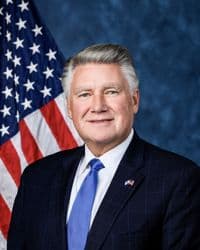
- Mark Harris
- Cosponsors
- - 15 - 0
- Introduced
- In Committee
What this bill would do
This bill, titled the "No Funding for Lawless Jurisdictions Act," proposes amendments to the Omnibus Crime Control and Safe Streets Act of 1968. It aims to restrict eligibility for certain crime control grants based on specific local policies and budget decisions. Specifically, it prohibits grant awards to states or local governments that substantially limit cash bail for covered offenses or allow personal recognizance release for convicted felons. Additionally, it prevents grants from being awarded to urbanized local governments that have reduced law enforcement agency budgets, unless caused by a proportionate budget shortfall.
Yes
Does this give the federal government more power?+4
The bill increases federal oversight by using grant eligibility to influence local bail and law enforcement budgeting decisions.
Does this reduce what the federal government spends?+2
The bill limits federal grant awards to specific state and local jurisdictions.
The opposite· 3 of 7
Would people in cities be better off under this?-4
The bill specifically targets urbanized local governments for grant reductions if they cut law enforcement budgets.
Does this change how police departments operate?-3
The bill penalizes jurisdictions that reduce law enforcement budgets, which may hinder local efforts to reform policing practices.
Does this protect the right to fair treatment by the courts?-3
The bill restricts local policies regarding cash bail and personal recognizance, which are key components of pretrial due process.
Who it would affect, and how
Potential Positive Impacts for People
- Maintaining Bail and Release Standards: Under Section 2, the bill prohibits grants to entities that substantially limit cash bail for covered offenses or allow judges to grant personal recognizance release to individuals previously convicted of a felony. This could be seen as a way to ensure specific bail and release standards are maintained for offenses that pose a threat to public safety and order, such as murder, rape, carjacking, and looting.
Potential Negative Impacts for People
- Reduction in Funding for Local Jurisdictions: Under Section 2, the Attorney General is prohibited from awarding, renewing, or extending grants to states or local governments with specific bail/release policies or to urbanized local governments that have reduced law enforcement budgets. This could result in a loss of grant funding for those specific jurisdictions.
Groups and Interests Ranking
Every group the model scored this bill for, from -10 to +10. Hover a score for the reason it gave.
- Demographic And Interest Groups
- Good For Urban Residents-4Good For African Americans-2Good For Low Income Households-2
- Social Issues And Justice
- Improves Policing Reform-3Improves Racial Equity-2Improves Poverty Reduction-1
- Economy And Finance
- Reduces Government Spending+2
- Governance And Ideology
- Increases Federal Power+4Improves Due Process-3
- 10/24/2025
- 1 Cosponsor added.
- 10/21/2025
- 1 Cosponsor added.
- 10/17/2025
- 1 Cosponsor added.
- 10/6/2025
- 2 Cosponsors added.
- 9/30/2025
- Referred to the House Committee on the Judiciary.
- 10 Cosponsors added.
- Introduced in House
 Andy Biggs
Republican · Arizona
 Josh Brecheen
Republican · Oklahoma
 Sheri Biggs
Republican · South Carolina
 Chuck Edwards
Republican · North Carolina
 Russell Fry
Republican · South Carolina
 Wesley Hunt
Republican · Texas
 Abraham Hamadeh
Republican · Arizona
 Pat Harrigan
Republican · North Carolina
 Gregory Murphy
Republican · North Carolina
 Mary Miller
Republican · Illinois
 Troy Nehls
Republican · Texas
 Ralph Norman
Republican · South Carolina
 Chip Roy
Republican · Texas
 Keith Self
Republican · Texas
 David Taylor
Republican · Ohio