Bill · H.R. 5544· House(119-HR-5544)
Ejiao Act of 2025
- Introduced
- 9/23/2025
- Last activity
- 9/23/2025 — Referred to the Committee on Ways and Means, and in addition to the Committees on Natural Resources, Foreign Affairs, Homeland Security, and the Judiciary, for a period to be subsequently determined by the Speaker, in each case for consideration of such provisions as fall within the jurisdiction of the committee concerned.
- Sponsored by
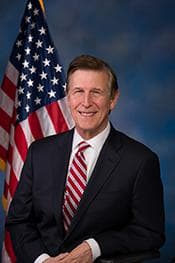
- Donald Beyer
- Cosponsors
- - 14 - 8
- Introduced
- In Committee
What this bill would do
The Ejiao Act of 2025 aims to prohibit the transportation, sale, and purchase of donkeys or donkey hides used to produce ejiao. It also bans the import, export, and sale of any products containing ejiao within the United States. The bill cites the decimation of global donkey populations and the negative impact on impoverished communities as primary reasons for these restrictions. To enforce these rules, the act establishes significant civil and criminal penalties, including fines and imprisonment. Additionally, it allows for the forfeiture of illegal goods and the equipment used to transport them.
Yes· 3 of 6
Does this better protect air, water and wildlife?+5
The bill protects global donkey populations from decimation due to the skin trade.
Would households on low incomes be better off under this?+4
The bill aims to preserve the animals that many low-income families rely on for their livelihoods.
Would people in rural areas be better off under this?+3
The bill seeks to protect the donkey populations used by rural communities for farming and transport.
The opposite
Does this protect the right to fair treatment by the courts?-2
The bill expands the government's power to seize property and assets through civil and criminal proceedings.
Who it would affect, and how
Potential Positive Impacts for People
-
Protection of Global Donkey Populations: The bill seeks to stop the slaughter of millions of donkeys used for skin production, which is currently decimating populations in Africa and Latin America (Section 2).
-
Support for Impoverished Communities: By curbing the donkey skin trade, the act aims to protect the livelihoods of families who rely on donkeys for essential tasks like farming, construction, and transporting water or children to school (Section 2).
-
Financial Stability for Owners: The bill addresses the issue where donkey owners find themselves worse off financially after selling their animals due to rising market prices (Section 2).
-
Financial Incentives for Information: The act allows for the payment of rewards to individuals who provide information leading to arrests, criminal convictions, or civil penalties related to the act (Section 6).
-
Reimbursement for Animal Care: Individuals who provide temporary care for a donkey during legal proceedings may be reimbursed for reasonable and necessary costs (Section 6).
Potential Negative Impacts for People
-
Civil Penalties: Individuals may be assessed civil penalties of up to $10,000 for violating the prohibitions set forth in the act (Section 4).
-
Criminal Penalties and Imprisonment: Persons engaging in the illegal import or export of products with a market value exceeding $350 could face fines up to $20,000 and up to five years in prison (Section 4).
-
Other Criminal Penalties: Violators who fail to meet the specific knowledge standards of the higher tier of penalties could still face fines up to $10,000 and up to one year in prison (Section 4).
-
Forfeiture of Property and Equipment: The government may seize donkeys, hides, or products, as well as vessels, vehicles, or aircraft used in the commission of a felony violation (Section 5).
-
Liability for Storage Costs: Any person assessed a penalty or convicted of an offense is liable for the costs associated with the storage, care, and maintenance of seized donkeys, hides, or products (Section 5).
Groups and Interests Ranking
Every group the model scored this bill for, from -10 to +10. Hover a score for the reason it gave.
- Demographic And Interest Groups
- Good For Low Income Households+4Good For Rural Residents+3
- Environment Energy And Infrastructure
- Improves Environmental Protections+5
- Social Issues And Justice
- Improves Poverty Reduction+3
- Economy And Finance
- Improves Consumer Protection+2
- Governance And Ideology
- Improves Government Transparency+1Improves Due Process-2
- 10/6/2026
- 1 Cosponsor added.
- 8/3/2026
- 1 Cosponsor added.
- 7/20/2026
- 1 Cosponsor added.
- 7/16/2026
- 1 Cosponsor added.
- 7/13/2026
- 1 Cosponsor added.
- 6/30/2026
- 2 Cosponsors added.
- 5/11/2026
- 1 Cosponsor added.
- 4/21/2026
- 2 Cosponsors added.
- 4/20/2026
- 1 Cosponsor added.
- 4/15/2026
- 1 Cosponsor added.
- 4/9/2026
- 1 Cosponsor added.
- 2/9/2026
- 1 Cosponsor added.
- 11/25/2025
- 1 Cosponsor added.
- 10/28/2025
- 1 Cosponsor added.
- 9/26/2025
- 1 Cosponsor added.
- 9/23/2025
- Referred to the Committee on Ways and Means, and in addition to the Committees on Natural Resources, Foreign Affairs, Homeland Security, and the Judiciary, for a period to be subsequently determined by the Speaker, in each case for consideration of such provisions as fall within the jurisdiction of the committee concerned.
- 5 Cosponsors added.
- Introduced in House
 Vern Buchanan
Republican · Florida
 Andy Barr
Republican · Kentucky
 André Carson
Democrat · Indiana
 Salud Carbajal
Democrat · California
 Maxine Dexter
Democrat · Oregon
 Brian Fitzpatrick
Republican · Pennsylvania
 Josh Gottheimer
Democrat · New Jersey
 William Keating
Democrat · Massachusetts
 Raja Krishnamoorthi
Democrat · Illinois
 Young Kim
Republican · California
 Zoe Lofgren
Democrat · California
 Mike Levin
Democrat · California
 Betty McCollum
Democrat · Minnesota
 Kevin Mullin
Democrat · California
 Eleanor Norton
Democrat · District of Columbia
 David Schweikert
Republican · Arizona
 W. Steube
Republican · Florida
 Dina Titus
Democrat · Nevada
 Claudia Tenney
Republican · New York
 Shri Thanedar
Democrat · Michigan
 Beth Van Duyne
Republican · Texas
 James Walkinshaw
Democrat · Virginia