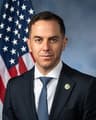
Robert Menendez (D-NJ)
To amend the Internal Revenue Code of 1986 to establish a tax credit for small businesses to provide diaper changing stations in restrooms.
A Democratic bill with 2 Republican cosponsors · See all 12 cosponsors
Last activity — Referred to the House Committee on Ways and Means.
In committee
Introduced and handed to a committee in the chamber it started in.
The committee holds it, and most bills are never heard from again. A hearing or a committee vote would be news; silence is the usual outcome, and it kills the bill without anyone voting against it.
Its path through Congress
- Introduced
- In Committee
What this bill would do
This bill amends the Internal Revenue Code of 1986 to create a tax credit for small businesses that provide diaper changing stations in their restrooms. Under the legislation, eligible small businesses can receive a tax credit equal to 70 percent of qualified expenses paid or incurred for installing diaper changing stations, diaper dispensers, or family-friendly restrooms. To qualify, a business must either have gross receipts under $5,000,000 or employ fewer than 100 full-time equivalent employees. The credit is capped at $10,000 per business location over any four-year period. Additionally, businesses must meet a family bathroom requirement ensuring both men and women have access to a public restroom equipped with a free diaper changing station and a diaper dispenser. These changes apply to taxable years beginning after December 31, 2025.
Yes· 3 of 14
- Scored +7
Would business owners be better off under this?
Provides eligible small business owners with a financial tax credit for upgrading their restroom facilities.
- Scored +7
Does this cut taxes for small businesses?
Provides a tax credit covering 70 percent of qualified expenses for installing diaper changing stations and family-friendly restrooms.
- Scored +7
Does this make it easier to run a small business?
Supports small businesses by offsetting the financial costs of restroom renovations and installations.
The opposite
No question was scored the opposite.
Who it would affect, and how
Potential Positive Impacts for People
-
Assistance for Small Businesses: Section 1(a) adds new section 45BB(a), which provides eligible small businesses with a tax credit covering 70 percent of qualified expenses. This helps offset the financial burden for smaller companies looking to upgrade their facilities.
-
Access to Free Diaper Changing Stations: Section 1(a) adds new section 45BB(c)(1)(A), which covers expenses for free diaper changing stations located in restrooms. This directly benefits parents and caregivers by making it easier to care for children while out.
-
Availability of Diaper Dispensers: Section 1(a) adds new section 45BB(c)(1)(B), which includes expenses for diaper dispensers that may also dispense hygiene products. This provides a convenient backup option for parents who may run out of supplies while away from home.
-
Improved Family Restroom Facilities: Section 1(a) adds new section 45BB(c)(1)(C), which covers the installation, renovation, or expansion of restrooms. Furthermore, new section 45BB(e) requires that both men and women have access to at least one public restroom equipped with these stations at the business location, ensuring equal access for all parents and caregivers.
Potential Negative Impacts for People
Based on the provided text, there are no explicitly stated negative consequences or burdens for individuals or groups of people in the United States.
Groups and Interests Ranking
Every group the model scored this bill for, from -10 to +10. Tap or hover a score for the reason it gave.
- Demographic And Interest Groups
- Would business owners be better off under this? — Provides eligible small business owners with a financial tax credit for upgrading their restroom facilities. Would children be better off under this? — Benefits infants and toddlers by ensuring proper changing facilities are more widely available in public restrooms. Would men be better off under this? — Mandates family restroom access ensuring fathers also have access to diaper changing stations. Would women be better off under this? — Improves public restroom accommodations and changing station access for mothers. Would people in their twenties and thirties be better off under this? — Helps young adults who are often parents of infants and toddlers navigate public spaces more easily. Would middle-income households be better off under this? — Assists middle-class families and caregivers with convenient access to diaper changing stations while shopping or dining. Would households on low incomes be better off under this? — Provides accessible public infrastructure that helps lower-income families who may rely more heavily on public accommodations. Would people in rural areas be better off under this? — Supports small businesses in rural and urban areas alike in upgrading public facilities. Would people in cities be better off under this? — Increases the availability of family-friendly restrooms in commercial areas.
- Economy And Finance
- Does this make it easier to run a small business? — Supports small businesses by offsetting the financial costs of restroom renovations and installations. Does this cut taxes for small businesses? — Provides a tax credit covering 70 percent of qualified expenses for installing diaper changing stations and family-friendly restrooms. Is this likely to grow the economy? — Encourages small business investment in facility upgrades.
- Social Issues And Justice
- Does this make child care cost less? — Improves public infrastructure and convenience for parents and caregivers with young children. Does this narrow the gap between how men and women are treated? — Ensures equal access to diaper changing facilities for both men and women caregivers.
- 10/8/2025
- 1 Cosponsor added.
- 9/17/2025
- Referred to the House Committee on Ways and Means.
- 11 Cosponsors added.
- Introduced in House
 André Carson
Democrat · Indiana
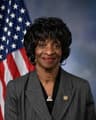 Valerie Foushee
Democrat · North Carolina
 Jimmy Gomez
Democrat · California
 Daniel Goldman
Democrat · New York
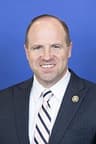 Timothy Kennedy
Democrat · New York
 Michael Lawler
Republican · New York
 Greg Landsman
Democrat · Ohio
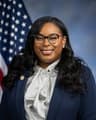 LaMonica McIver
Democrat · New Jersey
 Ryan Mackenzie
Republican · Pennsylvania
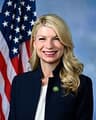 Brittany Pettersen
Democrat · Colorado
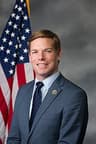 Eric Swalwell
Democrat · California
 Rashida Tlaib
Democrat · Michigan