Bill · H.R. 5351· House(119-HR-5351)
NSF AI Education Act of 2025
- Introduced
- 9/15/2025
- Last activity
- 6/25/2026 — Ordered to be Reported in the Nature of a Substitute (Amended) by the Yeas and Nays: 33 - 0.
- Sponsored by
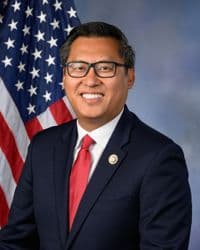
- Vince Fong
- Cosponsors
- - 14 - 14
- Introduced
What this bill would do
The NSF AI Education Act of 2025 aims to support National Science Foundation education and professional development regarding artificial intelligence. It authorizes student scholarships and fellowships for various levels of higher education, focusing on fields like teaching, manufacturing, and agriculture. The bill also establishes professional development fellowships for students, faculty, and industry professionals. Furthermore, it creates up to eight "Centers of AI Excellence" through community colleges and technical schools to drive workforce development. Additionally, the act provides awards for research on integrating artificial intelligence into K-12 education. Finally, it allows for a pilot program to create regional networks for K-12 educators and leaders.
Yes· 3 of 12
Would students be better off under this?+7
The bill establishes specific scholarships, fellowships, and professional development for students.
Does this put more money into scientific research?+7
The bill authorizes new funding for artificial intelligence research and educational integration.
Would people in their twenties and thirties be better off under this?+6
The bill provides scholarships, fellowships, and pathways to new jobs for students.
The opposite
No question was scored the opposite.
Who it would affect, and how
Potential Positive Impacts for People
-
Support for Students: The Director of the NSF may support scholarships and fellowships for undergraduate and graduate students to cover tuition, fees, and stipends for up to five years (Section 2, Subparagraph D).
-
Workforce Development: The bill establishes "Centers of AI Excellence" to enhance educational outcomes and drive workforce development by integrating artificial intelligence into teaching and learning (Section 3, Subparagraph B, clause ii).
-
Professional Growth for Educators: The bill allows for fellowships for teachers, school counselors, and other school professionals to obtain skills and training through partnerships with industry (Section 2, Subparagraph E, clause iv).
-
Support for Industry Professionals: Industry professionals may receive fellowships to take on short-term roles to instruct and educate students (Section 2, Subparagraph E, clause iii).
-
Research and Classroom Innovation: Eligible entities may receive awards to promote research on teaching models, tools, and materials for artificial intelligence in K-12 settings (Section 4, Subparagraph g, clause 2).
-
Networking for School Leaders: A pilot program may be established to provide peer support, mentoring, and research experiences for K-12 educators and principals (Section 4, Subparagraph h, clause 1).
Potential Negative Impacts for People
-
Strict Eligibility Requirements: To receive scholarships or fellowships, individuals must be a citizen, national, or lawful permanent resident of the United States (Section 2, Subparagraph G, clause i).
-
Financial Dependency on Appropriations: The establishment of Centers of AI Excellence is subject to the availability of appropriations (Section 3, Subparagraph B, clause ii).
Groups and Interests Ranking
Every group the model scored this bill for, from -10 to +10. Hover a score for the reason it gave.
- Demographic And Interest Groups
- Good For Students+7Good For Young Adults+6Good For Rural Residents+4Good For Children+3Good For Low Income Households+3
- Education And Technology
- Increases Scientific Research Funding+7Improves College Affordability+6Increases Public School Funding+4
- Economy And Finance
- Increases Job Creation+5Improves Small Business Support+3
- Environment Energy And Infrastructure
- Improves Rural Development+4
- Social Issues And Justice
- Improves Poverty Reduction+2
- 6/25/2026
- Committee Consideration and Mark-up Session Held
- Ordered to be Reported in the Nature of a Substitute (Amended) by the Yeas and Nays: 33 - 0.
- 6/8/2026
- 2 Cosponsors added.
- 5/22/2026
- 2 Cosponsors added.
- 4/23/2026
- 1 Cosponsor added.
- 4/21/2026
- 2 Cosponsors added.
- 4/20/2026
- 3 Cosponsors added.
- 3/26/2026
- 1 Cosponsor added.
- 3/12/2026
- 3 Cosponsors added.
- 1/21/2026
- 1 Cosponsor added.
- 1/13/2026
- 2 Cosponsors added.
- 1/7/2026
- 1 Cosponsor added.
- 12/18/2025
- 2 Cosponsors added.
- 12/17/2025
- 2 Cosponsors added.
- 11/19/2025
- 1 Cosponsor added.
- 10/17/2025
- 2 Cosponsors added.
- 9/26/2025
- 1 Cosponsor added.
- 9/15/2025
- Referred to the House Committee on Science, Space, and Technology.
- 2 Cosponsors added.
- Introduced in House
 Stephanie Bice
Republican · Oklahoma
 James Baird
Republican · Indiana
 Nicholas Begich
Republican · Alaska
 Mike Flood
Republican · Nebraska
 Josh Gottheimer
Democrat · New Jersey
 Laura Gillen
Democrat · New York
 Josh Harder
Democrat · California
 Mike Haridopolos
Republican · Florida
 Pat Harrigan
Republican · North Carolina
 Young Kim
Republican · California
 Mike Kennedy
Republican · Utah
 Susie Lee
Democrat · Nevada
 Sam Liccardo
Democrat · California
 Richard McCormick
Republican · Georgia
 Celeste Maloy
Republican · Utah
 Kristen McDonald Rivet
Democrat · Michigan
 Dave Min
Democrat · California
 Jay Obernolte
Republican · California
 Brittany Pettersen
Democrat · Colorado
 Andrea Salinas
Democrat · Oregon
 Shri Thanedar
Democrat · Michigan
 Derek Tran
Democrat · California
 David Valadao
Republican · California
 Derrick Van Orden
Republican · Wisconsin
 Gabe Vasquez
Democrat · New Mexico
 Eugene Vindman
Democrat · Virginia
 Matt Van Epps
Republican · Tennessee
 George Whitesides
Democrat · California