Bill · H.R. 5225· House(119-HR-5225)
Protect Innocent Victims of Taxation After Fire Extension Act
- Introduced
- 9/9/2025
- Last activity
- 9/9/2025 — Referred to the House Committee on Ways and Means.
- Sponsored by
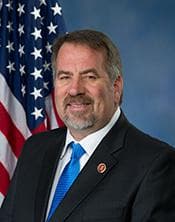
- Doug LaMalfa
- Cosponsors
- - 3 - 5
- Introduced
- In Committee
What this bill would do
This bill, titled the "Protect Innocent Victims of Taxation After Fire Extension Act," proposes to amend the Internal Revenue Code of 1986. It seeks to exclude qualified wildfire relief payments from an individual's gross income. These payments are compensation for losses, expenses, or damages resulting from a qualified wildfire disaster. A qualified wildfire disaster is defined as a federally declared disaster resulting from a forest or range fire occurring after December 31, 2014. The exclusion of these payments applies to amounts received after December 31, 2025. This provision is set to terminate for amounts received after December 31, 2032.
Yes· 3 of 6
Would people in rural areas be better off under this?+5
The bill provides financial protection for residents in areas prone to forest and range fires.
Does this improve help for people hit by a disaster?+5
The bill provides direct financial relief to wildfire victims by ensuring their compensation is not taxed.
Does this cut taxes for middle-income families?+5
The bill provides tax relief by excluding wildfire relief payments from gross income for individuals.
The opposite
Does this reduce what the federal government spends?-2
The exclusion of these payments from gross income results in a reduction of federal tax revenue.
Who it would affect, and how
Potential Positive Impacts for People
-
Tax Relief for Fire Victims: The bill ensures that gross income does not include amounts received as a qualified wildfire relief payment, which means victims do not have to pay taxes on this money (Section 2(a)).
-
Broad Coverage of Losses: The relief covers various types of hardships, including additional living expenses, lost wages, personal injury, death, or emotional distress caused by a qualified wildfire disaster (Section 2(a)).
-
Protection Against Duplicate Losses: The relief applies to losses or damages that have not already been compensated for by insurance or other means (Section 2(a)).
Potential Negative Impacts for People
-
Restrictions on Deductions and Credits: Individuals cannot claim a deduction or credit for expenditures if they have already excluded that amount from their gross income via this act (Section 2(c)(1)).
-
Impact on Property Basis: The amount excluded from gross income cannot be used to increase the basis or adjusted basis of any property (Section 2(c)(2)).
-
Expiration of Benefits: The tax exclusion is not permanent and will not apply to amounts received after December 31, 2032 (Section 2(a)).
Groups and Interests Ranking
Every group the model scored this bill for, from -10 to +10. Hover a score for the reason it gave.
- Demographic And Interest Groups
- Good For Rural Residents+5Good For Low Income Households+4Good For Middle Class Households+4
- Environment Energy And Infrastructure
- Improves Disaster Relief And F E M A+5
- Economy And Finance
- Reduces Middle Class Taxes+5Reduces Government Spending-2
- Social Issues And Justice
- Improves Poverty Reduction+3
- 10/8/2025
- 1 Cosponsor added.
- 9/26/2025
- 1 Cosponsor added.
- 9/9/2025
- Referred to the House Committee on Ways and Means.
- 6 Cosponsors added.
- Introduced in House
4 bills Congress.gov lists as related to this one — companions in the other chamber, earlier versions, and bills this one absorbed or was folded into.
 Cliff Bentz
Republican · Oregon
 Janelle Bynum
Democrat · Oregon
 Tom McClintock
Republican · California
 Blake Moore
Republican · Utah
 Joe Neguse
Democrat · Colorado
 Brad Sherman
Democrat · California
 Mike Thompson
Democrat · California
 Eugene Vindman
Democrat · Virginia