
A Republican bill with 17 Democratic cosponsors · See all 23 cosponsors
Last activity — Referred to the House Committee on the Judiciary.
In committee
Introduced and handed to a committee in the chamber it started in.
The committee holds it, and most bills are never heard from again. A hearing or a committee vote would be news; silence is the usual outcome, and it kills the bill without anyone voting against it.
Its path through Congress
- Introduced
- In Committee
What this bill would do
The BOP Release Card ID Act of 2025 requires the Director of the Bureau of Prisons to provide a photo identification release card to U.S. citizen prisoners being released from federal custody. These cards must meet REAL ID Act minimum standards and remain valid for at least 18 months. The Director must also work with States to allow these cards to be used to get state identification. Additionally, federal agencies and specific programs must accept these cards as proof of identity. Finally, the Attorney General will provide guidance to States regarding similar ID cards for state prisoners.
Yes· 3 of 15
- Scored +8
Would households on low incomes be better off under this?
Crucial for low-income individuals to access SNAP and Medicaid upon release.
- Scored +7
Would veterans be better off under this, taking everything together?
Facilitates access to VA benefits for those exiting federal custody.
- Scored +7
Does this make health care easier to get in general?
Facilitates access to Medicaid and Medicare by providing necessary proof of identity upon release.
The opposite
- Scored -2
Would immigrants be better off under this?
The bill specifically limits issuance to prisoners who are citizens of the United States.
Who it would affect, and how
Potential Positive Impacts for People
-
Access to Essential Services: Former prisoners can use the photo identification release card as proof of identity to access Social Security benefits, Medicaid, Medicare, SNAP, and programs under the Department of Education, Housing and Urban Development, and Veterans Affairs. (Section 2(a)(2)(4))
-
Facilitated State ID Acquisition: The bill requires the Director to negotiate with States to create a system where the release card can be used to obtain state identification. (Section 2(a)(2)(3)(A))
-
Federal Building Access: The release card must be accepted for individuals needing to present identification to enter a Federal building. (Section 2(a)(2)(4)(L))
-
Support for State-Level Implementation: The Attorney General will issue guidance to States on how to provide similar photo identification release cards for prisoners leaving state correctional facilities. (Section 2(b)(1))
Potential Negative Impacts for People
- No negative impacts for individuals are explicitly mentioned in the provided text.
Groups and Interests Ranking
Every group the model scored this bill for, from -10 to +10. Tap or hover a score for the reason it gave.
- Demographic And Interest Groups
- Would households on low incomes be better off under this? — Crucial for low-income individuals to access SNAP and Medicaid upon release. Would veterans be better off under this, taking everything together? — Facilitates access to VA benefits for those exiting federal custody. Would Black Americans be better off under this? — Positively impacts a demographic disproportionately affected by incarceration. Would Hispanic Americans be better off under this? — Positively impacts a demographic disproportionately affected by incarceration. Would retired people be better off under this? — Helps retirees exiting custody access Social Security and Medicare. Would people over 65 be better off under this? — Helps seniors exiting custody access Social Security and Medicare. Would immigrants be better off under this? — The bill specifically limits issuance to prisoners who are citizens of the United States.
- Social Issues And Justice
- Is this likely to lift people out of poverty? — Reduces barriers to SNAP and other poverty-alleviation programs for re-entering citizens. Does this make housing cost less? — Facilitates access to Department of Housing and Urban Development programs. Does this strengthen Social Security? — Enables former prisoners to present identity proof to access Social Security benefits. Is this likely to reduce homelessness? — Increases the ability of former prisoners to access housing assistance programs. Does this narrow racial gaps in how people are treated? — Helps marginalized populations re-enter society by removing the ID barrier to essential services.
- Healthcare
- Does this make health care easier to get in general? — Facilitates access to Medicaid and Medicare by providing necessary proof of identity upon release. Does this help veterans get medical care? — Provides former prisoners with the identification needed to access Department of Veterans Affairs programs.
- National Security And Foreign Policy
- Does this increase the pay, pensions or support veterans receive? — Ensures former prisoners who are veterans can access VA benefits via valid ID.
- Governance And Ideology
- Does this give the federal government more power? — Mandates a federal standard for ID cards and directs the AG to issue guidance to states.
- 10/5/2026
- 1 Cosponsor added.
- 7/27/2026
- 1 Cosponsor added.
- 6/8/2026
- 1 Cosponsor added.
- 6/4/2026
- 1 Cosponsor added.
- 2/23/2026
- 1 Cosponsor added.
- 12/18/2025
- 1 Cosponsor added.
- 9/15/2025
- 1 Cosponsor added.
- 9/4/2025
- Referred to the House Committee on the Judiciary.
- 16 Cosponsors added.
- Introduced in House
One bill Congress.gov lists as related to this one — companions in the other chamber, earlier versions, and bills this one absorbed or was folded into.
 Don Bacon
Republican · Nebraska
 Jason Crow
Democrat · Colorado
 Herbert Conaway
Democrat · New Jersey
 Diana DeGette
Democrat · Colorado
 Madeleine Dean
Democrat · Pennsylvania
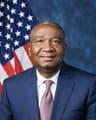 Cleo Fields
Democrat · Louisiana
 Michael Guest
Republican · Mississippi
 Mark Harris
Republican · North Carolina
 Henry Johnson
Democrat · Georgia
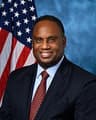 Jonathan Jackson
Democrat · Illinois
 Susie Lee
Democrat · Nevada
 Lucy McBath
Democrat · Georgia
 Eleanor Norton
Democrat · District of Columbia
 Joe Neguse
Democrat · Colorado
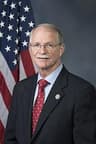 John Rutherford
Republican · Florida
 John Rose
Republican · Tennessee
 Lateefah Simon
Democrat · California
 Rashida Tlaib
Democrat · Michigan
 Shri Thanedar
Democrat · Michigan
 Derek Tran
Democrat · California
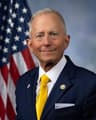 Jefferson Van Drew
Republican · New Jersey
 Eugene Vindman
Democrat · Virginia
 Bonnie Watson Coleman
Democrat · New Jersey