
A Democratic bill with 4 Democratic cosponsors · See all 4 cosponsors
Last activity — Referred to the Subcommittee on Nutrition and Foreign Agriculture.
In committee
Introduced and handed to a committee in the chamber it started in.
The committee holds it, and most bills are never heard from again. A hearing or a committee vote would be news; silence is the usual outcome, and it kills the bill without anyone voting against it.
Its path through Congress
- Introduced
- In Committee
What this bill would do
The ``Closing the Meal Gap Act of 2025'' proposes several changes to the Food and Nutrition Act of 2008. It seeks to replace the "thrifty food plan" with a "low-cost food plan" as the basis for calculating supplemental nutrition assistance program benefits. The bill also updates how medical and shelter expenses are deducted from income. Additionally, it removes a time limit regarding certain program requirements. These changes aim to adjust benefit allotments and simplify deductions for participants.
Yes· 3 of 7
- Scored +8
Would households on low incomes be better off under this?
The bill increases SNAP benefits through a new food plan, a medical expense deduction, and the removal of time limits and shelter expense caps.
- Scored +7
Is this likely to lift people out of poverty?
The bill increases food assistance by replacing the thrifty food plan with a low-cost food plan, removing shelter expense caps, and eliminating time limits.
- Scored +5
Would children be better off under this?
The bill increases food assistance amounts which benefits children in low-income households.
The opposite
No question was scored the opposite.
Who it would affect, and how
Potential Positive Impacts for People
-
Increased Benefit Basis: The bill replaces the "thrifty food plan" with the "low-cost food plan" for calculating allotments, which may change how benefits are distributed (Section 2(b)).
-
Adjustments for Location: The Secretary is required to make cost adjustments for the low-cost food plan specifically for the State of Hawaii and the urban and rural parts of Alaska (Section 2(a)(3)(B)).
-
Updated Medical Deductions: The bill replaces "excess medical" deductions with a standard medical expense deduction that is adjusted annually based on the Consumer Price Index for All Urban Consumers: Medical Care (Section 3(a)).
-
Changes to Shelter Expenses: The bill eliminates a specific cap regarding excess shelter expenses (Section 3(b)(1)).
-
Elimination of Time Limits: The Act removes a time limit currently found in Section 6 of the Food and Nutrition Act of 2008 (Section 4(a)).
Potential Negative Impacts for People
- Rounding of Diet Costs: When adjusting the cost of the diet, the results are rounded to the nearest lower-dollar increment for each household size (Section 2(a)(3)(C)).
Groups and Interests Ranking
Every group the model scored this bill for, from -10 to +10. Tap or hover a score for the reason it gave.
- Demographic And Interest Groups
- Would households on low incomes be better off under this? — The bill increases SNAP benefits through a new food plan, a medical expense deduction, and the removal of time limits and shelter expense caps. Would children be better off under this? — The bill increases food assistance amounts which benefits children in low-income households. Would people with disabilities be better off under this? — The bill implements a medical expense deduction that specifically benefits disabled members of households. Would people over 65 be better off under this? — The bill includes a standard medical expense deduction that benefits elderly members of households.
- Social Issues And Justice
- Is this likely to lift people out of poverty? — The bill increases food assistance by replacing the thrifty food plan with a low-cost food plan, removing shelter expense caps, and eliminating time limits.
- Healthcare
- Does this make health care easier to get in general? — The bill provides a standard medical expense deduction to assist with healthcare-related costs for SNAP recipients.
- Economy And Finance
- Is this likely to grow the economy? — The bill increases SNAP benefit levels, which can support local economies through increased consumer spending.
- 2/4/2026
- 1 Cosponsor added.
- 12/5/2025
- Referred to the Subcommittee on Nutrition and Foreign Agriculture.
- 9/4/2025
- Referred to the House Committee on Agriculture.
- 3 Cosponsors added.
- Introduced in House
One bill Congress.gov lists as related to this one — companions in the other chamber, earlier versions, and bills this one absorbed or was folded into.
 Salud Carbajal
Democrat · California
 Jahana Hayes
Democrat · Connecticut
 Summer Lee
Democrat · Pennsylvania
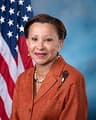 Nydia Velázquez
Democrat · New York