Bill · S. 2792· Senate(119-S-2792)
Closing the Meal Gap Act of 2025
- Introduced
- 9/11/2025
- Last activity
- 9/11/2025 — Read twice and referred to the Committee on Agriculture, Nutrition, and Forestry.
- Sponsored by
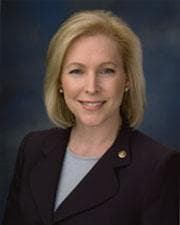
- Kirsten Gillibrand
- Cosponsors
- - 2 - 0
- Introduced
- In Committee
What this bill would do
The "Closing the Meal Gap Act of 2025" aims to amend the Food and Nutrition Act of 2008. It requires supplemental nutrition assistance program benefits to be calculated using a new "low-cost food plan" instead of the previous "thrifty food plan." This new plan involves a specific diet for a 4-person family that must be reevaluated every five years. The bill also modifies how medical and shelter expenses are deducted from income. Additionally, it removes certain time limits within the existing food assistance framework.
Yes· 3 of 5
Would households on low incomes be better off under this?+4
The bill improves food assistance by removing time limits and providing new ways to deduct medical and shelter expenses.
Would people over 65 be better off under this?+3
The bill establishes a standard medical expense deduction that can be applied to elderly members of a household.
Would people with disabilities be better off under this?+3
The bill allows for medical expense deductions for disabled members of a household.
The opposite
Does this reduce what the federal government spends?-3
The transition to a low-cost food plan likely reduces the total amount of SNAP benefit allotments provided compared to the thrifty food plan.
Who it would affect, and how
Potential Positive Impacts for People
-
Updated Benefit Calculations: The bill replaces the "thrifty food plan" with a "low-cost food plan" (Section 2(b)), which is adjusted annually on October 1 to reflect current food costs (Section 2(a)(3)(C)). This ensures benefit allotments stay current with market prices.
-
Geographic Adjustments: The Secretary will make cost adjustments for the State of Hawaii and urban and rural parts of Alaska (Section 2(a)(3)(B)), which helps account for higher food costs in those specific regions.
-
Standard Medical Deduction: The bill establishes a standard medical expense deduction of $140 for fiscal year 2025, which is adjusted annually based on the Consumer Price Index for Medical Care (Section 3(a)(1)(D)). This allows for a predictable deduction for the elderly or disabled.
-
Shelter Expense Changes: The bill eliminates the cap on excess shelter expenses (Section 3(b)(1)), removing a previous limitation on how these costs are handled.
-
Removal of Time Limits: The act eliminates a specific time limit previously found in Section 6 of the Food ander Nutrition Act of 2008 (Section 4(a)).
Potential Negative Impacts for People
-
Rounding of Benefit Amounts: When adjusting the cost of the diet for household sizes, the result is rounded to the nearest lower-dollar increment (Section 2(a)(3)(C)).
-
Medical Expense Limitations: While a standard medical deduction is established, the bill specifies that actual medical expense deductions for elderly or disabled members are exclusive of special diets (Section 3(a)(1)(2)).
Groups and Interests Ranking
Every group the model scored this bill for, from -10 to +10. Hover a score for the reason it gave.
- Demographic And Interest Groups
- Good For Low Income Households+4Good For People With Disabilities+3Good For Seniors+3
- Economy And Finance
- Reduces Government Spending-3
- Social Issues And Justice
- Improves Poverty Reduction+3
- Healthcare
- Improves Healthcare Access+2
- 9/11/2025
- Read twice and referred to the Committee on Agriculture, Nutrition, and Forestry.
- 3 Cosponsors added.
- Introduced in Senate
One bill Congress.gov lists as related to this one — companions in the other chamber, earlier versions, and bills this one absorbed or was folded into.
 Cory Booker
Democrat · New Jersey
 John Fetterman
Democrat · Pennsylvania
 Bernie Sanders
Independent · Vermont