Bill · H.R. 5123· House(119-HR-5123)
Indoor Air Quality and Healthy Schools Act of 2025
- Introduced
- 9/3/2025
- Last activity
- 9/3/2025 — Referred to the House Committee on Energy and Commerce.
- Sponsored by
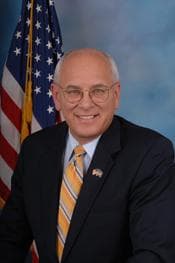
- Paul Tonko
- Cosponsors
- - 22 - 3
- Introduced
- In Committee
What this bill would do
-
This legislation directs the Environmental Protection Agency to create a national program focused on reducing indoor air contaminants and human health risks.
-
The bill requires the Administrator to publish a list of indoor contaminants of concern, set science-based voluntary guidelines, and establish concentration limits.
-
It authorizes the Administrator to provide technical and financial assistance, including grants, to state, local, and tribal governments, as well as schools and housing authorities.
-
The measure establishes a voluntary healthy building certification program and directs the creation of model provisions for building codes.
-
It mandates a national assessment of indoor air quality in schools and covered childcare facilities along with targeted technical support.
-
The text authorizes appropriations of $100,000,000 for each of fiscal years 2026 through 2030 to carry out the provisions of the Act.
Yes· 3 of 12
Would children be better off under this?+5
The bill specifically targets improving air quality in schools and childcare facilities.
Does this better protect air, water and wildlife?+5
The bill establishes a national program to assess and reduce exposure to various indoor air contaminants.
Does this put more money into public schools?+4
The bill authorizes support for improving indoor air quality in buildings used by local educational agencies.
The opposite
Does this make it easier to run a small business?-2
The bill may impose new regulatory burdens and management plan requirements on building owners and operators.
Does this improve buses, trains and other public transport?-1
The bill focuses on building design and maintenance rather than transit infrastructure.
Who it would affect, and how
Potential Positive Impacts for People
-
Section 3(b)(15) ensures consideration of disadvantaged communities and individuals by providing access to financial and technical assistance regardless of income, race, color, gender, national origin, tribal affiliation, or disability, which helps protect vulnerable populations.
-
Section 4(b) establishes a minimum initial list of contaminants of concern that includes particulate matter, carbon monoxide, nitrogen dioxide, ozone, formaldehyde, and radon, which provides clear targets for improving air quality in homes and public spaces.
-
Section 6 allows the Administrator to provide financial assistance and grants to state, local, and tribal governments, housing authorities, and nonprofit organizations to help develop programs that assess and improve indoor air quality.
-
Section 9 requires a national assessment of indoor air quality in schools and covered childcare facilities and provides tailored guidance and support to protect students, teachers, parents, and school workers.
Potential Negative Impacts for People
-
Section 6(c) sets a matching requirement where the federal share of the cost for financial assistance activities cannot exceed 75 percent, which places a financial burden on state, local, and tribal governments or organizations to come up with the remaining funds.
-
Section 8 requires the Administrator to recommend model provisions for building design, operation, and maintenance, and Section 8(g) calculates the incremental costs associated with compliance for new homes and commercial buildings, which could potentially drive up construction and housing costs for everyday people.
Groups and Interests Ranking
Every group the model scored this bill for, from -10 to +10. Hover a score for the reason it gave.
- Demographic And Interest Groups
- Good For Children+5Good For Low Income Households+3Good For Seniors+3Good For Native Americans+2Good For People With Disabilities+2Good For Urban Residents+2Good For Women+2
- Education And Technology
- Increases Public School Funding+4
- Environment Energy And Infrastructure
- Improves Environmental Protections+5Improves Public Transit-1
- Healthcare
- Improves Healthcare Access+3
- Economy And Finance
- Improves Small Business Support-2
- Governance And Ideology
- Improves Government Transparency+2
- Social Issues And Justice
- Improves Poverty Reduction+2
- 9/24/2026
- 1 Cosponsor added.
- 8/3/2026
- 1 Cosponsor added.
- 7/2/2026
- 1 Cosponsor added.
- 6/9/2026
- 1 Cosponsor added.
- 5/19/2026
- 1 Cosponsor added.
- 5/14/2026
- 1 Cosponsor added.
- 5/13/2026
- 1 Cosponsor added.
- 5/4/2026
- 1 Cosponsor added.
- 4/29/2026
- 1 Cosponsor added.
- 4/27/2026
- 1 Cosponsor added.
- 4/22/2026
- 2 Cosponsors added.
- 4/14/2026
- 1 Cosponsor added.
- 4/2/2026
- 1 Cosponsor added.
- 3/30/2026
- 1 Cosponsor added.
- 2/23/2026
- 1 Cosponsor added.
- 2/9/2026
- 1 Cosponsor added.
- 10/17/2025
- 1 Cosponsor added.
- 10/3/2025
- 1 Cosponsor added.
- 9/19/2025
- 1 Cosponsor added.
- 9/18/2025
- 2 Cosponsors added.
- 9/11/2025
- 2 Cosponsors added.
- 9/3/2025
- Referred to the House Committee on Energy and Commerce.
- 1 Cosponsor added.
- Introduced in House
 Nikki Budzinski
Democrat · Illinois
 Maxine Dexter
Democrat · Oregon
 Brian Fitzpatrick
Republican · Pennsylvania
 Adelita Grijalva
Democrat · Arizona
 Jared Huffman
Democrat · California
 Josh Harder
Democrat · California
 Sara Jacobs
Democrat · California
 Timothy Kennedy
Democrat · New York
 Mike Levin
Democrat · California
 Michael Lawler
Republican · New York
 Seth Magaziner
Democrat · Rhode Island
 Kevin Mullin
Democrat · California
 Kelly Morrison
Democrat · Minnesota
 Eleanor Norton
Democrat · District of Columbia
 Donald Norcross
Democrat · New Jersey
 Joe Neguse
Democrat · Colorado
 Scott Peters
Democrat · California
 Mike Quigley
Democrat · Illinois
 Mary Gay Scanlon
Democrat · Pennsylvania
 Greg Stanton
Democrat · Arizona
 Eric Sorensen
Democrat · Illinois
 Andrea Salinas
Democrat · Oregon
 Juan Vargas
Democrat · California
 Jefferson Van Drew
Republican · New Jersey
 James Walkinshaw
Democrat · Virginia