Bill · H.R. 4896· House(119-HR-4896)
Warehouse Worker Protection Act
- Introduced
- 8/5/2025
- Last activity
- 8/5/2025 — Referred to the Committee on Education and Workforce, and in addition to the Committee on Energy and Commerce, for a period to be subsequently determined by the Speaker, in each case for consideration of such provisions as fall within the jurisdiction of the committee concerned.
- Sponsored by
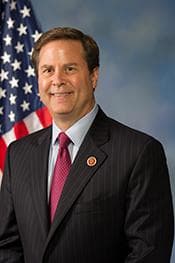
- Donald Norcross
- Cosponsors
- - 20 - 1
- Introduced
- In Committee
What this bill would do
The Warehouse Worker Protection Act aims to establish specific protections for workers in warehouse distribution centers. It creates a Fairness and Transparency Office within the Department of Labor to oversee these new protections. The bill regulates how employers use work quotas and workplace surveillance to ensure worker safety and transparency. It also mandates that employers provide written descriptions of quotas and allows employees to access their work speed data. Additionally, the act requires new OSHA standards regarding ergonomic management and medical treatment. Finally, it introduces stricter enforcement and penalties for violations of these standards.
Yes· 3 of 8
Would union members be better off under this?+6
The bill enhances worker rights and supports the ability of workers to organize and advocate for themselves.
Would households on low incomes be better off under this?+5
The bill provides essential safety and wage-related protections for workers in demanding distribution center roles.
Does this strengthen the rights of workers to organise?+5
The bill strengthens worker protections and expands the rights of employees to organize and file complaints.
The opposite
Would business owners be better off under this?-6
Employers face significant new regulatory burdens, administrative costs, and potential legal penalties.
Does this make it easier to run a small business?-3
The bill imposes new administrative, recordkeeping, and compliance costs on covered employers.
Who it would affect, and how
Potential Positive Impacts for People
-
Increased Transparency Regarding Work Quotas: Employers must provide written descriptions of all quotas, including how they are calculated and any potential discipline resulting from failure to meet them (Sec. 102(b)(1)).
-
Protection of Basic Human Needs: The bill prohibits quotas that prevent employees from taking required meal or rest breaks, using bathroom facilities, or complying with health and safety laws (Sec. 102(c)(1)).
-
Improved Health and Safety Standards: The act requires the development of new OSHA standards for ergonomic program management to protect workers from musculoskeletal disorders (Sec. 301).
-
Faster Medical Attention: New standards would require employers to have trained personnel available to provide first aid and ensure employees are referred to medical professionals without delay (Sec. 302).
-
Enhanced Worker Rights and Protections: Workers are granted the right to request their work speed data and are protected from retaliation for exercising their rights under this act (Sec. 102(f); Sec. 102(i)).
-
Mandatory Rest Periods: The bill requires employers to provide a 15-minute paid rest break for every 4 hours worked (Sec. 102(h)(1)).
Potential Negative Impacts for People
-
Increased Administrative Burdens for Employers: Covered employers must maintain extensive contemporaneous records of employee work speed data and provide various written notices and descriptions (Sec. 102(e); Sec. 102(b)).
-
Strict Compliance Requirements for Quotas: Employers face penalties if they take adverse employment actions based on quotas that were not properly described to the employee or that violate specific productivity standards (Sec. 102(c); Sec. 102(2)).
-
Potential Financial Penalties: Employers found in violation of the act may be subject to significant civil penalties, including amounts up to $76,987 per violation or higher for willful violations (Sec. 103).
-
Stringent OSHA Requirements: Employers will be subject to new, mandatory standards regarding ergonomic job evaluations, hazard control, and medical management (Sec. 301).
Groups and Interests Ranking
Every group the model scored this bill for, from -10 to +10. Hover a score for the reason it gave.
- Demographic And Interest Groups
- Good For Union Workers+6Good For Low Income Households+5Good For People With Disabilities+4Good For Young Adults+3Good For Business Owners-6
- Healthcare
- Improves Healthcare Access+4
- Governance And Ideology
- Improves Government Transparency+3
- Economy And Finance
- Improves Union Protections+5Improves Small Business Support-3
- Social Issues And Justice
- Improves Poverty Reduction+2
- 4/9/2026
- 2 Cosponsors added.
- 11/10/2025
- 1 Cosponsor added.
- 10/24/2025
- 1 Cosponsor added.
- 9/30/2025
- 1 Cosponsor added.
- 9/8/2025
- 1 Cosponsor added.
- 9/3/2025
- 1 Cosponsor added.
- 8/26/2025
- 1 Cosponsor added.
- 8/8/2025
- 1 Cosponsor added.
- 8/5/2025
- Referred to the Committee on Education and Workforce, and in addition to the Committee on Energy and Commerce, for a period to be subsequently determined by the Speaker, in each case for consideration of such provisions as fall within the jurisdiction of the committee concerned.
- 12 Cosponsors added.
- Introduced in House
One bill Congress.gov lists as related to this one — companions in the other chamber, earlier versions, and bills this one absorbed or was folded into.
 Brendan Boyle
Democrat · Pennsylvania
 André Carson
Democrat · Indiana
 Debbie Dingell
Democrat · Michigan
 Jesús García
Democrat · Illinois
 Maggie Goodlander
Democrat · New Hampshire
 Pramila Jayapal
Democrat · Washington
 Timothy Kennedy
Democrat · New York
 Michael Lawler
Republican · New York
 Lucy McBath
Democrat · Georgia
 Seth Magaziner
Democrat · Rhode Island
 LaMonica McIver
Democrat · New Jersey
 Eleanor Norton
Democrat · District of Columbia
 Alexandria Ocasio-Cortez
Democrat · New York
 Ilhan Omar
Democrat · Minnesota
 Delia Ramirez
Democrat · Illinois
 Brad Sherman
Democrat · California
 Linda Sánchez
Democrat · California
 Haley Stevens
Democrat · Michigan
 Andrea Salinas
Democrat · Oregon
 Shri Thanedar
Democrat · Michigan
 Maxine Waters
Democrat · California