Bill · H.R. 4894· House(119-HR-4894)
Deceptive Practices and Voter Intimidation Prevention Act of 2025
- Introduced
- 8/5/2025
- Last activity
- 8/5/2025 — Referred to the House Committee on the Judiciary.
- Sponsored by
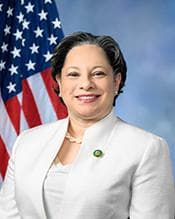
- Jennifer McClellan
- Cosponsors
- - 34 - 0
- Introduced
- In Committee
What this bill would do
The Deceptive Practices and Voter Intimidation Prevention Act of 2025 aims to prohibit deceptive practices in Federal elections. It prohibits communicating materially false information regarding the time, place, or manner of elections, as well as voter eligibility, within 60 days of an election. The bill also bans the use of artificial intelligence to produce such false information. Additionally, it prohibits intentionally hindering, interfering with, or preventing individuals from voting or registering to vote. The legislation establishes criminal penalties, such as fines and imprisonment, for these violations. Finally, it provides for corrective actions by the Attorney General and a private right of action for aggrieved persons.
Yes· 3 of 8
Does this protect the right to vote?+8
The bill prohibits deceptive practices and artificial intelligence-generated misinformation intended to impede voting in federal elections.
Would Black Americans be better off under this?+7
The bill addresses historical and contemporary targeting of Black voters through misinformation and intimidation.
Would Hispanic Americans be better off under this?+7
The bill provides protections against deceptive practices specifically noted as targeting Latino communities.
The opposite
No question was scored the opposite.
Who it would affect, and how
Potential Positive Impacts for People
-
Protection from Misinformation: The bill prohibits the communication of materially false information regarding election times, places, or voter eligibility within 60 days of an election (Section 3(a)(2)(A)). This could prevent voters from being misled about how or when to vote.
-
Prevention of AI-Generated Deception: The act specifically bans using artificial intelligence to produce false information intended to impede voting (Section 3(a)(2)(B)). This addresses the use of generative AI to create synthetic content like fake images or text to deceive the electorate.
-
Increased Accountability for Voter Interference: By making it unlawful to intentionally hinder, interfere with, or prevent people from voting or registering to vote, the bill seeks to protect the physical and digital process of voting (Section 3(a)(3)). This includes preventing the use of fake polling places or ballot boxes.
-
Correction of False Narratives: The Attorney General is authorized to communicate accurate, objective information to the public to correct materially false information if local officials have not done so (Section 4(a)(1)). This ensures voters can receive the correct facts to exercise their rights.
-
Legal Recourse for Victims: The bill establishes a private right of action, allowing aggrieved individuals to sue for preventive relief, such as injunctions, in a United States district court (Section 3(b)(1)(A)(2)). This provides a way for citizens to take legal action against those violating these protections.
Potential Negative Impacts for People
-
Criminal Penalties and Imprisonment: Individuals found guilty of communicating false information about elections or interfering with voting can face fines and up to one year in prison (Section 3(c)(1)(A)(2) and 3(c)(3)(2)).
-
Potential Burdens on Legal Proceedings: The bill allows for the recovery of reasonable attorney's fees by the prevailing party in civil actions (Section 3(b)(1)(A)(2)), which could impact the costs associated with such legal disputes.
Groups and Interests Ranking
Every group the model scored this bill for, from -10 to +10. Hover a score for the reason it gave.
- Demographic And Interest Groups
- Good For African Americans+7Good For Hispanic Americans+7Good For Native Americans+7Good For Immigrants+6
- Social Issues And Justice
- Improves Voting Rights+8Improves Voting Access+7
- Governance And Ideology
- Improves Government Transparency+5
- Education And Technology
- Increases Big Tech Regulation+4
- 10/17/2025
- 1 Cosponsor added.
- 8/5/2025
- Referred to the House Committee on the Judiciary.
- 33 Cosponsors added.
- Introduced in House
One bill Congress.gov lists as related to this one — companions in the other chamber, earlier versions, and bills this one absorbed or was folded into.
 Gabe Amo
Democrat · Rhode Island
 Shontel Brown
Democrat · Ohio
 Yvette Clarke
Democrat · New York
 André Carson
Democrat · Indiana
 Troy Carter
Democrat · Louisiana
 Danny Davis
Democrat · Illinois
 Dwight Evans
Democrat · Pennsylvania
 Cleo Fields
Democrat · Louisiana
 Valerie Foushee
Democrat · North Carolina
 Shomari Figures
Democrat · Alabama
 Steven Horsford
Democrat · Nevada
 Jared Huffman
Democrat · California
 Henry Johnson
Democrat · Georgia
 Robin Kelly
Democrat · Illinois
 Sydney Kamlager-Dove
Democrat · California
 Stephen Lynch
Democrat · Massachusetts
 Summer Lee
Democrat · Pennsylvania
 George Latimer
Democrat · New York
 Kweisi Mfume
Democrat · Maryland
 Gregory Meeks
Democrat · New York
 Seth Moulton
Democrat · Massachusetts
 Lucy McBath
Democrat · Georgia
 LaMonica McIver
Democrat · New Jersey
 Eleanor Norton
Democrat · District of Columbia
 Brittany Pettersen
Democrat · Colorado
 Delia Ramirez
Democrat · Illinois
 Terri Sewell
Democrat · Alabama
 Lateefah Simon
Democrat · California
 Bennie Thompson
Democrat · Mississippi
 Rashida Tlaib
Democrat · Michigan
 Shri Thanedar
Democrat · Michigan
 Nikema Williams
Democrat · Georgia
 Frederica Wilson
Democrat · Florida
 Bonnie Watson Coleman
Democrat · New Jersey