Bill · H.R. 4811· House(119-HR-4811)
Cell-Site Simulator Warrant Act of 2025
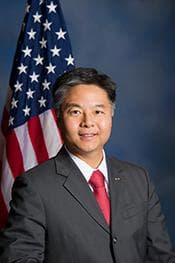
- Introduced
- 7/29/2025
- Last activity
- 7/29/2025 — Referred to the Committee on the Judiciary, and in addition to the Committees on Intelligence (Permanent Select), Armed Services, and Energy and Commerce, for a period to be subsequently determined by the Speaker, in each case for consideration of such provisions as fall within the jurisdiction of the committee concerned.
- Sponsored by
- Ted Lieu
- Cosponsors
- - 0 - 1
- Introduced
- In Committee
What this bill would do
The Cell-Site Simulator Warrant Act of 2025 seeks to regulate the use of cell-site simulators by amending title 18 of the United States Code. Under this bill, the use of such devices is generally prohibited for individuals, entities, and intelligence community members targeting United States persons. Exceptions are made for law enforcement actions authorized by a warrant, specific emergencies, research, and certain protective or correctional duties. The bill establishes strict requirements for obtaining warrants, including proving that other investigative methods have failed or are unsuitable. It also mandates strict minimization procedures and provides for judicial oversight and annual reporting to Congress.
Yes· 3 of 4
Does this protect people from being watched or searched?+8
The bill establishes strong protections against warrantless electronic tracking through strict warrant and minimization requirements.
Does this give people more control over their personal data?+7
The bill restricts unauthorized electronic surveillance and requires minimization of data collection regarding non-target individuals.
Does this change how police departments operate?+6
The bill implements strict judicial oversight and warrant requirements for the use of cell-site simulators by law enforcement.
The opposite
No question was scored the opposite.
Who it would affect, and how
Potential Positive Impacts for People
-
Protection against unauthorized surveillance: The bill prohibits the knowing use of cell-site simulators by individuals or entities, which could prevent unauthorized tracking of people (Section 2(a)(1)).
-
Judicial Oversight: Law enforcement must obtain a warrant from a court of competent jurisdiction before using a cell-s-site simulator, ensuring that a judge reviews the necessity of the surveillance (Section 2(d)(1)(A)(i)).
-
Strict Warrant Requirements: To get a warrant, agencies must prove that other tracking methods failed or are too dangerous, and they must specify the exact area and time of operation (Section 2(d)(1)(A)(ii)).
-
Prevention of Community Inconvenience: Courts are instructed not to grant warrants that would unreasonably inconvenience the community or put public safety at risk (Section 2(d)(1)(A)(iii)).
-
Privacy Protections for Bystanders: The bill requires agencies to disclose potential disruptions to mobile services, such as the ability to make 9-1-1 calls, and mandates that agencies minimize the acquisition and retention of information regarding unauthorized persons (Section 2(d)(1)(C)(i) and Section 2(f)(1)).
-
Right to Legal Redress: Any person subject to an unlawful operation of a cell-site simulator may bring a civil action for damages and attorney fees (Section 2(i)).
-
Accountability through Reporting: The bill requires several Inspectors General to submit annual reports to Congress regarding the use and compliance of these devices, which provides oversight on how often they are used and whether they are being used correctly (Section s 2(d)).
Potential Negative Impacts for People
-
Financial Penalties: Individuals or entities that violate the prohibition on using a cell-site simulator can be fined up to $250,000 (Section 2(b)).
-
Restrictions on Intelligence Gathering: Elements of the intelligence community are prohibited from using cell-site simulators outside the United States if the subject is a United States person (Section 2(a)(1)(B)).
-
Increased Burden on Law Enforcement: To use a cell-site simulator, law enforcement must meet several high-bar requirements, such as demonstrating that other methods have failed or are unlikely to succeed (Section 2(d)(1)(A)(ii)).
-
Strict Limitations on Time: Warrants and their extensions are limited to a maximum of 30 days, which could impact long-term investigations (Section 2(d)(1)(A)(iv) and (v)).
Groups and Interests Ranking
Every group the model scored this bill for, from -10 to +10. Hover a score for the reason it gave.
- Governance And Ideology
- Improves Privacy Rights+8Improves Government Transparency+5
- Education And Technology
- Improves Data Privacy+7
- Social Issues And Justice
- Improves Policing Reform+6
- 7/29/2025
- Referred to the Committee on the Judiciary, and in addition to the Committees on Intelligence (Permanent Select), Armed Services, and Energy and Commerce, for a period to be subsequently determined by the Speaker, in each case for consideration of such provisions as fall within the jurisdiction of the committee concerned.
- 1 Cosponsor added.
- Introduced in House
4 bills Congress.gov lists as related to this one — companions in the other chamber, earlier versions, and bills this one absorbed or was folded into.
 Tom McClintock
Republican · California