Bill · H.R. 4806· House(119-HR-4806)
College Transparency Act
- Introduced
- 7/29/2025
- Last activity
- 7/29/2025 — Referred to the House Committee on Education and Workforce.
- Sponsored by
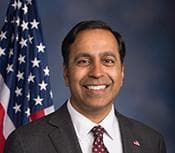
- Raja Krishnamoorthi
- Cosponsors
- - 12 - 11
- Introduced
- In Committee
What this bill would do
The College Transparency Act aims to establish a secure and privacy-protected postsecondary student data system. This system will be developed and maintained by the Commissioner of the National Center for Education Statistics. The goal is to accurately evaluate student enrollment, progression, completion, and postcollegiate outcomes, as well as higher education costs. It is designed to provide students and families with accurate and customizable information for making educational decisions. The system will also work to reduce the reporting burden on institutions of higher education.
Yes· 3 of 21
Would students be better off under this?+5
The bill creates a system to help students make informed postsecondary decisions.
Does this make what the government does easier for the public to see?+5
The bill enhances transparency regarding postsecondary outcomes and institutional performance.
Does this give people more control over their personal data?+5
The bill establishes strong data privacy and security protocols for student information.
The opposite
Would immigrants be better off under this?-2
The bill explicitly prohibits the collection of citizenship status to protect students.
Does this give the government more power to monitor people inside the country?-2
The collection of student-level data could be perceived as increased federal data collection.
Who it would affect, and how
Potential Positive Impacts for People
-
Enhanced decision-making for students and families: The system will provide accurate, complete, and customizable information to assist students and families in making decisions about postsecondary education (Section 2, subsection (l)(1)(A)(iii)).
-
Increased transparency and institutional improvement: The data system is intended to assist with transparency and the analysis of Federal aid programs (Section 2, subsection (l)(1)(A)(ii)).
-
Reduced administrative burden for schools: The system aims to reduce the reporting burden on institutions of higher education (Section 2, subsection (l)(1)(A)(iv)).
-
Protection of student privacy: The bill mandates the use of modern, relevant privacy- and security-enhancing technology and requires the Commissioner to follow Federal data minimization practices (Section 2, subsection (l)(1)(C)(iii-v)).
-
Consumer-friendly access to data: The Commissioner must make summary aggregate information available through a user-friendly website and analytic tool that allows users to customize and filter information (Section 2, subsection (l)(4)(A)).
-
Opportunities for students to correct records: A process will be established for students to request access to their personal information for inspection and to request corrections to inaccuracies (Section 2, subsection (l)(3)(C)(iv)).
Potential Negative Impacts for People
-
Privacy risks regarding sensitive information: While the bill includes protections, it requires the collection of various student-level data elements, such as race, ethnicity, age, gender, and Federal Pell Grant or loan recipient status (Section 2, subsection (l)(2)(C)).
-
Potential for unauthorized access: The bill acknowledges the need for security protocols to protect against unauthorized access, use, and disclosure of data (Section 2, subsection (l)(8)).
-
Risk of unlawful disclosure: There is a risk that individuals with access to the system could willfully disclose personally identifiable information (Section 2, subsection (l)(7)(A)).
Groups and Interests Ranking
Every group the model scored this bill for, from -10 to +10. Hover a score for the reason it gave.
- Demographic And Interest Groups
- Good For Students+5Good For Young Adults+4Good For Low Income Households+3Good For Veterans+3Good For African Americans+2Good For Asian Americans+2Good For Hispanic Americans+2Good For Middle Class Households+2Good For Native Americans+2Good For Women+2Good For Immigrants-2
- Governance And Ideology
- Improves Government Transparency+5Improves Privacy Rights+4Increases Federal Power+2
- Education And Technology
- Improves Data Privacy+5Improves College Affordability+3Increases Scientific Research Funding+2
- Social Issues And Justice
- Improves Gender Equality+2Improves Racial Equity+2
- Economy And Finance
- Improves Consumer Protection+3
- National Security And Foreign Policy
- Improves Cybersecurity Defense+2Improves Veterans Benefits+2Increases Domestic Surveillance-2
- 10/6/2026
- 2 Cosponsors added.
- 9/15/2026
- 2 Cosponsors added.
- 9/8/2026
- 2 Cosponsors added.
- 9/3/2026
- 2 Cosponsors added.
- 9/1/2026
- 2 Cosponsors added.
- 6/29/2026
- 2 Cosponsors added.
- 11/4/2025
- 1 Cosponsor added.
- 10/28/2025
- 1 Cosponsor added.
- 8/5/2025
- 1 Cosponsor added.
- 7/29/2025
- Referred to the House Committee on Education and Workforce.
- 8 Cosponsors added.
- Introduced in House
One bill Congress.gov lists as related to this one — companions in the other chamber, earlier versions, and bills this one absorbed or was folded into.
 Suzanne Bonamici
Democrat · Oregon
 Don Bacon
Republican · Nebraska
 Joaquin Castro
Democrat · Texas
 Angie Craig
Democrat · Minnesota
 Diana DeGette
Democrat · Colorado
 Rosa DeLauro
Democrat · Connecticut
 Brian Fitzpatrick
Republican · Pennsylvania
 Marie Perez
Democrat · Washington
 Mike Kelly
Republican · Pennsylvania
 Thomas Kean
Republican · New Jersey
 Jennifer Kiggans
Republican · Virginia
 Stephen Lynch
Democrat · Massachusetts
 Michael Lawler
Republican · New York
 Nicole Malliotakis
Republican · New York
 Ryan Mackenzie
Republican · Pennsylvania
 Zachary Nunn
Republican · Iowa
 August Pfluger
Republican · Texas
 Scott Peters
Democrat · California
 Brad Sherman
Democrat · California
 Elise Stefanik
Republican · New York
 Mikie Sherrill
Democrat · New Jersey
 Shri Thanedar
Democrat · Michigan
 Nikema Williams
Democrat · Georgia