Bill · H.R. 4719· House(119-HR-4719)
Freedom to Move Act
- Introduced
- 7/23/2025
- Last activity
- 7/24/2025 — Referred to the Subcommittee on Highways and Transit.
- Sponsored by
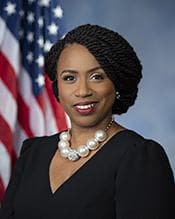
- Ayanna Pressley
- Cosponsors
- - 26 - 0
- Introduced
- In Committee
What this bill would do
The Freedom to Move Act directs the Secretary of Transportation to establish a competitive grant program known as "Freedom to Move Grants." These grants are intended to help states, counties, and local municipalities provide fare-free public transportation. The bill also aims to improve and expand access to safe, accessible, and reliable mass transit systems. Funds can be used for implementing fare-free services and improving public transportation, particularly in underserved communities. Eligible entities must submit detailed applications regarding transit redesign, equity evaluations, and operational costs. The program is authorized to receive $5,000,000,000 for each fiscal year from 2026 through 2030.
Yes· 3 of 16
Does this improve buses, trains and other public transport?+8
The bill provides $5 billion annually to expand, improve, and make public transit fare-free.
Would households on low incomes be better off under this?+7
The bill provides direct financial relief by making public transportation fare-free for low-income users.
Would people with disabilities be better off under this?+6
The bill funds improvements to bus stop accessibility and mandates consultation with disability advocates.
The opposite
Does this reduce what the federal government spends?-1
The bill authorizes $25 billion in new federal spending over five years.
Who it would affect, and how
Potential Positive Impacts for People
-
Financial Relief through Fare-Free Transit: The bill aims to invest in efforts to provide fare-free public transportation, which covers lost fare revenue (Section 2; Section 3(a)).
-
Improved Community Livability: By supporting the expansion of safe, accessible, and reliable mass transit, the act seeks to improve the livability of communities (Section 2).
-
Enhanced Transit Accessibility and Safety: Funds can be used for bus stop safety and accessibility improvements, as well as providing pedestrian and bike shelters (Section 3(e)(2)).
-
Focus on Underserved Communities: The bill prioritizes improving bus service for low-income and historically underserved communities (Section 3(b)(2); Section 3(e)(2)).
-
Reduction in Criminalization: The act requires entities to plan for the elimination of fare evasion policies and the end of the criminalization of individuals evading fares (Section 3(b)(5)(C)).
Potential Negative Impacts for People
-
Increased Operational Demands: Increased ridership resulting from fare-free programs may lead to additional costs related to fuel, personnel, maintenance, and other operational expenses (Section 3(b)(6)).
-
Workplace Safety Concerns: The bill notes a need to address and provide training for assaults on transit employees (Section 3(b)(7)).
Groups and Interests Ranking
Every group the model scored this bill for, from -10 to +10. Hover a score for the reason it gave.
- Demographic And Interest Groups
- Good For Low Income Households+7Good For People With Disabilities+6Good For Urban Residents+5Good For African Americans+4Good For Hispanic Americans+4Good For Seniors+4Good For Children+3Good For Rural Residents+3Good For Women+2
- Social Issues And Justice
- Improves Disability Rights+5Improves Racial Equity+5Improves Policing Reform+4Improves Poverty Reduction+3
- Environment Energy And Infrastructure
- Improves Public Transit+8Improves Rural Development+3
- Economy And Finance
- Improves Union Protections+2Reduces Government Spending-1
- 4/20/2026
- 1 Cosponsor added.
- 12/10/2025
- 1 Cosponsor added.
- 9/26/2025
- 1 Cosponsor added.
- 7/29/2025
- 2 Cosponsors added.
- 7/24/2025
- Referred to the Subcommittee on Highways and Transit.
- 7/23/2025
- Referred to the House Committee on Transportation and Infrastructure.
- 21 Cosponsors added.
- Introduced in House
One bill Congress.gov lists as related to this one — companions in the other chamber, earlier versions, and bills this one absorbed or was folded into.
 Alma Adams
Democrat · North Carolina
 Sanford Bishop
Democrat · Georgia
 Joyce Beatty
Democrat · Ohio
 Shontel Brown
Democrat · Ohio
 James Clyburn
Democrat · South Carolina
 Emanuel Cleaver
Democrat · Missouri
 André Carson
Democrat · Indiana
 Jasmine Crockett
Democrat · Texas
 Danny Davis
Democrat · Illinois
 Dwight Evans
Democrat · Pennsylvania
 Cleo Fields
Democrat · Louisiana
 Jahana Hayes
Democrat · Connecticut
 Henry Johnson
Democrat · Georgia
 Jonathan Jackson
Democrat · Illinois
 Summer Lee
Democrat · Pennsylvania
 Gwen Moore
Democrat · Wisconsin
 Grace Meng
Democrat · New York
 Seth Magaziner
Democrat · Rhode Island
 LaMonica McIver
Democrat · New Jersey
 Eleanor Norton
Democrat · District of Columbia
 Alexandria Ocasio-Cortez
Democrat · New York
 Ilhan Omar
Democrat · Minnesota
 Delia Ramirez
Democrat · Illinois
 Lateefah Simon
Democrat · California
 Rashida Tlaib
Democrat · Michigan
 Nikema Williams
Democrat · Georgia