Bill · H.R. 4659· House(119-HR-4659)
Identifying Regulatory Barriers to Housing Supply Act
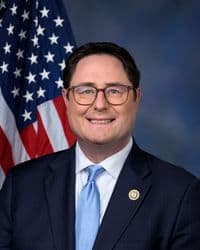
- Introduced
- 7/23/2025
- Last activity
- 7/23/2025 — Referred to the House Committee on Financial Services.
- Sponsored by
- Mike Flood
- Cosponsors
- - 2 - 4
- Introduced
- In Committee
What this bill would do
The Identifying Regulatory Barriers to Housing Supply Act aims to reduce housing shortages and improve affordability by discouraging burdensome land use policies. It requires certain grantees under the Community Development Block Grant program to submit a plan to track specific land use policies. These plans must describe whether certain policies have been adopted, the plan to implement them, and how they will benefit the jurisdiction. The goal is to use zoning and land use reforms to address the rising cost of housing. This legislation targets various policies, such as expanding multifamily zones and streamlining permitting processes.
Yes· 3 of 9
Does this make housing cost less?+7
The bill requires grantees to track and implement land use policies designed to remove barriers to housing affordability.
Would households on low incomes be better off under this?+5
The bill focuses on increasing the supply of affordable housing through density and zoning reforms.
Would middle-income households be better off under this?+4
The bill targets the reduction of cost-burdened households through increased housing options.
The opposite
Does this give the federal government more power?-2
The bill imposes new reporting and land use tracking requirements on local grant recipients.
Who it would affect, and how
Potential Positive Impacts for People
-
Increased Housing Affordability: The bill seeks to remove barriers to making housing more affordable to address the shortage of millions of homes (Section 2 and Section 3).
-
Expanded Housing Options: Grantees are encouraged to track and implement various policies that increase housing variety, such as allowing duplexes, triplexes, or fourplexes in single-family areas, allowing manufactured homes, and permitting accessory dwelling units (Section 4(a)(2)).
-
Efficient Development: The bill identifies ways to streamline or shorten permitting processes and timelines, which can include one-stop or parallel-process permitting (Section 4(a)(2)(J)).
-
Improved Land Use Efficiency: Provisions include allowing the conversion of office units to apartments, increasing allowable floor area ratios, and reducing minimum lot sizes (Section 4(a)(2)(H, N, O)).
-
Economic and Productivity Gains: By addressing the housing shortage, the bill aims to mitigate the $2 trillion per year in lost opportunities and lower productivity currently experienced by Americans (Section 3).
Potential Negative Impacts for People
-
Administrative Requirements for Grantees: Recipients of certain grants must prepare and submit a land use plan in a standardized form at least once during a 5-year period before receiving certain funds (Section 4(a)(1)).
-
Potential Impact on Local Zoning Characteristics: The bill includes various land use policy changes that may alter existing community structures, such as allowing higher density, reducing height limitations, or changing single-family residential zoning (Section 4(a)(2)).
Groups and Interests Ranking
Every group the model scored this bill for, from -10 to +10. Hover a score for the reason it gave.
- Demographic And Interest Groups
- Good For Low Income Households+5Good For Middle Class Households+4Good For Urban Residents+4Good For Rural Residents+2
- Social Issues And Justice
- Improves Affordable Housing+7Improves Poverty Reduction+3
- Economy And Finance
- Improves Economic Growth+3Increases Job Creation+3
- Environment Energy And Infrastructure
- Improves Public Transit+3
- Governance And Ideology
- Increases Federal Power-2
- 5/29/2026
- 1 Cosponsor added.
- 12/15/2025
- 2 Cosponsors added.
- 10/14/2025
- 1 Cosponsor added.
- 8/26/2025
- 1 Cosponsor added.
- 7/23/2025
- Referred to the House Committee on Financial Services.
- 1 Cosponsor added.
- Introduced in House
One bill Congress.gov lists as related to this one — companions in the other chamber, earlier versions, and bills this one absorbed or was folded into.
 Emanuel Cleaver
Democrat · Missouri
 Angie Craig
Democrat · Minnesota
 Monica De La Cruz
Republican · Texas
 Josh Harder
Democrat · California
 Michael Lawler
Republican · New York
 Brittany Pettersen
Democrat · Colorado