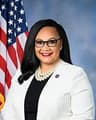
Nikema Williams (D-GA)
Advancing Maternal Health Equity Under Medicaid Act
A Democratic bill with 21 Democratic cosponsors · See all 21 cosponsors
Last activity — Referred to the House Committee on Energy and Commerce.
In committee
Introduced and handed to a committee in the chamber it started in.
The committee holds it, and most bills are never heard from again. A hearing or a committee vote would be news; silence is the usual outcome, and it kills the bill without anyone voting against it.
Its path through Congress
- Introduced
- In Committee
What this bill would do
This bill, known as the "Advancing Maternal Health Equity Under Medicaid Act," aims to change how the federal government helps pay for Medicaid. It seeks to increase the federal matching rate for increased spending on maternal health care services. This change would apply to calendar quarters starting after one year from the date of enactment. The bill defines specific maternal health care services, such as prenatal, labor and delivery, and postpartum care. It also establishes requirements for how states must use these additional funds.
Yes· 3 of 8
- Scored +9
Would women be better off under this?
The bill directly targets and expands essential maternal and postpartum health services for women.
- Scored +8
Does this make health care easier to get in general?
The bill expands access to maternal care, including telehealth, home visiting, and various support professionals.
- Scored +7
Would households on low incomes be better off under this?
Medicaid recipients are often low-income, and this bill enhances their access to essential maternal care.
The opposite
No question was scored the opposite.
Who it would affect, and how
Potential Positive Impacts for People
-
Increased Funding for Maternal Care: The bill provides a higher Federal matching rate of 90 percent for increased expenditures related to maternal health care services (Section 2, subsection (a)(5)(B)).
-
Improved Service Capacity and Quality: States are required to use the received funds for activities that increase the capacity, efficiency, and quality in the provision of maternal health care services (Section 2, subsection (b)(6)(A)(ii)).
-
Expanded Scope of Care: The bill includes various essential services such as telehealth, home visiting, and mental or behavioral health care services during the prenatal and postpartum periods (Section 2, subsection (b)(6)(B)(i)).
-
Broad Definition of Support Workers: The bill recognizes various professionals, including doulas, community health workers, nutritionists, and language interpreters, as perinatal health workers (Section 2, subsection (b)(6)(B)(i)).
Potential Negative Impacts for People
- Funding Restrictions: States are prohibited from using these funds to supplant existing State funds used for maternal health care services that were in effect as of January 1, 2023 (Section 2, subsection (b)(6)(A)(i)).
Groups and Interests Ranking
Every group the model scored this bill for, from -10 to +10. Tap or hover a score for the reason it gave.
- Demographic And Interest Groups
- Would women be better off under this? — The bill directly targets and expands essential maternal and postpartum health services for women. Would households on low incomes be better off under this? — Medicaid recipients are often low-income, and this bill enhances their access to essential maternal care. Would children be better off under this? — Improved maternal health supports healthy infant development.
- Healthcare
- Does this make health care easier to get in general? — The bill expands access to maternal care, including telehealth, home visiting, and various support professionals. Does this put more money into Medicaid, the health coverage for people on low incomes? — The bill increases the federal matching rate for Medicaid expenditures related to maternal health services. Does this make mental health care easier to get? — The bill specifically includes mental and behavioral health care services during the prenatal and postpartum periods.
- Social Issues And Justice
- Does this narrow the gap between how men and women are treated? — By targeting maternal health, the bill addresses a significant area of care specifically for women.
- Governance And Ideology
- Does this give the federal government more power? — The bill increases federal involvement in Medicaid funding for specific services.
- 10/1/2026
- 1 Cosponsor added.
- 11/25/2025
- 1 Cosponsor added.
- 10/31/2025
- 1 Cosponsor added.
- 7/29/2025
- 1 Cosponsor added.
- 7/2/2025
- 2 Cosponsors added.
- 6/27/2025
- 1 Cosponsor added.
- 6/25/2025
- Referred to the House Committee on Energy and Commerce.
- 14 Cosponsors added.
- Introduced in House
 Alma Adams
Democrat · North Carolina
 Suzanne Bonamici
Democrat · Oregon
 Steve Cohen
Democrat · Tennessee
 Judy Chu
Democrat · California
 Veronica Escobar
Democrat · Texas
 Jared Huffman
Democrat · California
 Jahana Hayes
Democrat · Connecticut
 Julie Johnson
Democrat · Texas
 Timothy Kennedy
Democrat · New York
 Gwen Moore
Democrat · Wisconsin
 Joseph Morelle
Democrat · New York
 Jennifer McClellan
Democrat · Virginia
 LaMonica McIver
Democrat · New Jersey
 Eleanor Norton
Democrat · District of Columbia
 Deborah Ross
Democrat · North Carolina
 Marilyn Strickland
Democrat · Washington
 Terri Sewell
Democrat · Alabama
 Melanie Stansbury
Democrat · New Mexico
 Rashida Tlaib
Democrat · Michigan
 Maxine Waters
Democrat · California
 Debbie Wasserman Schultz
Democrat · Florida