Bill · H.R. 4108· House(119-HR-4108)
Refuge From Cruel Trapping Act
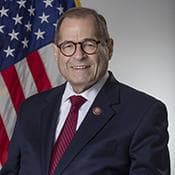
- Introduced
- 6/24/2025
- Last activity
- 6/24/2025 — Referred to the House Committee on Natural Resources.
- Sponsored by
- Jerrold Nadler
- Cosponsors
- - 14 - 0
- Introduced
- In Committee
What this bill would do
This bill, known as the "Refuge From Cruel Trapping Act," aims to amend the National Wildlife Refuge System Administration Act of 1966. It seeks to prohibit the possession or use of body-gripping traps within the National Wildlife Refuge System. The legislation defines body-gripping traps as devices intended to kill or capture wildlife by physically restraining any part of the animal. Certain exceptions are provided for federal agencies, the dismantling of traps, the state of Alaska, and tribal members using traps for subsistence. Violators may face civil fines, imprisonment, and the forfeiture of both the traps and any captured wildlife.
Yes· 3 of 4
Does this better protect air, water and wildlife?+5
The bill enhances wildlife protection by prohibiting certain harmful trapping methods in the National Wildlife Refuge System.
Would Native Americans be better off under this?+5
The bill specifically protects the subsistence hunting rights of members of federally recognized Indian Tribes.
Does this better protect public land such as parks and forests?+4
The bill regulates wildlife management practices within the National Wildlife Refuge System.
The opposite
Would people in rural areas be better off under this?-2
The prohibition on certain trapping methods may impact traditional or recreational activities often utilized in rural areas.
Who it would affect, and how
Potential Positive Impacts for People
-
Protection of Wildlife through Regulatory Limits: The bill prohibits the use of specific devices like steel-jaw or snare traps in the National Wildlife Refuge System (Sec. 2(a)). This could benefit those interested in protecting animals from physical restraint by traps.
-
Preservation of Species via Federal Agency Exceptions: Federal agencies are allowed to use these traps to control invasive species or protect species listed as threatened or endangered, provided they have first explored all nonlethal methods (Sec. 2(b)(1)). This could benefit the management of specific ecosystems and sensitive species.
-
Protection of Tribal Subsistence Rights: The prohibition does not apply to members of federally recognized Indian Tribes using these traps for subsistence purposes (Sec. 2(b)(4)). This ensures that traditional subsistence practices are preserved for these groups.
Potential Negative Impacts for People
-
Financial and Legal Burdens for Violators: Individuals who possess or use a body-gripping trap in violation of the act could face civil fines of up to $500 per trap or use, imprisonment for up to 180 days, and the requirement to pay all associated court costs (Sec. 2(c)(1)).
-
Loss of Property and Wildlife: Any body-gripping trap used in violation of this section, as well as any wildlife captured with it (including pelts or raw fur), is subject to forfeiture to the United States (Sec. 2(d)).
-
Restrictions on Wildlife Management Tools: While federal agencies have exceptions, the general prohibition on body-gripping traps may limit the tools available to people within the System, excluding those specific devices like kill-type or snare traps (Sec. 2(f)(1)).
Groups and Interests Ranking
Every group the model scored this bill for, from -10 to +10. Hover a score for the reason it gave.
- Environment Energy And Infrastructure
- Improves Environmental Protections+5Improves Public Land Management+4
- Demographic And Interest Groups
- Good For Native Americans+5Good For Rural Residents-2
- Governance And Ideology
- Increases Federal Power+3
- 9/15/2026
- 1 Cosponsor added.
- 8/29/2025
- 2 Cosponsors added.
- 8/1/2025
- 1 Cosponsor added.
- 7/10/2025
- 1 Cosponsor added.
- 6/24/2025
- Referred to the House Committee on Natural Resources.
- 9 Cosponsors added.
- Introduced in House
 Donald Beyer
Democrat · Virginia
 Nanette Barragán
Democrat · California
 Steve Cohen
Democrat · Tennessee
 André Carson
Democrat · Indiana
 Sean Casten
Democrat · Illinois
 Suzan DelBene
Democrat · Washington
 Jared Huffman
Democrat · California
 Henry Johnson
Democrat · Georgia
 Raja Krishnamoorthi
Democrat · Illinois
 Zoe Lofgren
Democrat · California
 Ted Lieu
Democrat · California
 Grace Meng
Democrat · New York
 Eleanor Norton
Democrat · District of Columbia
 Jamie Raskin
Democrat · Maryland